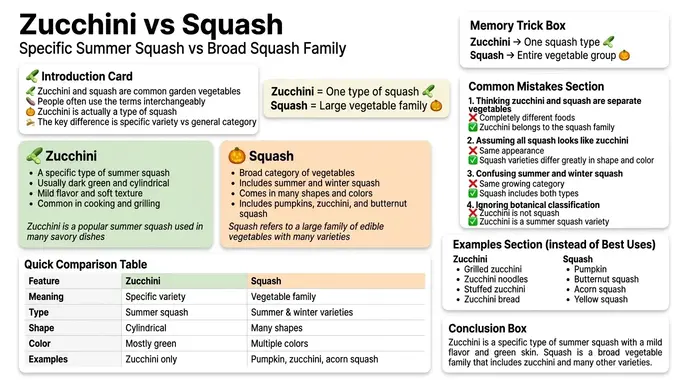
Many people get confused about the difference between zucchini and squash because the terms are often used together in grocery stores, recipes, gardening, and cooking shows.
Some people think zucchini and squash are completely different vegetables, while others assume they are exactly the same. The truth is a little more interesting.
In simple words, zucchini is actually a type of squash. “Squash” is a broad category of vegetables, while zucchini is one specific variety within that group.
The difference between zucchini and squash mainly comes down to classification, appearance, flavor, texture, and culinary use.
This guide explains zucchini and squash in a simple and practical way, including definitions, nutrition, cooking uses, gardening differences, similarities, real life examples, and expert insights that make the topic easy to understand.
Quick Answer: Difference Between Zucchini and Squash
The main difference between zucchini and squash is that zucchini is a specific type of squash.
- Squash refers to a large family of vegetables
- Zucchini is a summer squash variety with dark green skin and soft texture
For example:
All zucchinis are squash, but not all squash are zucchini.
Definition of Zucchini and Squash
- Zucchini: A green summer squash with soft edible skin and mild flavor commonly used in cooking.
- Squash: A broad vegetable category that includes summer squash and winter squash varieties.
Simple Example
- Zucchini = one vegetable type
- Squash = entire vegetable family
Pronunciation of Both (US & UK)
| Word | US Pronunciation | UK Pronunciation |
| Zucchini | zoo kee nee | zoo kee nee |
| Squash | skwosh | skwosh |
Now let’s understand this clearly through classification, cooking, nutrition, and real world food examples.
Difference Between Zucchini and Squash Comparison Table
| Feature | Zucchini | Squash | Similarity |
| Definition | Specific squash variety | Broad vegetable category | Both are vegetables |
| Type | Summer squash | Summer and winter varieties | Both belong to gourd family |
| Skin | Thin and edible | Can be thin or thick | Both have outer skin |
| Texture | Soft and tender | Varies by type | Both used in cooking |
| Flavor | Mild and slightly sweet | Mild to nutty | Both absorb flavors well |
| Color | Usually green | Many colors available | Both grow on vines |
| Seeds | Small soft seeds | Seed structure varies | Both contain seeds |
| Cooking Use | Stir fries, noodles, grilling | Soups, roasting, baking | Both are versatile foods |
This table clearly shows the difference and similarity between zucchini and squash for quick understanding.
Key Differences Explained Between Zucchini and Squash
Classification Difference
The biggest difference is scientific classification.
Zucchini belongs to the squash family. Squash itself includes many vegetables such as:
- Zucchini
- Pumpkin
- Butternut squash
- Acorn squash
- Yellow squash
This means zucchini is one member of a much larger vegetable group.
Summer Squash vs Winter Squash
Zucchini is classified as a summer squash because it is harvested while still immature and tender.
Winter squash varieties are harvested later and usually have:
- Harder skin
- Sweeter flesh
- Longer storage life
Appearance Difference
Zucchini is usually:
- Dark green
- Cylindrical
- Smooth skinned
Other squash varieties may be:
- Yellow
- Orange
- Round
- Ribbed
- Thick skinned
Texture and Flavor
Zucchini has:
- Soft texture
- Mild flavor
- High water content
Winter squash varieties often taste:
- Sweeter
- Richer
- More nutty
Cooking Style
Zucchini cooks quickly and works well in:
- Stir fries
- Pasta alternatives
- Grilling
- Salads
Other squash types are often used for:
- Roasting
- Soups
- Baking
- Purees
Why Are Zucchini and Squash So Confusing?
Many grocery stores label vegetables differently depending on region and recipe style. In some places, zucchini is simply called “green squash,” which creates confusion for beginners.
Cooking websites, food bloggers, and recipe videos on YouTube and Pinterest also use the terms interchangeably at times, especially when discussing summer squash recipes.
How Zucchini and Squash Grow
Zucchini Growth
Zucchini grows quickly on bush style plants and is usually harvested young for better texture.
Squash Growth
Different squash varieties grow differently:
- Some grow on vines
- Some grow in bushes
- Winter squash usually takes longer to mature
Farmers often separate squash types based on harvest season and storage ability.
Difference Between Zucchini and Squash in Nutrition
| Nutrition Feature | Zucchini | Other Squash Varieties |
| | |
| Calories | Low | Moderate depending on type |
| Water Content | Very high | Varies |
| Fiber | Moderate | Often higher in winter squash |
| Vitamin A | Lower | Higher in orange squash |
| Carbohydrates | Lower | Higher in winter squash |
Many health conscious users prefer zucchini because it is low in calories and commonly used in low carb meals.
Difference Between Zucchini and Squash in Cooking
Zucchini Cooking Uses
- Zucchini noodles
- Grilled slices
- Stir fries
- Baking breads and muffins
Squash Cooking Uses
- Pumpkin soup
- Roasted butternut squash
- Stuffed acorn squash
- Casseroles
Modern recipe platforms owned by Google frequently recommend zucchini in healthy diet plans because of its versatility and lower carbohydrate content.
Real Life Examples with Zucchini and Squash
Healthy Diet Meals
Zucchini noodles are popular alternatives to pasta in low carb diets.
Seasonal Cooking
Winter squash varieties are common during autumn and holiday cooking seasons.
Restaurant Menus
Many restaurants serve grilled zucchini as a side dish because it cooks quickly and absorbs seasoning well.
Home Gardening
Zucchini is one of the most popular vegetables for beginner gardeners because it grows rapidly and produces heavily.
Food Content on Social Media
Platforms like Instagram feature countless recipes using zucchini bread, roasted squash, stuffed squash, and healthy meal preparation ideas.
Difference + Similarity Between Zucchini and Squash
| Feature | Zucchini | Squash | Similarity |
| Classification | Specific type | Vegetable family | Both are gourds |
| Harvest Time | Summer harvest | Summer or winter harvest | Both seasonal vegetables |
| Flavor | Mild | Mild to sweet | Both versatile in recipes |
| Skin | Thin | Thin or thick | Both edible depending on type |
| Cooking Speed | Quick cooking | Varies by variety | Both used globally |
| Nutrition | Low calorie | Nutrient rich varieties | Both healthy vegetables |
| Texture | Soft | Soft or dense | Both absorb seasoning well |
This table clearly shows the difference and similarity between zucchini and squash for quick understanding.
Why People Get Confused Between Zucchini and Squash
Zucchini Is Technically Squash
This is the biggest reason for confusion.
Regional Naming Differences
Some countries use “courgette” instead of zucchini, while others simply say squash.
Similar Appearance
Yellow squash and zucchini can look very similar in shape and texture.
Grocery Store Labels
Stores sometimes group all squash types together without detailed labeling.
Common Mistakes with Zucchini and Squash
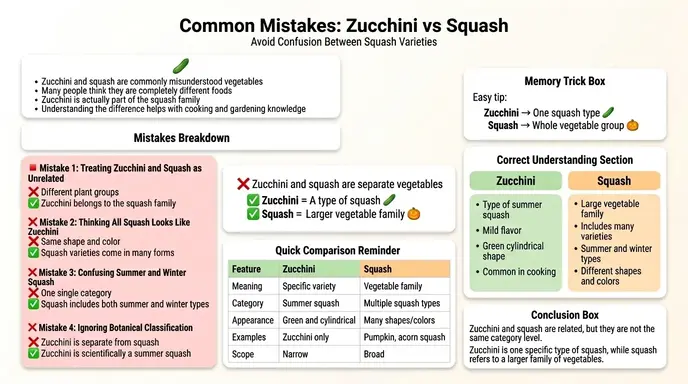
| Mistake | Correct Understanding |
| Thinking zucchini is separate from squash | Zucchini is a squash variety |
| Assuming all squash tastes the same | Flavor varies greatly |
| Confusing summer and winter squash | Harvest stage changes texture |
| Overcooking zucchini | It softens quickly |
| Ignoring nutritional differences | Winter squash often contains more carbohydrates |
Quick Memory Tip
- Squash = family
- Zucchini = one member of that family
When to Use Zucchini or Other Squash
Choose Zucchini If:
- You want low calorie meals
- You need quick cooking vegetables
- You prefer mild flavor
- You want pasta substitutes
Choose Other Squash If:
- You want sweeter flavor
- You need hearty soups or roasting vegetables
- You want longer storage life
- You prefer denser texture
Expert Insight
In practical cooking, professional chefs often treat zucchini differently from winter squash because of water content and cooking behavior.
Zucchini cooks very quickly and absorbs seasoning easily, while winter squash varieties develop deeper sweetness and richer texture when roasted.
Nutrition experts also note that zucchini is especially popular in modern low carb and calorie conscious diets, while nutrient dense winter squash varieties are valued for fiber, vitamin A, and natural sweetness.
Most beginners focus only on appearance, but experienced cooks usually choose squash varieties based on texture, moisture level, cooking time, and recipe goals.
Frequently Asked Questions
What is the main difference between zucchini and squash?
Zucchini is a specific type of squash, while squash is a broader vegetable category.
Is zucchini a squash?
Yes. Zucchini is a summer squash variety.
Are zucchini and yellow squash the same?
They are similar summer squash varieties but differ in color and slight flavor differences.
Which is healthier, zucchini or squash?
Both are healthy, but zucchini is lower in calories while winter squash often contains more vitamins.
Can zucchini replace squash in recipes?
Usually yes for summer squash recipes, but winter squash recipes may differ in texture and sweetness.
Why is zucchini popular in low carb diets?
Zucchini is low in carbohydrates and works well as a pasta substitute.
What is another name for zucchini?
In many countries, zucchini is called “courgette.”
Does zucchini taste like squash?
Yes. Since zucchini is a squash variety, the flavor is naturally similar to other mild summer squash types.
Conclusion
Understanding the difference between zucchini and squash becomes much easier once you realize that zucchini is actually one type of squash rather than a completely separate vegetable.
Squash is a broad family that includes summer and winter varieties, while zucchini is specifically a tender summer squash known for mild flavor and soft texture.
Although the terms are often used interchangeably in cooking and grocery stores, important differences exist in texture, sweetness, nutrition, cooking methods, and seasonal use.
Zucchini is popular for low calorie meals and fast cooking, while other squash varieties are commonly used for roasting, soups, and hearty dishes.
In real world cooking and gardening, choosing the right squash depends on your recipe, flavor preference, nutrition goals, and preparation style.
Once you understand the relationship between zucchini and squash, grocery shopping, cooking, and meal planning become much easier and less confusing.
Discover More Articles!
Difference Between Chromosome and Chromatid:With Examples
Difference Between Diamond and Moissanite:With Examples

James Whitmore. Labdiff.com is my english grammar comparision website. I explore the history and evolution of English words. I write detailed comparisons explaining why spellings change over time and how British and American English diverged. My articles add depth and credibility to grammar comparison topics.