Many people use jam and marmalade interchangeably at breakfast tables, but they are not the same thing.
The difference between jam and marmalade mainly comes down to the type of fruit used, texture, taste, and how each spread is prepared.
Jam is usually made from crushed or mashed fruit mixed with sugar, creating a thick and smooth fruit spread.
Marmalade, on the other hand, is traditionally made from citrus fruits like oranges, lemons, or grapefruits and often contains pieces of peel that give it a slightly bitter taste.
For example:
- Strawberry jam tastes sweet and fruity.
- Orange marmalade tastes sweet with a mild bitter citrus flavor.
Brands sell both products because they serve different taste preferences and cooking uses.
In this guide, you will learn:
- What jam and marmalade mean
- Their key differences
- Ingredients and preparation methods
- Taste and texture comparisons
- Real life food examples
- Common misconceptions
- Which spread is better for different uses
By the end, you will clearly understand the difference between jam and marmalade in simple words.
Quick Answer: Difference Between Jam and Marmalade
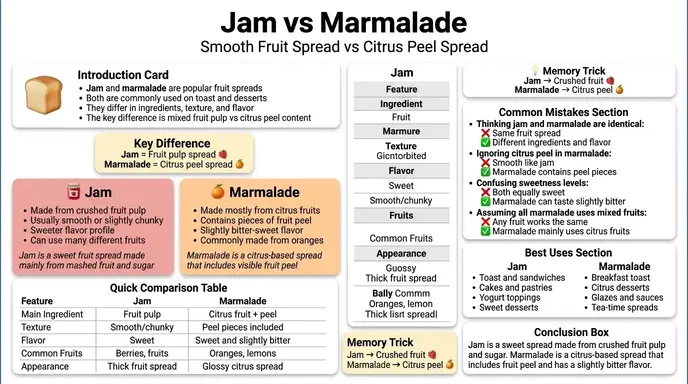
The difference between jam and marmalade is that jam is made from crushed fruit pulp, while marmalade is usually made from citrus fruits and includes pieces of peel.
Simple Example
- Strawberry spread = jam
- Orange peel spread = marmalade
In simple words:
- Jam = sweet fruit spread
- Marmalade = citrus spread with peel
Definition of Jam and Marmalade
What Is Jam?
Jam is a fruit spread made by cooking crushed or chopped fruit with sugar until it thickens.
It usually has a smooth or slightly chunky texture.
Example
Strawberry jam spread on toast.
What Is Marmalade?
Marmalade is a preserve traditionally made from citrus fruits and their peel.
It often has a slightly bitter flavor because of the citrus rind.
Example
Orange marmalade served with toast or pastries.
Pronunciation of Both Terms
| Word | US Pronunciation | UK Pronunciation |
| Jam | JAM | JAM |
| Marmalade | MAR muh layd | MAH muh layd |
Now let’s understand the deeper difference between jam and marmalade.
Comparison Table: Difference Between Jam and Marmalade
| Feature | Jam | Marmalade |
| Main Ingredient | Crushed fruit | Citrus fruit |
| Peel Included | Usually no | Usually yes |
| Taste | Mostly sweet | Sweet and slightly bitter |
| Texture | Smooth or chunky | Gel like with peel strips |
| Common Fruits | Strawberry, blueberry, peach | Orange, lemon, grapefruit |
| Color | Depends on fruit | Usually orange or yellow |
| Traditional Use | Bread, desserts | Toast, pastries, glazes |
| Flavor Profile | Fruity sweetness | Citrus bitterness and sweetness |
| Cooking Style | Fruit pulp cooked with sugar | Citrus fruit and peel cooked with sugar |
Key Differences Explained Between Jam and Marmalade
Jam Uses Crushed Fruit
One of the biggest differences is the fruit preparation.
Jam is usually made from mashed or chopped fruit pulp.
Real Life Example
A homemade strawberry jam recipe often uses:
- strawberries
- sugar
- pectin
- lemon juice
The fruit becomes soft and spreadable after cooking.
Marmalade Uses Citrus Peel
Marmalade traditionally contains citrus rind or peel.
Example
Orange marmalade often includes thin strips of orange peel.
This peel gives marmalade its signature slightly bitter flavor.
Jam Is Usually Sweeter
Jam mainly focuses on sweet fruit flavor.
Popular sweet jams include:
- strawberry jam
- raspberry jam
- apricot jam
Marmalade Has a Bitter Citrus Taste
The peel inside marmalade adds bitterness that balances the sweetness.
That unique flavor is why many adults prefer marmalade with breakfast.
Texture Is Different
Jam usually feels softer and smoother.
Marmalade often has visible peel pieces suspended in jelly like syrup.
Fruit Choice Is Different
Jam can be made from almost any fruit.
Examples
- cherries
- peaches
- blueberries
- mangoes
Marmalade is traditionally made using citrus fruits.
Examples
- oranges
- lemons
- limes
- grapefruits
Marmalade Often Feels More Sophisticated
In many cultures, marmalade is associated with classic British breakfasts and gourmet spreads.
The fictional character Paddington Bear famously loves marmalade sandwiches, which helped popularize marmalade worldwide.
Difference and Similarity Table Between Jam and Marmalade
| Feature | Jam | Marmalade | Similarity |
| Type | Fruit preserve | Citrus preserve | Both are sweet spreads |
| Ingredients | Fruit pulp | Citrus fruit and peel | Both use sugar |
| Flavor | Sweet | Sweet with bitterness | Both enhance breakfast foods |
| Texture | Smooth/chunky | Jelly like with peel | Both spread on bread |
| Fruit Variety | Many fruits | Mostly citrus fruits | Both are fruit based |
| Cooking Process | Boiled fruit mixture | Boiled citrus mixture | Both involve cooking and thickening |
| Storage | Jarred preserve | Jarred preserve | Both have long shelf life |
| Usage | Desserts and toast | Toast and glazes | Both are breakfast condiments |
This table clearly shows the difference and similarity between jam and marmalade for quick understanding.
Why People Get Confused Between Jam and Marmalade
Many supermarket jars look similar, and both are fruit spreads served on bread or toast.
The confusion increases because:
- both contain sugar
- both are preserved spreads
- both appear in breakfast sections
- some products are marketed similarly
However, the easiest way to identify them is:
Jam Check
Is it made from crushed fruit pulp?
Marmalade Check
Does it contain citrus peel?
That simple rule solves most confusion.
What Causes the Difference Between Jam and Marmalade?
Fruit Type
Jam works with many fruits.
Marmalade specifically focuses on citrus fruits.
Peel Usage
Jam rarely includes peel.
Marmalade commonly includes peel strips for texture and flavor.
Flavor Goals
Jam aims for pure sweetness.
Marmalade balances sweetness with slight bitterness.
Cultural Influence
Marmalade became strongly associated with British breakfast culture, while jam became popular worldwide in many flavors.
Real Life Examples With Jam and Marmalade
Breakfast Example
Jam
Strawberry jam on peanut butter sandwiches.
Marmalade
Orange marmalade on buttered toast.
Baking Example
Jam
Jam filled donuts and pastries.
Marmalade
Citrus glazes for cakes or roasted meats.
Restaurant Example
Hotels often serve multiple jam flavors alongside marmalade during breakfast buffets.
Dessert Example
Jam
Used in cheesecakes and cookies.
Marmalade
Used in citrus tarts and gourmet desserts.
Home Cooking Example
Many homemade jam recipes are beginner friendly because they do not require peel preparation like marmalade.
When to Use Jam or Marmalade
Use “Jam” When:
- the spread uses mashed fruit
- sweetness is the main flavor
- the texture is smoother
- non citrus fruits are used
Examples
- strawberry jam
- blueberry jam
- peach jam
Use “Marmalade” When:
- citrus fruits are used
- peel pieces are included
- slight bitterness is present
- the spread has jelly texture
Examples
- orange marmalade
- lemon marmalade
Common Mistakes With Jam and Marmalade
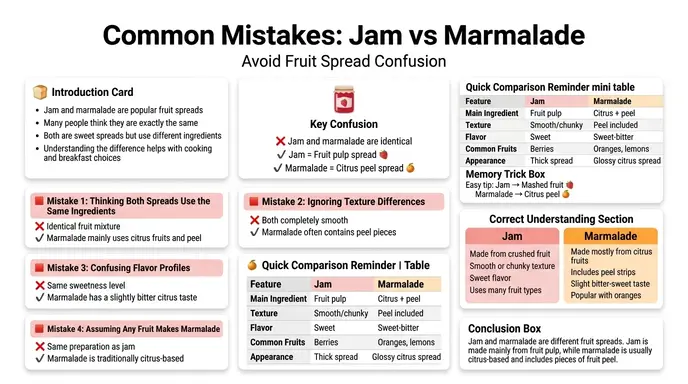
| Mistake | Why It Is Wrong | Correct Understanding |
| Thinking all fruit spreads are jam | Marmalade is different | Citrus peel matters |
| Assuming marmalade is always orange | Other citrus fruits work too | Lemon and grapefruit marmalade exist |
| Ignoring peel texture | Peel defines marmalade | Jam usually lacks peel |
| Believing marmalade is less sweet | It still contains sugar | Bitterness simply balances flavor |
| Confusing jelly with marmalade | Jelly uses fruit juice only | Marmalade uses peel and pulp |
How Search Engines Understand “Difference Between Jam and Marmalade”
Search engines like Google recognize this as a food comparison and culinary education query.
Common searches include:
- jam vs marmalade
- what is marmalade
- marmalade vs jelly
- fruit preserves explained
- orange marmalade meaning
Google prioritizes content that:
- explains food differences clearly
- includes cooking examples
- answers beginner food questions
- compares ingredients and texture
- supports recipe and breakfast related intent
Recipe websites and cooking brands frequently create content around these terms because food terminology often confuses consumers.
Expert Insight: Why Marmalade Tastes Different
In practical cooking, the biggest reason marmalade tastes unique is the citrus peel.
The peel contains natural oils and compounds that create bitterness and strong aroma.
Most beginners focus only on sweetness. Professional chefs also consider:
- acidity
- citrus oils
- texture balance
- peel thickness
- flavor layering
That is why marmalade often pairs well with:
- buttered toast
- roasted meats
- pastries
- tea time foods
Its slight bitterness creates more complex flavor compared to standard jam.
Can Marmalade Be Called Jam?
Technically, marmalade is a type of fruit preserve, but it is usually classified separately because of its citrus peel content and traditional preparation style.
So while they are related, they are not exactly the same.
Which Is Healthier: Jam or Marmalade?
Both can contain high amounts of sugar.
However:
- marmalade may contain more citrus nutrients from peel
- jam may contain more fruit pulp depending on preparation
Health value mainly depends on:
- sugar content
- fruit percentage
- preservatives
- serving size
Low sugar versions of both products are now common in modern grocery stores.
FAQ:
What is the main difference between jam and marmalade?
Jam is made from crushed fruit pulp, while marmalade is made from citrus fruit and peel.
Does marmalade always contain orange?
No. Marmalade can also use lemon, lime, or grapefruit.
Why is marmalade bitter?
The citrus peel creates slight bitterness.
Is marmalade healthier than jam?
It depends on ingredients and sugar levels, but marmalade may contain more citrus peel nutrients.
Can jam contain peel?
Sometimes, but peel is not a defining feature like it is in marmalade.
Is marmalade a type of jelly?
No. Jelly is usually made from fruit juice only, while marmalade contains peel and pulp.
Which is sweeter: jam or marmalade?
Jam is usually sweeter because it lacks the bitter citrus peel.
What foods pair best with marmalade?
Marmalade pairs well with toast, pastries, cakes, and some savory dishes.
Conclusion
Understanding the difference between jam and marmalade is easy once you focus on the fruit type, texture, and peel content.
Jam is usually made from crushed fruit pulp and tastes sweet and fruity. Marmalade is traditionally made from citrus fruits and includes peel, giving it a slightly bitter and more complex flavor.
In simple words:
- jam = sweet fruit spread
- marmalade = citrus spread with peel
Both are popular breakfast preserves, but they create very different taste experiences and cooking uses.
Once you understand the role of citrus peel, identifying the difference between jam and marmalade becomes much simpler.
Discover More Articles!
Difference Between Prism and Pyramid: With Examples(2026)
Difference Between Bid and Ask:With Simple Examples

James Whitmore. Labdiff.com is my english grammar comparision website. I explore the history and evolution of English words. I write detailed comparisons explaining why spellings change over time and how British and American English diverged. My articles add depth and credibility to grammar comparison topics.