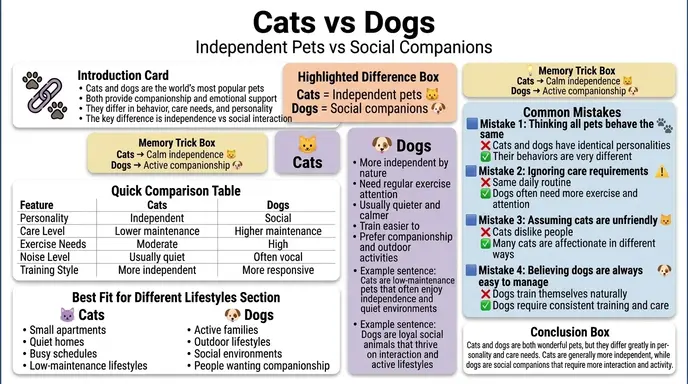
Many people search for the difference between cats and dogs when deciding which pet fits their lifestyle better. Some want a quiet and independent companion, while others prefer an energetic and loyal pet.
Although both animals are among the most popular pets in the world, they behave very differently in daily life.
The difference between cats and dogs involves personality, training, grooming, intelligence, communication, emotional bonding, and care needs.
In simple words, cats are usually more independent and self managing, while dogs are more social and interactive with humans.
In this guide, you will learn what makes cats and dogs different, why people compare them so often, real life examples, similarities, expert insights, and practical advice for choosing the right pet.
Quick Answer: Difference Between Cats and Dogs
The main difference between cats and dogs is their behavior and interaction style with humans.
- Cats are generally independent, calm, and low maintenance
- Dogs are usually social, loyal, and highly interactive
For example:
A cat may stay alone comfortably for hours, while a dog often wants attention, walks, and playtime regularly.
Definition of Cats and Dogs
- Cat: A domesticated feline animal known for independence, agility, and quiet behavior.
- Dog: A domesticated canine animal known for loyalty, companionship, and social interaction.
Simple Example
- A cat may quietly sit near its owner
- A dog may actively seek attention and play
Pronunciation of Both (US & UK)
| Word | US Pronunciation | UK Pronunciation |
| Cat | kat | kat |
| Dog | dawg / dog | dog |
Now let’s understand this clearly through deep comparisons, real world usage, and practical examples.
Difference Between Cats and Dogs Comparison Table
| Feature | Cats | Dogs | Similarity |
| Nature | Independent | Social | Both are companion pets |
| Training | Selective learning | Easier obedience training | Both can learn routines |
| Exercise Needs | Lower | Higher | Both need physical activity |
| Grooming | Self grooming | Requires owner help | Hygiene matters for both |
| Communication | Quiet signals | Vocal and expressive | Both communicate emotions |
| Lifestyle | Indoor friendly | Outdoor activity preferred | Both adapt to homes |
| Attention Needs | Moderate | High | Both need affection |
| Lifespan | Often longer | Breed dependent | Both require long term care |
This table clearly shows the difference and similarity between cats and dogs for quick understanding.
Key Differences Explained Between Cats and Dogs
Personality and Behavior
Cats usually prefer independence and personal space. Dogs naturally enjoy companionship and social interaction.
Real life example:
A cat may observe guests quietly from a corner, while a dog may run to greet visitors immediately.
Social Interaction
Dogs evolved as pack animals, which makes them naturally social with humans and other animals. Cats are affectionate too, but often on their own terms.
Platforms like Instagram and YouTube frequently highlight these personality differences through pet videos and training content.
Training Ability
Dogs are usually easier to train because they respond well to commands and routines. Cats can learn too, but they are more selective and independent in behavior.
Exercise Requirements
Dogs typically need outdoor walks, physical exercise, and active play daily. Cats often stay active indoors through climbing, jumping, and toys.
Communication Style
Dogs express emotions openly through barking, tail wagging, and body movement. Cats communicate more subtly through purring, blinking, posture, and ear movements.
Maintenance and Grooming
Cats naturally clean themselves multiple times a day. Dogs usually need regular bathing, brushing, and owner supported grooming.
Why Do Cats and Dogs Behave Differently?
The difference mainly comes from evolution and domestication history.
Dogs evolved from wolves and developed strong pack instincts, cooperation skills, and loyalty toward humans over thousands of years. Cats evolved as solitary hunters and retained more independence even after domestication.
This explains why dogs often seek approval and companionship, while cats prioritize comfort, territory, and controlled interaction.
How Cats and Dogs Interact with Humans
Cats and Human Bonding
Many users mistakenly believe cats are emotionally distant. In reality, cats form strong bonds but show affection differently.
Common signs include:
- Purring
- Slow blinking
- Sleeping near owners
- Quietly following people around the house
Dogs and Human Bonding
Dogs usually show attachment more openly and energetically.
Common signs include:
- Tail wagging
- Jumping excitedly
- Bringing toys
- Seeking physical closeness
Companies like Google increasingly support AI powered pet behavior research because pet wellness and emotional understanding have become major global interests.
Difference Between Cats and Dogs in Intelligence
| Intelligence Area | Cats | Dogs |
| | |
| Problem Solving | Independent thinking | Cooperative problem solving |
| Training Response | Selective obedience | Command focused learning |
| Memory | Strong environmental memory | Strong social memory |
| Hunting Skills | Excellent solo hunters | Team oriented hunters |
Many beginners think dogs are automatically smarter because they obey commands more often. However, intelligence works differently in cats and dogs.
Difference Between Cats and Dogs in Daily Care
Cat Care
- Litter box cleaning
- Indoor stimulation
- Scratching posts
- Moderate feeding schedules
Dog Care
- Daily walks
- Obedience training
- Outdoor exercise
- Frequent social interaction
Dogs usually require more time commitment compared to cats.
Difference Between Cats and Dogs in Emotional Support
Both animals help reduce stress and loneliness, but in different ways.
Cats
- Quiet companionship
- Calm emotional presence
- Lower pressure interaction
Dogs
- Active emotional support
- Strong attachment behavior
- Greater social engagement
This is one reason therapy dogs are common worldwide, although emotional support cats are also becoming more recognized.
When to Use Each as a Pet Choice
Choose a Cat If:
- You live in a smaller apartment
- You prefer quiet environments
- You work long hours
- You want lower maintenance
Choose a Dog If:
- You enjoy outdoor activities
- You want active companionship
- You have time for training and walks
- You prefer highly interactive pets
Real Life Examples with Cats and Dogs
Apartment Living
Cats usually adapt better to smaller indoor spaces because they require less outdoor activity.
Family Homes
Dogs often fit active families because they enjoy group interaction and play.
Busy Professionals
Many professionals choose cats because they can stay alone more comfortably during working hours.
Outdoor Lifestyle Owners
People who hike, jog, or spend time outdoors often prefer dogs as companions.
Social Media Pet Culture
Platforms owned by Meta contain massive pet communities sharing training advice, cat humor, dog behavior tips, and animal wellness information.
Why People Get Confused Between Cats and Dogs
Both Are Popular Companion Animals
People sometimes assume their care needs are similar simply because both are household pets.
Media Representation
Movies and cartoons often oversimplify pet behavior, creating unrealistic expectations.
Breed Differences
Some dog breeds behave calmly like cats, while some cats are extremely social and energetic.
Individual Personality
Every pet has its own temperament regardless of species.
Difference + Similarity Between Cats and Dogs
| Feature | Cats | Dogs | Similarity |
| Behavior | Independent | Social | Both form emotional bonds |
| Communication | Subtle | Expressive | Both show emotions |
| Grooming | Self cleaning | Assisted grooming | Hygiene is important |
| Activity | Indoor focused | Outdoor focused | Both need stimulation |
| Training | Selective | Responsive | Both can learn routines |
| Loyalty Style | Quiet attachment | Open attachment | Both connect emotionally |
| Living Space | Smaller spaces suitable | Larger spaces preferred | Both adapt over time |
This table clearly shows the difference and similarity between cats and dogs for quick understanding.
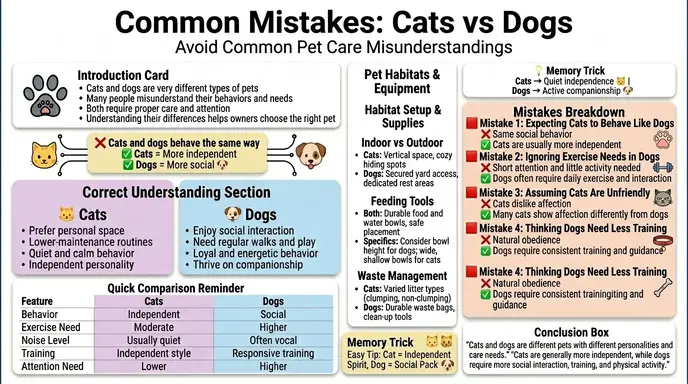
Common Mistakes with Cats and Dogs
| Mistake | Correct Understanding |
| Thinking cats are emotionless | Cats show affection differently |
| Assuming all dogs are friendly | Breed and training matter |
| Ignoring exercise needs | Both animals need stimulation |
| Treating cats like dogs | Their instincts differ greatly |
| Underestimating training importance | Both pets benefit from routines |
Quick Tip
Understanding animal psychology creates stronger and healthier relationships with pets.
Expert Insight
In practical use, veterinarians and animal behavior experts often explain that choosing the “better pet” depends more on lifestyle compatibility than species popularity.
Many first time owners select pets based on appearance or internet trends rather than care requirements.
For example, energetic dog breeds may struggle in inactive households, while intelligent indoor cats may become bored without stimulation.
Experienced pet owners usually focus on behavior patterns, time commitment, living space, emotional needs, and long term responsibility before adoption.
This realistic approach leads to healthier pets and stronger human animal relationships.
Frequently Asked Questions
What is the main difference between cats and dogs?
Cats are generally more independent, while dogs are more social and interactive.
Are cats easier to care for than dogs?
Usually yes. Cats often require less daily supervision and outdoor activity.
Which pet is more loyal?
Dogs usually show loyalty more openly, but cats also form strong emotional bonds.
Do cats and dogs get along together?
Yes. Many cats and dogs live together peacefully when introduced properly.
Which animal is smarter, cats or dogs?
Both are intelligent in different ways. Dogs excel in social learning, while cats excel in independent problem solving.
Are dogs more affectionate than cats?
Dogs express affection more visibly, but cats can be equally attached emotionally.
Which pet is better for apartments?
Cats are generally better suited for smaller indoor spaces.
Why do dogs require more attention?
Dogs evolved as pack animals and naturally seek companionship and interaction.
Conclusion
Understanding the difference between cats and dogs helps people choose the right companion animal and create healthier relationships with pets.
Although both species offer affection, companionship, and emotional support, their personalities and care needs are very different.
Cats are usually independent, adaptable, quiet, and lower maintenance. Dogs are generally energetic, loyal, interactive, and socially connected with humans.
These differences come from their natural instincts, domestication history, and behavioral evolution over thousands of years.
In real life situations, neither animal is universally better. The best choice depends on your schedule, living space, personality, activity level, and expectations as a pet owner.
A busy apartment resident may prefer a calm indoor cat, while an active family may enjoy the companionship of a playful dog.
Once you fully understand the difference between cats and dogs, choosing the right pet becomes easier, more responsible, and far more rewarding.
Discover More Articles!
Difference Between Antique and Vintage: Simple Examples
Difference Between Skeet and Trap:With Simple Examples

James Whitmore. Labdiff.com is my english grammar comparision website. I explore the history and evolution of English words. I write detailed comparisons explaining why spellings change over time and how British and American English diverged. My articles add depth and credibility to grammar comparison topics.