Many people confuse the difference between antique and vintage when shopping for furniture, clothing, jewelry, collectibles, or home décor.
Both terms describe older items, and both are commonly used in fashion, interior design, auctions, and resale markets. However, they do not mean the same thing.
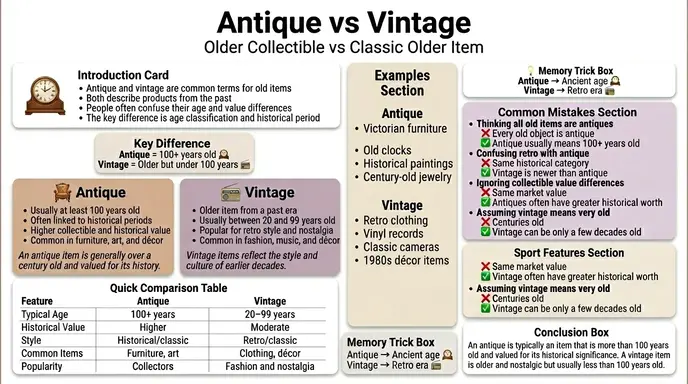
The difference between antique and vintage mainly depends on age and historical classification. An antique item is generally at least 100 years old, while a vintage item is older but not old enough to qualify as an antique.
For example:
- A chair made in 1890 may be considered antique.
- A jacket from the 1980s is usually considered vintage.
Platforms frequently categorize products as antique or vintage because buyers specifically search for items based on age, rarity, style, and collectibility.
In this guide, you will learn:
- What antique and vintage mean
- Their key differences
- Age classifications
- Real world examples
- Common shopping mistakes
- Why collectors value them differently
By the end, you will clearly understand the difference between antique and vintage in simple words.
Quick Answer: Difference Between Antique and Vintage
The difference between antique and vintage is that antique items are usually at least 100 years old, while vintage items are old but typically less than 100 years old.
Simple Example
- A 1920 wooden cabinet = antique
- A 1970 leather jacket = vintage
In simple words:
- Antique = very old collectible
- Vintage = older style item from a past era
Definition of Antique and Vintage
What Is an Antique?
An antique is an item generally considered to be at least 100 years old and valued for historical, artistic, or collectible significance.
Example
An early 1900s handmade dining table.
What Is Vintage?
Vintage refers to items from a previous era that represent the style or culture of their time but are usually less than 100 years old.
Example
A 1980s denim jacket or retro watch.
Pronunciation of Both Terms
| Word | US Pronunciation | UK Pronunciation |
| Antique | an TEEK | an TEEK |
| Vintage | VIN tij | VIN tij |
Now let’s understand the deeper difference between antique and vintage.
Comparison Table: Difference Between Antique and Vintage
| Feature | Antique | Vintage |
| Age Requirement | Usually 100+ years old | Usually 20–99 years old |
| Historical Value | Often significant | Sometimes nostalgic |
| Rarity | Usually rarer | More commonly available |
| Market Price | Often expensive | Varies widely |
| Style Appeal | Historical elegance | Retro or classic style |
| Common Categories | Furniture, art, clocks | Fashion, décor, cars |
| Collectibility | High collector interest | Popular lifestyle appeal |
| Condition Importance | Very important | Important but flexible |
| Era Association | Older historical periods | Modern past decades |
Key Differences Explained Between Antique and Vintage
Antique Items Are Much Older
One of the biggest differences is age.
Most experts and auction houses classify antiques as items over 100 years old.
Real Life Example
A handcrafted Victorian era cabinet may qualify as antique.
Vintage Items Represent Past Eras
Vintage items are old enough to reflect a previous generation’s style but not old enough to become antiques.
Example
A 1990s leather jacket can be vintage even though it is not extremely old.
Antiques Often Have Historical Importance
Antiques may connect to:
- historical periods
- famous craftsmanship
- cultural heritage
- rare production methods
That historical connection often increases value.
Vintage Focuses More on Style and Nostalgia
Vintage products are often loved because they remind people of a specific era.
Example
Vintage fashion from the 1970s or 1980s remains popular because of retro trends.
Antique Items Are Usually Rarer
Because of age, fewer genuine antiques survive in excellent condition.
That scarcity increases collector demand.
Vintage Items Are More Accessible
Vintage products are often easier to find through:
- thrift stores
- online marketplaces
- fashion resale shops
- retro collections
Antique Restoration Requires Extra Care
Collectors usually avoid excessive restoration because original condition affects antique value.
Vintage items often allow more flexibility in restoration or customization.
Difference and Similarity Table Between Antique and Vintage
| Feature | Antique | Vintage | Similarity |
| Meaning | Very old collectible item | Older item from past era | Both describe old objects |
| Age | 100+ years | Usually under 100 years | Both involve age based value |
| Popularity | Collector focused | Fashion and lifestyle focused | Both attract enthusiasts |
| Value Drivers | Historical rarity | Retro appeal and design | Both may increase in value |
| Examples | Old clocks, furniture | Retro clothing, vinyl records | Both appear in resale markets |
| Condition Importance | Extremely important | Important | Both benefit from good care |
| Marketplaces | Auction houses | Vintage shops | Both sold online |
| Emotional Appeal | Historical admiration | Nostalgia | Both create sentimental value |
This table clearly shows the difference and similarity between antique and vintage for quick understanding.
Why People Get Confused Between Antique and Vintage
Many sellers use the terms loosely for marketing purposes.
For example:
- some people call anything “old” antique
- some stores label retro items as vintage incorrectly
The easiest way to remember the difference is:
Antique Check
Is the item at least 100 years old?
Vintage Check
Does it represent a past era without reaching 100 years?
That simple rule solves most confusion.
What Causes the Difference Between Antique and Vintage?
Age Classification
The primary distinction comes from item age.
Historical Context
Antiques usually connect to older historical periods.
Vintage items connect more to recent decades and trends.
Consumer Appeal
Antique buyers often focus on rarity and history.
Vintage buyers often focus on style and nostalgia.
Market Positioning
Auction houses and resale markets categorize products differently to match collector expectations.
Real Life Examples With Antique and Vintage
Furniture Example
Antique
An 1800s wooden dining table.
Vintage
A 1970s mid century modern chair.
Fashion Example
Antique
Handmade Victorian lace clothing.
Vintage
1990s denim jackets and retro sneakers.
Car Example
Antique
Very early classic automobiles.
Vintage
1960s or 1980s collector cars.
Jewelry Example
Antique
Edwardian era gold jewelry.
Vintage
Retro watches from the 1970s.
Home Décor Example
Vintage posters and antique mirrors are often sold together in interior design shops.
When to Use Antique or Vintage
Use “Antique” When:
- the item is over 100 years old
- historical significance exists
- collector value is high
- craftsmanship reflects older eras
Examples
- antique furniture
- antique clocks
- antique paintings
Use “Vintage” When:
- the item comes from a previous decade
- retro style matters
- nostalgic appeal exists
- the item is old but not ancient
Examples
- vintage clothing
- vintage cameras
- vintage records
Common Mistakes With Antique and Vintage
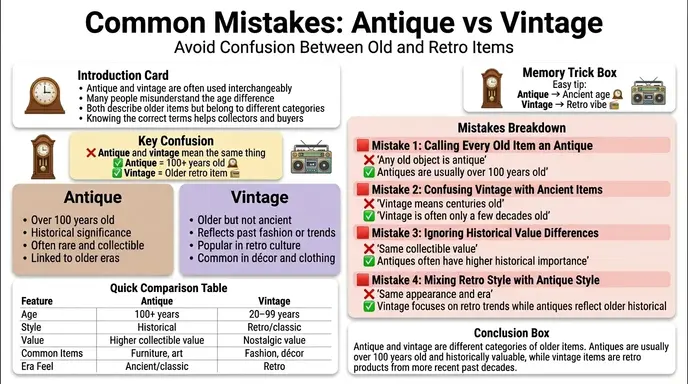
| Mistake | Why It Is Wrong | Correct Understanding |
| Calling all old items antiques | Age matters | Antiques are usually 100+ years old |
| Thinking vintage means cheap | Some vintage items are valuable | Demand affects price |
| Ignoring item condition | Damage reduces value | Preservation matters |
| Confusing retro with vintage | Retro can be newly made | Vintage is genuinely older |
| Assuming antiques are always expensive | Value varies greatly | Rarity and condition matter |
How Search Engines Understand “Difference Between Antique and Vintage”
Search engines like Google recognize this as a shopping, collectible, and educational query.
Common searches include:
- antique vs vintage
- what counts as antique
- vintage meaning
- antique furniture guide
- vintage fashion explained
Google prioritizes content that:
- explains age classifications clearly
- includes buying examples
- helps shoppers identify items
- compares collectible value
- satisfies lifestyle and shopping intent
Platforms like eBay and Etsy optimize product categories heavily around these terms because buyers frequently search by era and style.
Expert Insight: Why Some Vintage Items Become More Valuable Than Antiques
In practical resale markets, age alone does not determine value.
Most beginners assume antiques are always more expensive.
However, professionals also consider:
- rarity
- brand demand
- condition
- cultural influence
- fashion trends
- collector communities
For example:
Some vintage sneakers or luxury watches may sell for more than certain antiques because modern collectors strongly desire them.
Popularity and demand often influence market prices as much as age.
Can Something Be Both Antique and Vintage?
Technically, antiques are also vintage because they come from the past.
However, in everyday use:
- antique = very old historical item
- vintage = older retro item from a past era
Most sellers separate the categories for clarity.
Is Retro the Same as Vintage?
No.
Vintage
Actually made in an earlier era.
Retro
Newly made items designed to look old fashioned.
Example
A brand new “retro style” radio is not vintage.
FAQ:
What is the main difference between antique and vintage?
Antiques are usually over 100 years old, while vintage items are older items from more recent past decades.
How old does something need to be to become antique?
Generally, at least 100 years old.
Is vintage older than antique?
No. Antiques are usually older than vintage items.
Can 1990s clothing be vintage?
Yes. Many fashion experts consider 1990s clothing vintage today.
Are all antiques valuable?
No. Value depends on rarity, condition, craftsmanship, and demand.
Is retro the same as vintage?
No. Retro items are new products made in an old style, while vintage items are genuinely old.
Why do people collect vintage items?
Many people enjoy nostalgia, unique style, and cultural history.
Why are antiques expensive?
Their rarity, age, craftsmanship, and historical significance often increase value.
Conclusion
Understanding the difference between antique and vintage becomes much easier once you focus on age and historical context.
Antique items are generally at least 100 years old and often valued for rarity and historical importance. Vintage items are older products from past decades that reflect retro style and cultural trends.
In simple words:
- antique = historical collectible
- vintage = stylish older era item
Both categories remain highly popular in fashion, furniture, home décor, auctions, and collector markets around the world.
Once you understand the age distinction and style focus, identifying the difference between antique and vintage becomes simple.
Discover More Articles!
Difference Between Jam and Marmalade: With Real Examples
Difference Between Skeet and Trap:With Simple Examples

James Whitmore. Labdiff.com is my english grammar comparision website. I explore the history and evolution of English words. I write detailed comparisons explaining why spellings change over time and how British and American English diverged. My articles add depth and credibility to grammar comparison topics.