Many patients, medical students, and healthcare professionals search for the difference between anesthetist and anesthesiologist because these terms are often used interchangeably.
However, their meaning can vary depending on the country, healthcare system, and professional qualifications involved.
Understanding the distinction is important when discussing surgery, anesthesia care, patient safety, and medical careers.
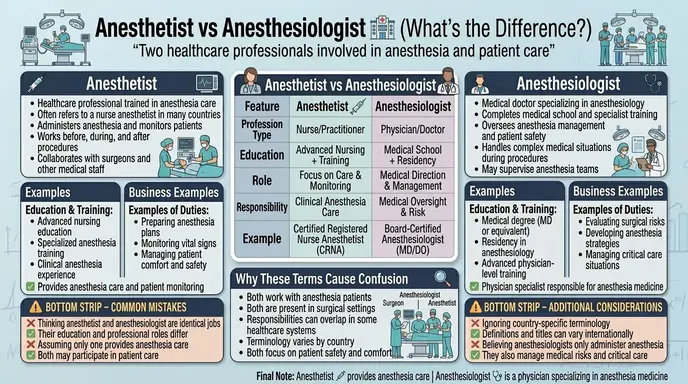
In simple words, an anesthesiologist is a medical doctor who specializes in anesthesia, pain management, and perioperative care, while an anesthetist is a broader term that may refer to different anesthesia professionals depending on the country.
In some regions, anesthetist can refer to a physician anesthesiologist, while in others it may refer to a nurse anesthetist or another trained anesthesia provider.
This guide explains anesthetists and anesthesiologists clearly, including definitions, education requirements, responsibilities, similarities, real world examples, and healthcare applications.
Quick Answer: Difference Between Anesthetist and Anesthesiologist
The main difference between anesthetist and anesthesiologist is training and professional designation.
- An anesthesiologist is a licensed medical doctor (MD or equivalent) specializing in anesthesia and perioperative medicine.
- An anesthetist is a broader term that can refer to various trained professionals who administer anesthesia, depending on the healthcare system.
For example:
Before a major surgery, an anesthesiologist may evaluate the patient, create the anesthesia plan, manage complications, and supervise anesthesia care.
An anesthetist may assist or provide anesthesia services according to local regulations and qualifications.
Definition of Anesthetist and Anesthesiologist
- Anesthetist: A healthcare professional trained to administer anesthesia. The exact role depends on the country and healthcare system.
- Anesthesiologist: A physician who has completed medical school and specialized training in anesthesia, pain management, and perioperative care.
Simple Example
- Anesthetist = trained anesthesia provider
- Anesthesiologist = physician specialist in anesthesia
Pronunciation of Both (US & UK)
| Term | US Pronunciation | UK Pronunciation |
| Anesthetist | uh nes thuh tist | an es the tist |
| Anesthesiologist | an es thee zee ol uh jist | an es thee see ol uh jist |
Now let’s understand this clearly through medical training, patient care, and surgical practice.
Difference Between Anesthetist and Anesthesiologist Comparison Table
| Feature | Anesthetist | Anesthesiologist |
| Definition | General anesthesia provider | Physician specializing in anesthesia |
| Medical Degree | Depends on country | Required |
| Scope of Practice | Varies by qualification | Full medical anesthesia care |
| Surgical Planning | May participate | Leads anesthesia planning |
| Diagnosis Ability | Depends on regulations | Full physician authority |
| Pain Management | Limited or specialized | Extensive expertise |
| Critical Care Training | Varies | Comprehensive |
| Education Path | Varies widely | Medical school + residency |
This table clearly shows the difference between anesthetist and anesthesiologist for quick understanding.
Key Differences Explained Between Anesthetist and Anesthesiologist
Medical Doctor Status
The biggest difference is physician training.
An anesthesiologist is a medical doctor who has completed:
- Medical school
- Residency training
- Specialized anesthesia education
An anesthetist may or may not be a physician depending on the country.
Level of Medical Training
Anesthesiologists typically undergo many years of advanced education covering:
- Pharmacology
- Physiology
- Critical care medicine
- Emergency management
- Pain medicine
This extensive training prepares them to manage complex medical situations during surgery.
Scope of Patient Care
Anesthesiologists often manage:
- Preoperative assessment
- Intraoperative anesthesia
- Postoperative recovery
- Chronic pain treatment
- Intensive care support
Some anesthetists have narrower scopes depending on local regulations.
Decision Making Authority
Anesthesiologists typically have full responsibility for:
- Anesthesia planning
- Medication selection
- Emergency intervention
- Airway management
They oversee patient safety throughout procedures.
Healthcare System Differences
Terminology varies internationally.
For example:
- In some countries, “anesthetist” refers to a physician specialist.
- In others, it may refer to a non physician anesthesia professional.
This is one reason many users get confused about the difference.
Why Do These Roles Exist?
Modern surgery requires specialized professionals to safely manage pain, unconsciousness, breathing, and vital functions during procedures.
Anesthesia care became increasingly complex as surgery advanced. Different healthcare systems developed various professional roles to meet growing patient needs while maintaining safety standards.
How an Anesthesiologist Works
Preoperative Evaluation
Before surgery, the anesthesiologist reviews:
- Medical history
- Current medications
- Allergies
- Health risks
This helps create a safe anesthesia plan.
Anesthesia Administration
During surgery, anesthesiologists monitor:
- Heart rate
- Blood pressure
- Oxygen levels
- Breathing function
Their goal is to keep the patient stable and comfortable.
Emergency Management
Anesthesiologists are trained to respond rapidly to:
- Airway emergencies
- Allergic reactions
- Cardiac complications
- Unexpected surgical events
How an Anesthetist Works
Anesthesia Delivery
Depending on qualifications and regulations, anesthetists may:
- Administer anesthesia
- Monitor patients
- Assist anesthesia teams
- Support surgical procedures
Team Based Care
Many healthcare systems use anesthesia care teams that include:
- Anesthesiologists
- Nurse anesthetists
- Anesthesia assistants
- Surgical staff
Teamwork improves efficiency and patient care.
Difference Between Anesthetist and Anesthesiologist in Real Life
| Situation | Anesthetist | Anesthesiologist |
| Routine surgery | May provide anesthesia | May supervise or provide care |
| Complex surgery | May assist | Usually leads care |
| High risk patient | Supports care team | Manages overall plan |
| ICU involvement | Depends on training | Often involved |
| Pain clinics | Limited in some systems | Commonly involved |
Both roles contribute significantly to patient safety.
Difference Between Anesthetist and Anesthesiologist in Healthcare
Surgical Procedures
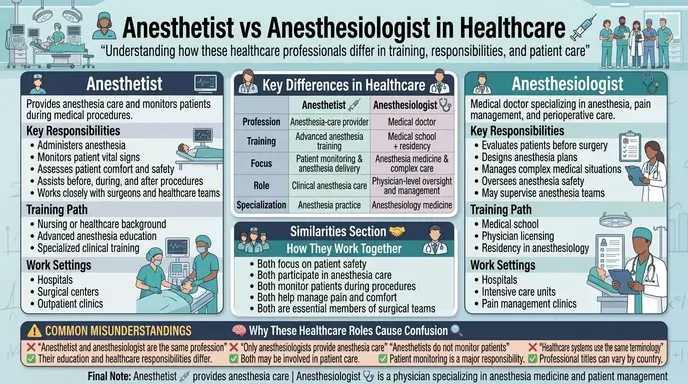
Anesthesia professionals help ensure:
- Pain control
- Patient comfort
- Safe unconsciousness
- Stable vital signs
Pain Management
Many anesthesiologists specialize in:
- Chronic pain treatment
- Nerve blocks
- Spine interventions
- Cancer pain management
Critical Care
Some anesthesiologists also work in intensive care units and emergency settings.
Real Life Examples with Anesthetist and Anesthesiologist
Knee Replacement Surgery
An anesthesiologist may assess risks and create the anesthesia strategy.
An anesthetist may assist in delivering care depending on the healthcare setting.
Emergency Surgery
Complex emergencies often require physician level anesthesia expertise.
Childbirth Epidurals
Anesthesia professionals frequently provide epidural pain relief during labor.
Outpatient Procedures
Both anesthetists and anesthesiologists may participate in same day surgical care.
Intensive Care Treatment
Anesthesiologists often help manage critically ill patients requiring advanced monitoring.
Difference + Similarity Between Anesthetist and Anesthesiologist
| Feature | Anesthetist | Anesthesiologist | Similarity |
| Anesthesia Knowledge | Yes | Yes | Both specialize in anesthesia care |
| Patient Monitoring | Yes | Yes | Both ensure safety |
| Surgical Support | Yes | Yes | Both work in operating rooms |
| Medical Degree | Varies | Required | Both require specialized training |
| Pain Management | Sometimes | Extensive | Both may participate |
| Team Collaboration | Yes | Yes | Both work with surgeons and nurses |
This table clearly shows the difference and similarity between anesthetist and anesthesiologist for quick understanding.
Why People Get Confused Between Anesthetist and Anesthesiologist
International Terminology
Different countries use the terms differently.
Similar Daily Responsibilities
Both may be involved in anesthesia administration.
Team Based Care Models
Patients often interact with multiple anesthesia professionals during the same procedure.
Media and Public Usage
Healthcare terminology is frequently simplified in news articles and public discussions.
Common Mistakes with Anesthetist and Anesthesiologist
| Mistake | Correct Understanding |
| Thinking the terms always mean the same thing | Definitions vary by country |
| Assuming every anesthetist is a physician | Not always |
| Believing anesthesiologists only administer anesthesia | They manage broader patient care |
| Ignoring training differences | Education requirements differ significantly |
| Assuming one role is unnecessary | Both contribute to safe care |
Quick Memory Tip
- Anesthetist = anesthesia professional
- Anesthesiologist = physician anesthesia specialist
When to Use Each Term
Use “Anesthetist” When:
- Referring generally to an anesthesia provider
- Discussing international healthcare systems
- Describing non physician anesthesia professionals where applicable
Use “Anesthesiologist” When:
- Referring specifically to a physician specialist
- Discussing medical anesthesia leadership
- Talking about advanced anesthesia and pain management care
Using the correct term improves medical accuracy.
Why People Get Confused in Anesthetist and Anesthesiologist
Similar Job Functions
Both help deliver anesthesia during procedures.
Shared Work Environment
Both commonly work in operating rooms.
Regional Language Differences
Healthcare systems define the terms differently.
Public Awareness
Many patients simply know that someone “puts them to sleep” for surgery without understanding the professional distinctions.
Expert Insight
From a healthcare perspective, patient safety depends less on terminology and more on training, experience, teamwork, and adherence to medical standards.
However, understanding the distinction between anesthetists and anesthesiologists helps patients better understand who is managing their care.
Anesthesiologists undergo extensive physician level training that prepares them to handle complex medical conditions, emergencies, critical care situations, and advanced pain management.
Meanwhile, many anesthetists play valuable roles within anesthesia care teams and contribute significantly to safe surgical outcomes.
In modern healthcare, anesthesia is one of the safest medical specialties because of rigorous training, advanced monitoring technologies, and collaborative patient care models.
Frequently Asked Questions
What is the main difference between an anesthetist and an anesthesiologist?
An anesthesiologist is a physician specialist, while anesthetist is a broader term that may refer to different anesthesia professionals.
Is an anesthesiologist a doctor?
Yes. An anesthesiologist is a licensed medical doctor who specializes in anesthesia.
Can an anesthetist administer anesthesia?
Yes, depending on their qualifications and local regulations.
Who manages anesthesia during surgery?
This depends on the healthcare system, but anesthesiologists often lead anesthesia care for complex procedures.
Do anesthesiologists treat pain?
Yes. Many specialize in acute and chronic pain management.
Why are anesthesia professionals important?
They help ensure patient comfort, safety, and stable vital functions during procedures.
Are anesthetists and anesthesiologists found in all countries?
Yes, but terminology and professional roles vary internationally.
Which role has more medical training?
Generally, anesthesiologists have the most extensive physician level anesthesia training.
Conclusion
Understanding the difference between anesthetist and anesthesiologist becomes easier once you focus on training, qualifications, and scope of practice.
An anesthesiologist is a physician who specializes in anesthesia, pain management, and perioperative medicine, while anesthetist is a broader term that may refer to various anesthesia professionals depending on the country and healthcare system.
Although both roles contribute to patient safety and anesthesia care, anesthesiologists typically have the highest level of medical training and responsibility for complex anesthesia management.
At the same time, anesthetists remain valuable members of modern healthcare teams and play important roles in surgical and procedural care.
By understanding the difference between anesthetist and anesthesiologist, patients can better navigate healthcare discussions and gain a clearer picture of the professionals involved in their treatment.
Discover More Articles!
Difference Between Liberty and Freedom: With in Examples
Difference Between Clip and Magazine:In 30 Seconds

James Whitmore. Labdiff.com is my english grammar comparision website. I explore the history and evolution of English words. I write detailed comparisons explaining why spellings change over time and how British and American English diverged. My articles add depth and credibility to grammar comparison topics.