Many users get confused about the difference between then and than with examples because both words look similar but completely mean different things.
In everyday writing, students often mix them in essays, emails, and even on platforms like Google Docs or social media.
That’s why understanding the difference between then and than with examples is important for clear and correct English.
In simple words, the confusion comes from pronunciation and quick typing habits. However, once you understand the logic behind each word, the difference between then and than with examples becomes very easy to remember.
This guide will break everything down in a simple, human friendly way so you never mix them again.
You’ll learn meaning, usage, examples, comparison tables, common mistakes, and real life situations where these words are used. Let’s understand this clearly and permanently.
🟢 Quick Answer: Difference Between Then and Than With Examples
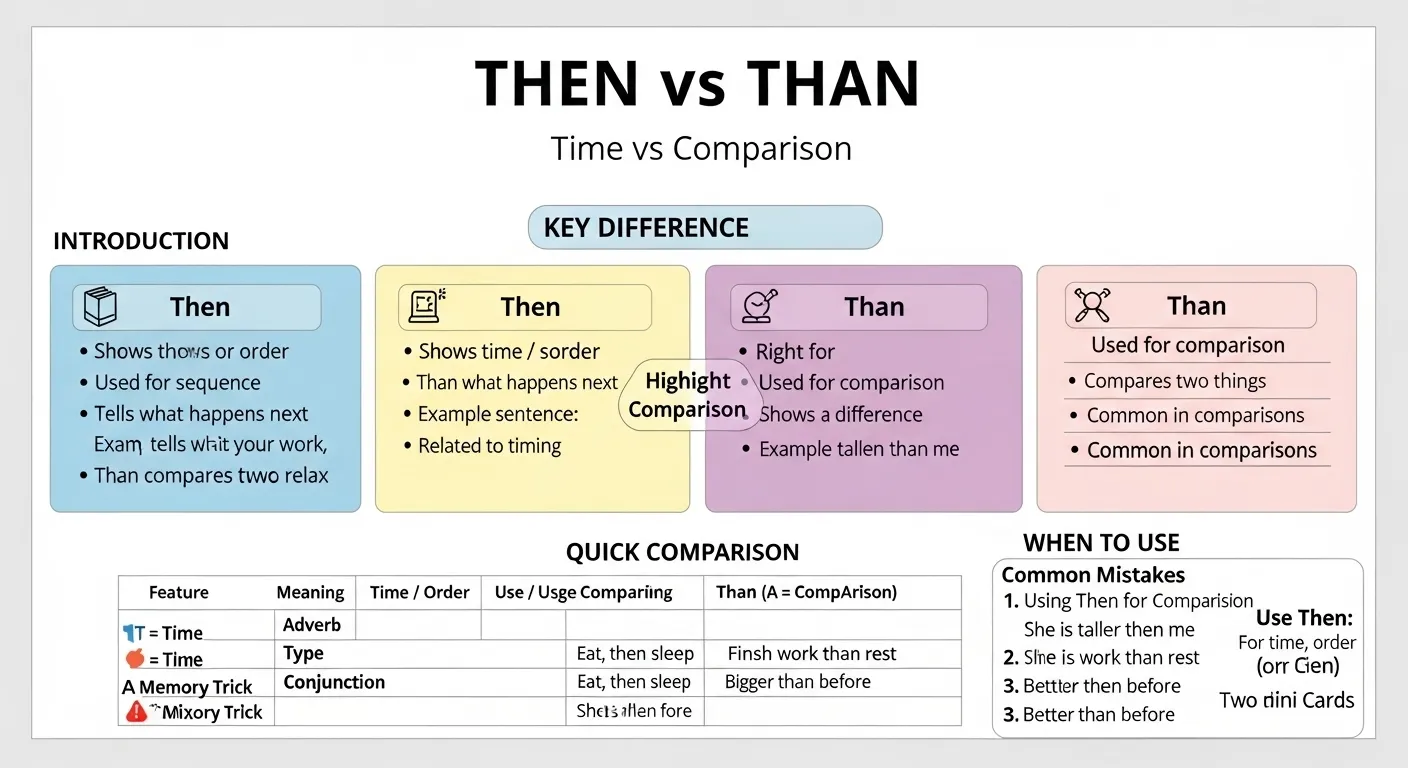
Then is used for time or sequence (what happens next).
Than is used for comparison (showing difference between two things).
👉 Example:
- I will eat dinner then go to sleep.
- She is taller than her sister.
🟢 Definitions of Then and Than
Then:
“Then” refers to time, order, or consequence. It shows what happens next in a sequence.
Than:
“Than” is used to compare two things, people, or situations.
🟢 Pronunciation (US & UK Insight)
Understanding pronunciation helps reduce confusion in the difference between then and than with examples.
- Then: /ðen/ (same in US & UK)
- Than: /ðæn/ (US) or /ðən/ (UK softer sound)
👉 Linking idea: Even though they sound similar, their meaning changes completely based on context, not pronunciation.
🟢 Comparison Table: Then vs Than
| Feature | Then | Than | Similarity |
| Meaning | Time or sequence | Comparison | Both are common English words |
| Usage | Events order | Comparing two things | Used in sentences |
| Grammar Role | Adverb | Conjunction | Help structure meaning |
| Example | We ate, then left | She is smarter than me | Used in daily speech |
| Context | Past or future sequence | Comparative sentences | Found in spoken English |
| Confusion Reason | Similar spelling | Similar spelling | Often misused by learners |
This table clearly shows the difference and similarity between then and than with examples for quick understanding.
🟢 Key Differences Explained Between Then and Than With Examples
1. Time vs Comparison
- Then shows time.
- Than shows comparison.
👉 Example: I studied, then slept. / He is faster than me.
2. Sequence of Events
- “Then” connects actions in order.
👉 Example: Brush your teeth, then go to bed.
3. Making Comparisons
- “Than” compares people or things.
👉 Example: A car is faster than a bike.
4. Cause and Effect
- “Then” shows result.
👉 Example: If you work hard, then you succeed.
5. Grammar Function
- “Then” = adverb of time
- “Than” = comparative conjunction
6. Real Communication Use
- Used in emails, exams, chats, and professional writing in tools like Google Docs, Microsoft Word, and social platforms like Instagram captions.
🟢 Deep Explanation: Why This Confusion Exists
The confusion in difference between then and than with examples mainly happens because:
- Both words sound similar in fast speech
- Keyboard typing errors happen quickly
- Auto correct sometimes fails
- Non native learners mix grammar rules
- Social media encourages informal writing
Even platforms like Google search trends show high queries for this topic, proving it is a global learning issue.
🟢 How English Grammar Uses Then and Than
English grammar systems, including educational tools used in schools and platforms like Grammarly or Google Docs, classify:
- “Then” under temporal adverbs
- “Than” under comparative conjunctions
This classification helps search engines and language models like those used in Google understand intent correctly when users search for the difference between then and than with examples.
🟢 Difference and Similarity Table (Detailed View)
| Feature | Then | Than | Similarity |
| Type | Time related word | Comparison word | Both are functional grammar words |
| Sentence role | Sequence marker | Comparison linker | Both connect ideas |
| Usage in writing | Storytelling, instructions | Comparisons, opinions | Used in all English levels |
| Difficulty level | Easy | Easy | Confusing due to sound |
| Real life use | Instructions, steps | Reviews, judgments | Everyday communication |
🟢 Common Mistakes with Then and Than
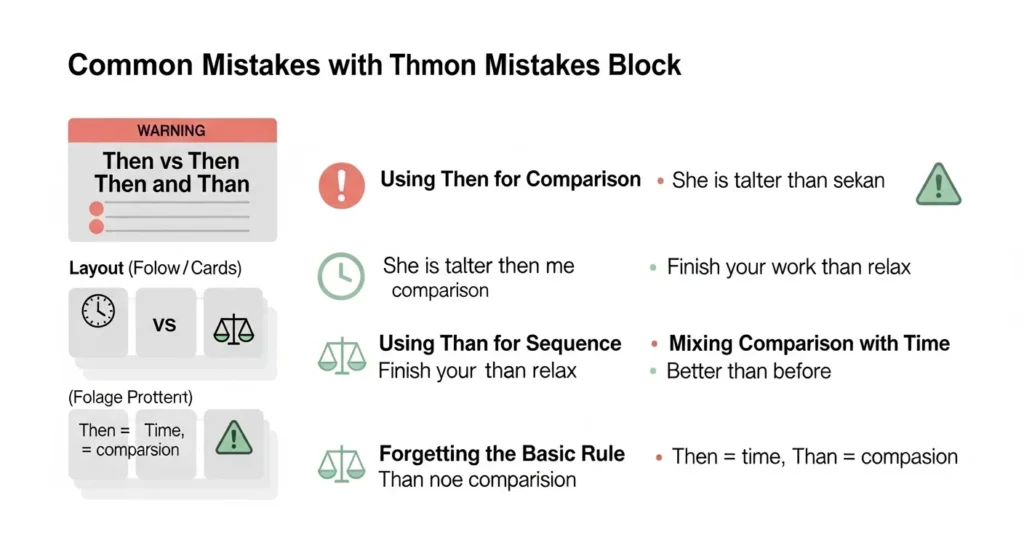
❌ 1. Wrong comparison usage
“I am better then you.”
✔ Correct: I am better than you.
❌ 2. Wrong sequence usage
“First eat than sleep.”
✔ Correct: First eat, then sleep.
❌ 3. Mixing in exams
Students often lose marks due to spelling confusion.
❌ 4. Social media typing errors
Fast typing leads to wrong word usage.
❌ 5. Auto correct dependency
Users trust auto correct without checking grammar.
🟢 Real Life Examples of Then and Than
📌 Personal Life
- I finished homework, then went out.
- She is more organized than me.
📌 Academic Use
- Study chapter one, then chapter two.
- Physics is harder than chemistry.
📌 Business Use
- We will review the report, then approve it.
- This product is cheaper than competitors.
📌 Social Media Use
- Post picture, then add caption.
- This filter looks better than the previous one.
🟢 When to Use Then and Than
Use Then when:
- Talking about time
- Explaining steps
- Showing results
Use Than when:
- Comparing things
- Ranking items
- Expressing preference
🟢 Why People Get Confused
People often struggle with the difference between then and than with examples because:
- English spelling inconsistencies
- Similar pronunciation
- Lack of grammar practice
- Over reliance on informal communication
- Influence of texting culture
Even digital platforms like Instagram captions and WhatsApp messages increase informal usage errors.
🟢 How Search Engines Understand Then vs Than
Search engines like Google use NLP (Natural Language Processing) to detect meaning:
- “then” signals time based intent
- “than” signals comparison intent
So when users search the difference between then and than with examples, Google identifies educational intent and shows grammar explanations, examples, and comparison content.
This is why structured content with clear examples ranks higher in search results.
🟢 Expert Insight
From a language learning perspective, mastering small grammar differences like then vs than improves overall writing clarity. In real academic and professional environments, such small mistakes can affect credibility.
Educators and language trainers often recommend practicing with sentence substitution techniques.
For example, replacing the word and checking if meaning still fits time or comparison helps build long term memory.
This simple rule based approach is widely used in ESL (English as a Second Language) teaching systems.
🟢 FAQ:
1. What is the main difference between then and than?
Then shows time; than shows comparison.
2. Can then and than be used in the same sentence?
Yes, but with different meanings.
3. Why do people confuse then and than?
Because they sound similar when spoken.
4. Is then used for comparison?
No, only for time or sequence.
5. Is than used for time?
No, it is only for comparison.
6. Which is correct: better then or better than?
Better than is correct.
7. How can I remember then vs than?
Then = time (think “when”), Than = comparison (think “difference”).
8. Are then and than homophones?
They are near homophones in some accents.
9. Where are these words commonly used?
In writing, speaking, exams, and digital content.
10. What is the easiest trick to avoid mistakes?
Check: If it’s time → then, if comparison → than.
🟢 Conclusion
Understanding the difference between then and than with examples is essential for clear and correct English communication.
Although both words look similar, their meanings are completely different. “Then” always relates to time, sequence, or result, while “than” is strictly used for comparison.
In real life usage, mastering this small grammar rule improves writing quality in exams, emails, social media posts, and professional communication.
Many learners confuse these words due to similar pronunciation, but once you practice with examples, the difference becomes automatic.
To fully remember the rule, always think: then = time, than = comparison. With consistent practice and real world usage, you will never mix them again. This small improvement can significantly boost your English accuracy and confidence.
Discover More Articals!
Difference Between Affect and Effect (Simple Words + Examples)
Difference Between Mono and Strep: Symptoms, Causes & Treatment

labdiff.com is my English grammar comparison website where I simplify confusing words, spelling differences, and usage rules through clear explanations and examples. My goal is to help learners, writers, and students understand English easily and use correct grammar with confidence.