Many people get confused about the difference between affect and effect because both words sound similar and are used in related situations. Even advanced English learners mix them up in writing and speaking.
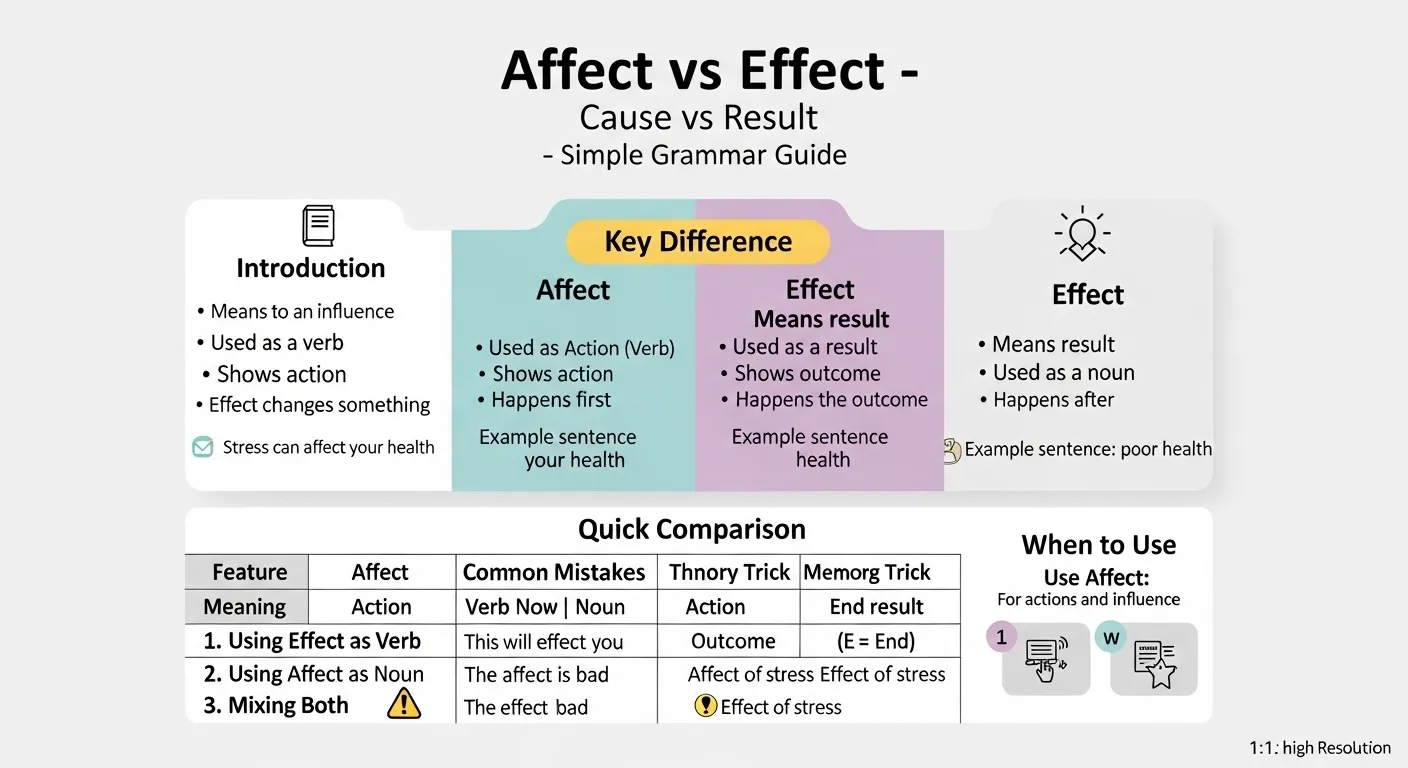
The difference between affect and effect is mainly about verb vs noun. In simple words, affect usually means “to influence something,” while effect means “the result of something.”
If you’ve ever searched “affect vs effect examples” or “how to use affect and effect correctly,” this guide will make it super easy to understand with real-life examples.
⚡ Quick Answer: Difference Between Affect and Effect
👉 Affect = action (to influence)
👉 Effect = result (outcome)
Example:
- Lack of sleep affects your mood.
- The effect of lack of sleep is tiredness.
📖 Definition of Affect and Effect
- Affect: To change, influence, or impact something (usually a verb).
- Effect: The result or outcome of a change (usually a noun).
🔊 Pronunciation (US & UK)
- Affect: /əˈfekt/ (US & UK)
- Effect: /ɪˈfekt/ (US & UK)
Now let’s understand clearly with comparisons.
📊 Affect vs Effect: Simple Comparison Table
| Feature | Affect | Effect |
| Part of Speech | Verb (action) | Noun (thing/result) |
| Meaning | To influence | Result or outcome |
| Usage | Before result happens | After result happens |
| Easy Memory Trick | A = Action | E = End result |
| Example | Noise affects sleep | Effect = poor sleep |
🔑 Key Differences Explained Between Affect and Effect
1. Action vs Result
- Affect = doing something (influencing)
- Effect = what happens after
👉 Example:
Stress affects your health → Bad health is the effect
2. When to Use Each
Use affect when something is changing something else.
Use effect when talking about the final outcome.
3. Sentence Position
- Affect comes before the result
- Effect comes after the action
4. Easy Memory Trick
👉 Affect = A = Action
👉 Effect = E = End result
🧠 What Does “Affect” Mean in Real Use?
Affect is used when one thing influences another.
Examples:
- Weather affects travel plans
- Social media (like Instagram) can affect mood
- Lack of exercise affects health
👉 In all cases, something is causing a change.
🎯 What Does “Effect” Mean in Real Use?
Effect is the result of a change.
Examples:
- The effect of rain is wet roads
- The effect of stress is tiredness
- The effect of too much screen time is eye strain
👉 It answers: “What happened?”
📊 Difference and Similarity Table Between Affect and Effect
| Feature | Affect | Effect | Similarity |
| Meaning | Influence | Result | Both related to change |
| Grammar | Verb | Noun | Used in same context |
| Usage | Cause stage | Result stage | Connected logically |
| Position | Before outcome | After outcome | Same sentence often |
| Example | Study affects grades | Effect = good marks | Show cause & result |
This table clearly shows the difference and similarity between difference between affect and effect for quick understanding.
⚠️ Common Mistakes with Affect and Effect
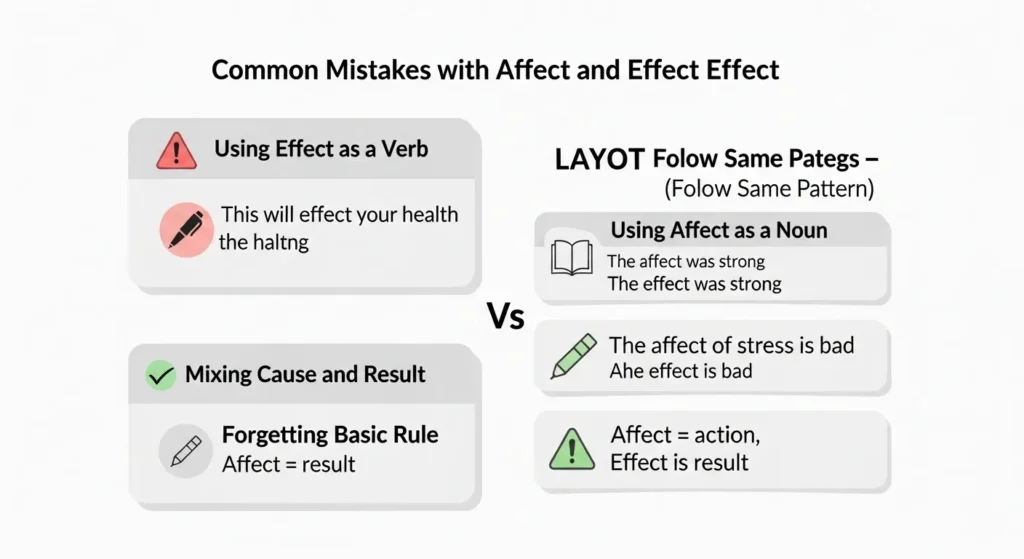
1. Using effect as a verb
❌ “This will effect your mood”
✔ “This will affect your mood”
2. Mixing positions
❌ “The affect of rain…”
✔ “The effect of rain…”
3. Forgetting the rule
❌ Random guessing
✔ Use A = Action, E = End
4. Overthinking
❌ Complicating usage
✔ Keep it simple: cause vs result
🌍 Real-Life Examples with Affect and Effect
1. Health Example
- Junk food affects your body
- The effect is weight gain
2. Study Example
- Hard work affects results
- The effect is good grades
3. Technology Example
- Too much use of YouTube affects sleep
- The effect is fatigue
4. Weather Example
- Rain affects traffic
- The effect is delays
🧭 When to Use Each (Simple Rule)
- Use affect when:
- Something is influencing another thing
- You are describing an action
- Use effect when:
- You are talking about a result
- You want to describe an outcome
🤔 Why People Get Confused in Affect vs Effect
- Similar spelling
- Similar pronunciation
- Used in same sentences
- Taught incorrectly in some cases
🔍 How Search Engines Understand “Affect vs Effect”
Search engines like Google recognize:
- Educational intent
- Grammar confusion queries
- Need for simple explanations
That’s why easy examples and tables rank better they solve the confusion quickly.
🧠 Expert Insight
From a language learning perspective, mastering small differences like affect vs effect improves writing clarity and confidence. In professional communication, using the wrong word can change meaning.
In real-world writing:
- “Affect” shows cause
- “Effect” shows result
👉 Understanding this pair is one of the most useful grammar skills in English.
❓ FAQs
1. What is the easiest way to remember affect vs effect?
A = Action (affect), E = End (effect)
2. Is affect always a verb?
Usually yes, but rare exceptions exist.
3. Is effect always a noun?
Mostly yes, but sometimes used as a verb in formal English.
4. Can both be used in one sentence?
Yes: “Stress affects health, and the effect is fatigue.”
5. Which one should I use in exams?
Use affect for action, effect for result.
6. Why are they confusing?
Because they look and sound similar.
🏁 Conclusion
The difference between affect and effect becomes very easy once you understand the core idea. Affect is about influencing something, while effect is the result of that influence.
In simple terms:
👉 Affect = action
👉 Effect = result
With this clear rule and examples, you can now use both words correctly in writing and speaking without confusion.
Discover More Articals!
Difference Between IPA and Beer: Taste, Types & What to Choose
Difference Between Flannel and Plaid: With Examples(2026)

James Whitmore. Labdiff.com is my english grammar comparision website. I explore the history and evolution of English words. I write detailed comparisons explaining why spellings change over time and how British and American English diverged. My articles add depth and credibility to grammar comparison topics.