Many home cooks unknowingly ruin perfectly good meals simply because they do not understand the difference between simmer and boil.
A soup turns cloudy, meat becomes tough, or pasta cooks unevenly. Most people blame the recipe, but the real issue is often the cooking temperature.
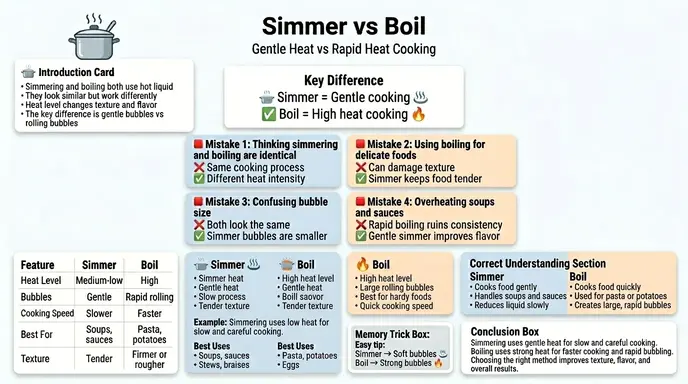
The difference between simmer and boil comes down to heat intensity, bubble size, and cooking purpose. Simmering uses gentle heat, while boiling uses high heat and rapid bubbling.
If you are cooking pasta, soup, curry, rice, or sauces, understanding this cooking technique can completely change your results.
Even professional chefs in restaurants like Olive Garden and culinary schools teach simmering and boiling as two separate methods.
In this guide, you will learn:
- what simmering and boiling mean
- how they look and work
- key cooking differences
- when to use each method
- common mistakes beginners make
Let’s understand this clearly.
🟢 Quick Answer: Difference Between Simmer and Boil
Simmering means cooking liquid at a gentle temperature with small soft bubbles.
Boiling means cooking liquid at a high temperature with large rapid bubbles.
👉 Example:
- Soup cooking slowly = Simmer
- Pasta water bubbling aggressively = Boil
🟢 Definition of Simmer and Boil
- Simmer: A gentle cooking method where liquid stays just below boiling with small occasional bubbles.
- Boil: A cooking method where liquid reaches high heat and bubbles rapidly across the surface.
🟢 Pronunciation Guide
- Simmer → “SIM-er” (US & UK)
- Boil → “BOYL” (US & UK)
Now let’s see why these two cooking methods create very different results in real kitchens.
🟢 Simmer vs Boil Comparison Table
| Feature | Simmer | Boil |
| Heat Level | Medium-low | High |
| Bubble Size | Small gentle bubbles | Large aggressive bubbles |
| Temperature | Around 85–96°C | Around 100°C |
| Cooking Speed | Slower | Faster |
| Best For | Soups, sauces, curries | Pasta, potatoes, eggs |
| Texture Result | Tender and flavorful | Firm or fast-cooked |
| Water Movement | Light movement | Strong rolling movement |
| Risk | Under-cooking if too low | Overcooking if too high |
🟢 KEY DIFFERENCES EXPLAINED BETWEEN Simmer and Boil
1. Heat Intensity
Simmering uses lower heat. Boiling uses maximum heat.
👉 Example:
Rice often cooks better on a simmer, while pasta needs boiling water.
2. Bubble Appearance
Simmering creates tiny bubbles that gently rise.
Boiling creates large bubbles across the entire pot.
Many beginners identify the wrong heat because they only look for “any bubbles.”
3. Cooking Purpose
Simmering develops flavor slowly.
Boiling cooks food quickly.
👉 Example:
- Curry = simmer
- Noodles = boil
4. Texture Changes
Boiling can break delicate foods apart.
Simmering keeps food soft and controlled.
This is why soups taste smoother when simmered.
5. Water Movement
Boiling creates aggressive movement inside the pot.
Simmering keeps ingredients more stable.
👉 Real kitchen insight: Fish and dumplings often fall apart if boiled too hard.
6. Moisture Evaporation
Boiling evaporates liquid quickly.
Simmering reduces liquid slowly and evenly.
That is important for sauces and stews.
🟢 What is Simmering and How Does It Work?
Simmering is a gentle cooking process that happens just below boiling temperature.
Signs of simmering:
- Small bubbles
- Light steam
- Gentle surface movement
Best foods for simmering:
- soups
- curries
- stews
- sauces
- beans
In real cooking, simmering helps ingredients absorb flavor slowly.
👉 Think about chicken soup. Slow simmering pulls flavor from vegetables and meat without making the broth cloudy.
Professional kitchens and brands like Le Creuset often design cookware specifically for controlled simmer cooking.
🟢 What is Boiling and Why is It Used?
Boiling happens when liquid reaches its highest cooking temperature.
Signs of boiling:
- Rapid bubbling
- Strong steam
- Rolling water movement
Best foods for boiling:
- pasta
- eggs
- potatoes
- noodles
Boiling is mainly used when speed matters.
👉 Example:
Pasta needs strong boiling water to cook evenly and prevent sticking.
🟢 Why Simmering and Boiling Exist in Cooking
Different foods react differently to heat.
Simmering exists because:
- slow cooking improves flavor
- proteins stay tender
- sauces reduce properly
Boiling exists because:
- fast heat cooks food quickly
- starches soften faster
- water reaches maximum cooking energy
Understanding this difference improves cooking consistency dramatically.
🟢 Real-Life Examples of Simmer and Boil
1. Cooking Soup
A soup left at full boil becomes cloudy.
A simmer keeps broth clear and flavorful.
2. Cooking Pasta
Simmering pasta makes it sticky.
Boiling cooks it properly.
3. Making Curry
A hard boil can split cream or yogurt.
Simmering keeps the sauce smooth.
4. Hard-Boiled Eggs
Eggs usually start with boiling water, then lower to simmer to avoid cracking.
🟢 Difference and Similarity Table Between Simmer and Boil
| Feature | Simmer | Boil | Similarity |
| Meaning | Gentle cooking | Rapid cooking | Both use heated liquid |
| Heat | Medium-low | High | Both cook food with water |
| Bubble Type | Small bubbles | Large bubbles | Both produce steam |
| Speed | Slow | Fast | Both soften ingredients |
| Best Use | Flavor development | Quick cooking | Both used daily in kitchens |
| Food Texture | Tender | Firm or broken | Both affect texture |
| Energy Use | Lower | Higher | Both require heat source |
This table clearly shows the difference and similarity between simmer and boil for quick understanding.
🟢 Common Mistakes with Simmer and Boil
❌ Mistake 1: Boiling Everything
Many beginners boil soups and sauces aggressively.
✔ Fix: Lower heat after liquid heats up.
❌ Mistake 2: Simmering Pasta
Pasta needs active boiling water.
✔ Fix: Use a rolling boil for pasta.
❌ Mistake 3: Confusing Small Bubbles with Boiling
Tiny bubbles around the edges usually mean simmering, not full boiling.
✔ Fix: Watch the whole surface movement.
❌ Mistake 4: Cooking Meat Too Fast
High boiling heat can toughen meat.
✔ Fix: Simmer slowly for tenderness.
🟢 Real Life Examples with Simmer and Boil
- Cooking ramen noodles → Boil
- Making tomato sauce → Simmer
- Preparing rice → Simmer after boiling
- Cooking potatoes → Boil
- Slow-cooking lentils → Simmer
🟢 When to Use Simmer vs Boil
Use Simmer When:
- making soups
- cooking sauces
- tenderizing meat
- reducing liquids
Use Boil When:
- cooking pasta
- blanching vegetables
- preparing eggs
- cooking potatoes quickly
🟢 Why People Get Confused Between Simmer and Boil
Several reasons cause confusion:
- both involve bubbles
- recipes often explain poorly
- beginners focus only on temperature
- visual differences seem small
Social media cooking videos also exaggerate boiling for dramatic effect, which misleads many home cooks.
🟢 How Cooking Systems and Food Science Understand Simmer vs Boil
Food science explains that heat changes:
- protein structure
- starch texture
- liquid evaporation
- flavor extraction
Platforms like YouTube and recipe publishers often teach simmering as a key professional cooking technique because it improves texture and flavor control.
Search engines like Google also recognize strong user intent around cooking confusion terms such as:
- “should soup simmer or boil”
- “difference between simmering and boiling”
- “what does simmer mean”
🟢 Expert Insight
In professional kitchens, controlling heat is considered one of the most important cooking skills.
Most beginners focus heavily on ingredients but ignore temperature control. In real scenarios, the same recipe can taste completely different depending on If it was simmered or boiled.
Experienced chefs usually simmer foods longer because:
- flavor develops better
- textures stay smoother
- ingredients remain intact
That is why restaurant soups, curries, and sauces often taste richer than rushed home cooking.
🟢 FAQ
Is simmering the same as boiling?
No. Simmering uses gentler heat and smaller bubbles.
Which is hotter, simmer or boil?
Boiling is hotter.
Should soup simmer or boil?
Most soups should simmer for better flavor.
Can pasta cook in simmering water?
It can, but boiling works much better.
Why does meat become tough when boiled?
High heat tightens protein fibers.
What temperature is simmering?
Usually around 85–96°C (185–205°F).
Do sauces thicken faster when boiling?
Yes, but boiling can ruin texture.
Why do chefs prefer simmering?
Because it gives better flavor and texture control.
🟢 Conclusion
The difference between simmer and boil may seem small, but it changes how food tastes, looks, and feels.
Simmering uses gentle heat and works best for soups, sauces, curries, and slow flavor development. Boiling uses high heat and is better for fast cooking foods like pasta and potatoes.
Understanding the difference between simmer and boil helps you avoid common cooking mistakes, improve texture, and cook with more confidence.
Once you learn to control heat properly, even simple meals can taste more professional and balanced.
Discover More Articles!
Difference Between DoS and DDoS: Guide with Examples
Difference Between Espresso and Cappuccino (Simple & Clear Guide)

James Whitmore. Labdiff.com is my english grammar comparision website. I explore the history and evolution of English words. I write detailed comparisons explaining why spellings change over time and how British and American English diverged. My articles add depth and credibility to grammar comparison topics.