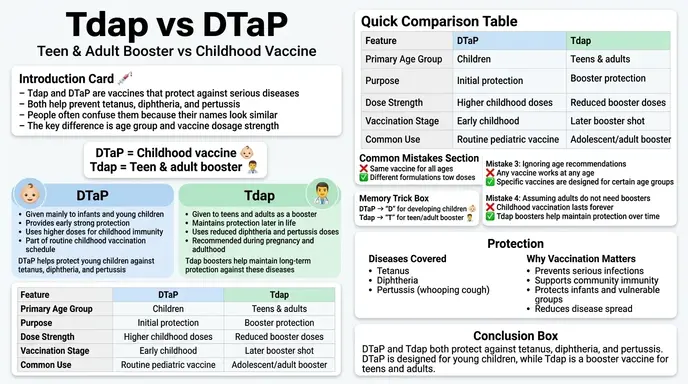
Many parents, students, and adults get confused about the difference between Tdap and DTaP because both vaccines protect against the same diseases and their names look almost identical.
However, they are designed for different age groups and contain different vaccine strengths. Understanding the difference is important for child immunization schedules, school requirements, pregnancy care, and adult booster shots.
In simple words, DTaP is mainly given to young children, while Tdap is a booster vaccine for older children, teenagers, and adults.
Both vaccines protect against tetanus, diphtheria, and pertussis (whooping cough), but they are not interchangeable in routine medical schedules.
This guide explains Tdap and DTaP clearly, including definitions, vaccine schedules, ingredients, similarities, side effects, real life examples, and why healthcare providers recommend each one.
Quick Answer: Difference Between Tdap and DTaP
The main difference between Tdap and DTaP is the age group and vaccine dosage strength.
- DTaP is given to infants and young children
- Tdap is a booster vaccine for older children, teens, and adults
For example:
A baby usually receives DTaP during childhood immunization visits, while a pregnant adult may receive a Tdap booster for protection against whooping cough.
Definition of Tdap and DTaP
- DTaP: A childhood vaccine that protects against diphtheria, tetanus, and pertussis using stronger pediatric doses.
- Tdap: A booster vaccine for adolescents and adults that protects against the same diseases with reduced diphtheria and pertussis components.
Simple Example
- DTaP = primary childhood protection
- Tdap = booster protection later in life
Pronunciation of Both (US & UK)
| Vaccine | US Pronunciation | UK Pronunciation |
| DTaP | dee tap | dee tap |
| Tdap | tee dap | tee dap |
Now let’s understand this clearly through vaccine schedules, protection levels, and real world healthcare use.
Difference Between Tdap and DTaP Comparison Table
| Feature | DTaP | Tdap | Similarity |
| Main Use | Childhood vaccine | Booster vaccine | Both protect against same diseases |
| Age Group | Infants and young children | Teens and adults | Both support immunity |
| Dosage Strength | Higher diphtheria and pertussis doses | Lower booster doses | Both contain tetanus protection |
| Schedule | Multiple early childhood doses | Usually booster doses | Both recommended by doctors |
| Purpose | Build initial immunity | Maintain immunity later | Both prevent serious infections |
| Pregnancy Use | Not typically used | Common during pregnancy | Both reduce pertussis risk |
| School Requirements | Early childhood immunization | Adolescent booster requirement | Both part of public health systems |
| Vaccine Type | Pediatric formulation | Adolescent/adult formulation | Both are combination vaccines |
This table clearly shows the difference and similarity between Tdap and DTaP for quick understanding.
Key Differences Explained Between Tdap and DTaP
Age Group Difference
The biggest difference is who receives the vaccine.
- DTaP is designed for babies and children under age 7
- Tdap is designed for older children, teenagers, and adults
This helps the immune system receive age appropriate protection.
Dosage Strength Difference
DTaP contains stronger diphtheria and pertussis components because young children need stronger primary immune training.
Tdap contains reduced doses because older individuals already have some immune memory from earlier vaccinations.
Booster vs Primary Protection
DTaP builds the body’s first protection during childhood.
Tdap refreshes or boosts immunity later in life after protection begins to weaken.
Pregnancy Recommendation
Healthcare providers commonly recommend Tdap during pregnancy to help protect newborn babies from whooping cough.
Organizations like Centers for Disease Control and Prevention and World Health Organization emphasize this recommendation in maternal health guidance.
Vaccine Schedule Difference
DTaP is usually given in a series of doses during infancy and early childhood.
Tdap is generally given:
- During adolescence
- During pregnancy
- As adult booster protection
Why Do Tdap and DTaP Exist?
Immunity against diseases like tetanus and pertussis can weaken over time. Children need strong initial immune protection, while older individuals need booster support to maintain immunity safely.
That is why healthcare systems use different vaccine formulations for different life stages rather than using one identical vaccine forever.
How Tdap and DTaP Work
Both vaccines train the immune system to recognize harmful bacteria and respond quickly if infection occurs.
The vaccines protect against:
- Tetanus
- Diphtheria
- Pertussis (whooping cough)
Tetanus Protection
Tetanus affects the nervous system and can cause severe muscle stiffness.
Diphtheria Protection
Diphtheria is a serious bacterial infection affecting the throat and breathing.
Pertussis Protection
Pertussis causes severe coughing and can be especially dangerous for infants.
Difference Between Tdap and DTaP in Vaccine Schedule
| Age Stage | Recommended Vaccine |
| Infancy | DTaP |
| Early childhood | DTaP boosters |
| Adolescence | Tdap booster |
| Pregnancy | Tdap |
| Adulthood | Tdap or Td boosters |
Vaccination schedules may vary slightly depending on country and healthcare guidance.
Difference Between Tdap and DTaP Side Effects
Common Side Effects of Both Vaccines
- Mild fever
- Soreness at injection site
- Fatigue
- Mild swelling
DTaP Side Effects
Young children may experience:
- Fussiness
- Temporary tiredness
- Mild appetite changes
Tdap Side Effects
Adults and teens may experience:
- Arm soreness
- Muscle aches
- Mild headache
Most side effects are temporary and mild.
Real Life Examples with Tdap and DTaP
Infant Immunization Visits
Babies commonly receive DTaP as part of routine pediatric vaccination schedules.
School Vaccine Requirements
Many schools require proof of Tdap booster vaccination before middle school enrollment.
Pregnancy Care
Doctors often recommend Tdap during pregnancy to protect newborns before infants can receive their own vaccines.
Workplace Healthcare Policies
Healthcare workers may receive Tdap boosters because they interact with vulnerable patients.
Digital Health Systems
Platforms supported by Google and healthcare apps increasingly help parents track vaccine schedules and booster reminders.
Difference + Similarity Between Tdap and DTaP
| Feature | DTaP | Tdap | Similarity |
| Diseases Covered | Tetanus, diphtheria, pertussis | Same diseases | Both prevent bacterial infections |
| Main Users | Young children | Teens and adults | Both improve immunity |
| Dose Strength | Higher pediatric dose | Lower booster dose | Both contain combination vaccines |
| Medical Goal | Initial immunity | Long term protection | Both reduce disease spread |
| Public Health Role | Childhood immunization | Booster maintenance | Both support community protection |
| Administration | Early childhood schedule | Later booster schedule | Both given by injection |
This table clearly shows the difference and similarity between Tdap and DTaP for quick understanding.
Why People Get Confused Between Tdap and DTaP
Similar Names
The vaccine names differ by only one letter capitalization pattern.
Same Disease Protection
Both vaccines protect against the same three diseases.
Similar Medical Discussions
Doctors often mention them together during immunization planning.
Booster Confusion
Many people do not realize immunity changes over time and requires different vaccine strengths later in life.
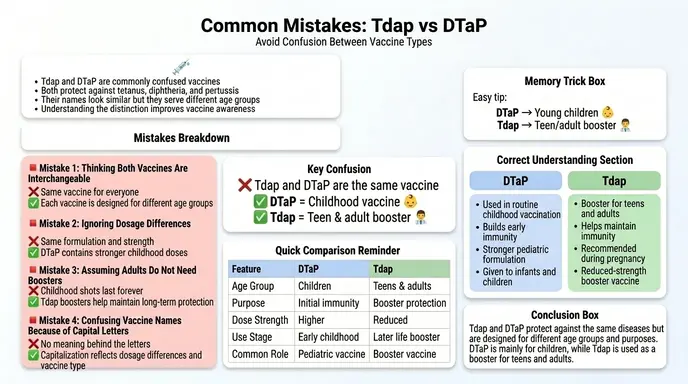
Common Mistakes with Tdap and DTaP
| Mistake | Correct Understanding |
| Thinking Tdap and DTaP are identical | They are age specific vaccines |
| Assuming adults receive DTaP | Adults usually receive Tdap |
| Ignoring booster schedules | Immunity weakens over time |
| Confusing vaccine timing | Childhood and adult schedules differ |
| Believing one vaccine lasts forever | Booster protection is important |
Quick Memory Tip
- DTaP = children
- Tdap = teens and adults booster
When to Use Tdap or DTaP
Use DTaP When:
- Vaccinating infants and young children
- Building early immune protection
- Following pediatric immunization schedules
Use Tdap When:
- Giving booster protection to older individuals
- Protecting pregnant adults
- Updating adolescent or adult immunity
Always follow guidance from licensed healthcare professionals.
Expert Insight
In real healthcare practice, one of the biggest misconceptions is that childhood vaccines provide lifelong protection without boosters.
Medical professionals understand that immunity against diseases like pertussis gradually decreases over time, which is why booster vaccines like Tdap are essential for adolescents and adults.
Pediatricians focus heavily on early DTaP vaccination because infants are especially vulnerable to serious complications from whooping cough.
Obstetricians also prioritize Tdap during pregnancy because maternal antibodies can help protect newborn babies before they are old enough for their own vaccine series.
Understanding vaccine timing and purpose is more important than simply memorizing names.
Frequently Asked Questions
What is the main difference between Tdap and DTaP?
DTaP is for young children, while Tdap is a booster for teens and adults.
Do both vaccines protect against the same diseases?
Yes. Both protect against tetanus, diphtheria, and pertussis.
Can adults receive DTaP?
DTaP is generally intended for children under age 7.
Why is Tdap recommended during pregnancy?
It helps protect newborn babies against whooping cough.
Is Tdap a booster shot?
Yes. Tdap is mainly used as booster protection.
How many DTaP doses do children receive?
Children usually receive multiple DTaP doses during early childhood.
Are vaccine side effects common?
Mild side effects like soreness or fatigue are relatively common and temporary.
Why do vaccine names look similar?
Because both vaccines target the same diseases but use different dosage formulations.
Conclusion
Understanding the difference between Tdap and DTaP becomes much easier once you focus on age group and vaccine purpose.
DTaP is mainly used to build strong early immunity in infants and young children, while Tdap is designed as a booster vaccine for adolescents, adults, and pregnant individuals.
Although both vaccines protect against tetanus, diphtheria, and pertussis, they are not interchangeable in routine immunization schedules.
The dosage strengths differ because immune system needs change throughout life. Childhood vaccines establish protection, while booster vaccines help maintain it later.
In practical healthcare settings, these vaccines play a major role in preventing serious bacterial infections and protecting vulnerable populations, especially infants.
Understanding when and why each vaccine is used helps parents, students, and adults make better informed healthcare decisions.
Once you fully understand the difference between Tdap and DTaP, vaccine schedules and medical recommendations become much clearer and easier to follow.
Discover More Articles!
Difference Between Chromosome and Chromatid:With Examples
Difference Between Diamond and Moissanite:With Examples

James Whitmore. Labdiff.com is my english grammar comparision website. I explore the history and evolution of English words. I write detailed comparisons explaining why spellings change over time and how British and American English diverged. My articles add depth and credibility to grammar comparison topics.