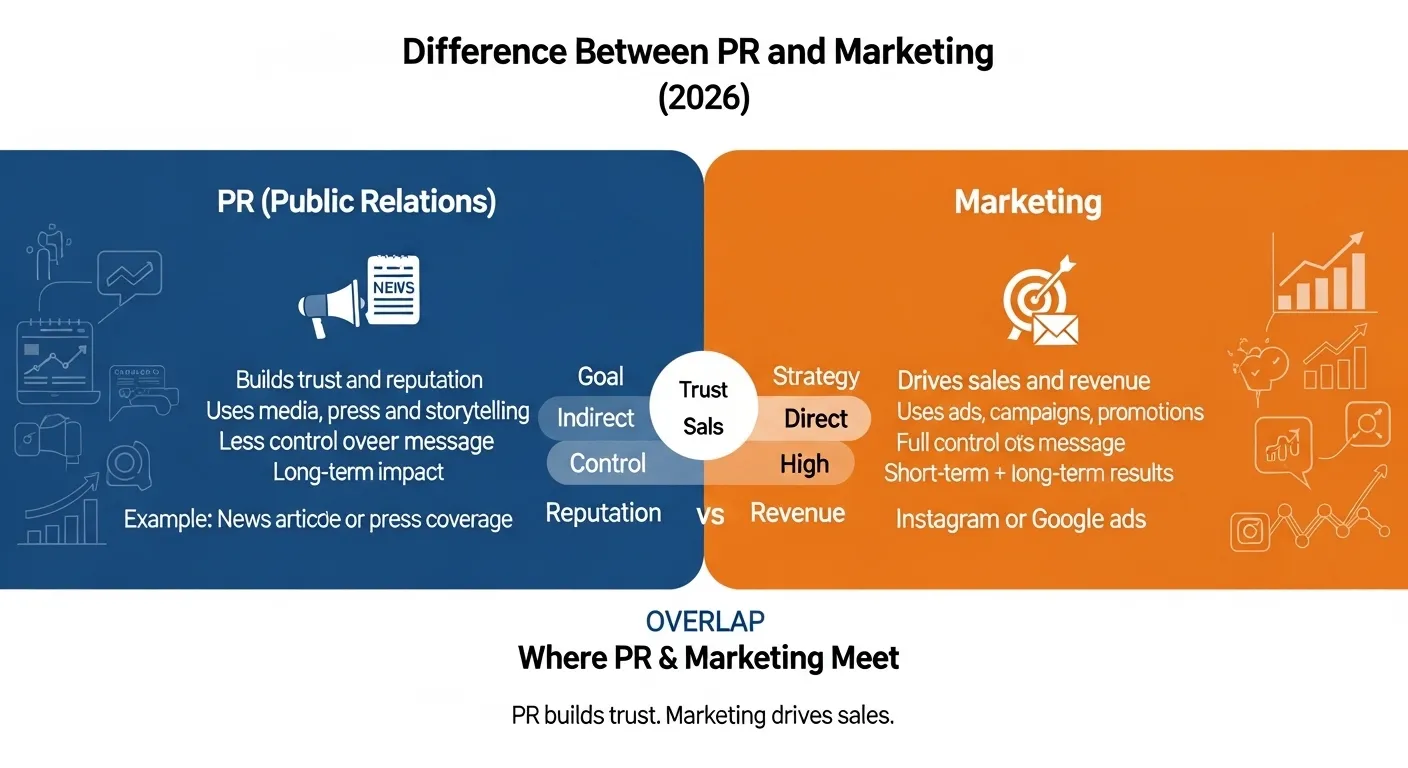
The difference between PR and marketing often confuses many people, especially beginners in business and digital strategy. Both seem to promote a brand, but they work in very different ways.
In simple words, the difference between PR and marketing is that marketing focuses on selling products or services, while PR focuses on building trust and reputation.
Today, platforms like Google, Meta, Instagram, and YouTube have blurred the line between them. That’s why many users search: what is PR vs marketing? how does PR work? why is marketing important?
In this complete guide, you will learn everything clearly from basics to expert insights.
⚡ Quick Answer: Difference Between PR and Marketing
The difference between PR and marketing is:
- Marketing focuses on promoting products to increase sales
- PR (Public Relations) focuses on building a positive public image
👉 Example:
Running ads on Instagram is marketing.
Getting featured in a news article is PR.
📖 Definition of PR and Marketing
- Public Relations (PR): Managing a brand’s reputation through media, communication, and relationships.
- Marketing: Promoting and selling products or services using campaigns, ads, and strategies.
🔊 Pronunciation of PR and Marketing (US & UK)
- PR (Public Relations): /ˌpiː ˈɑːr/ (US & UK)
- Marketing: /ˈmɑːrkɪtɪŋ/ (US), /ˈmɑːkɪtɪŋ/ (UK)
Now let’s break down the concept in detail.
📊 PR vs Marketing Comparison Table
| Feature | PR (Public Relations) | Marketing | Key Insight |
| Goal | Build trust and reputation | Drive sales | Image vs revenue |
| Focus | Public perception | Customer action | Long term vs short term |
| Strategy | Media relations, storytelling | Ads, promotions | Indirect vs direct |
| Control | Low (media decides) | High (brand controls) | Earned vs paid |
| Channels | News, press, influencers | Ads, email, social | Different approach |
| Outcome | Credibility | Conversions | Trust vs results |
🔑 Key Differences Explained Between PR and Marketing
1. Purpose
PR builds trust, while marketing drives sales.
👉 Example: Crisis communication is PR, product promotion is marketing.
2. Communication Style
PR uses storytelling and media. Marketing uses direct messaging and ads.
3. Control Over Message
Marketing has full control. PR depends on journalists or media platforms.
4. Cost Structure
Marketing is usually paid. PR can be earned or organic.
5. Time Impact
Marketing gives faster results. PR works over time.
6. Audience Focus
Marketing targets buyers. PR targets the general public.
🤔 What is PR and Why Does It Exist?
PR exists because trust matters more than promotion.
In real scenarios, people trust news, reviews, and recommendations more than ads. PR builds credibility through media coverage and public communication.
👉 Example: A brand mentioned on YouTube by influencers gains trust quickly.
📈 What is Marketing and How Does It Work?
Marketing is designed to generate revenue.
It works using:
- ads
- campaigns
- audience targeting
- funnels
Platforms like Meta allow businesses to target users based on behavior and interests.
👉 Example: Running paid ads to sell a product is marketing.
🌐 Difference Between PR and Marketing in Digital Era
In today’s digital world, PR and marketing often overlap.
- Influencer marketing = PR + marketing
- Content marketing = storytelling + conversion
Search engines like Google use both signals:
- PR builds authority
- Marketing drives clicks and conversions
📊 Difference and Similarity Table Between PR and Marketing
| Feature | PR | Marketing | Similarity |
| Purpose | Build reputation | Drive sales | Both promote brands |
| Strategy | Media coverage | Paid campaigns | Use communication |
| Channels | News, press | Social platforms | Use digital media |
| Control | Limited | Full | Need planning |
| Cost | Low/earned | Paid | Require investment |
| Outcome | Trust | Revenue | Business growth |
This table clearly shows the difference and similarity between PR and marketing for quick understanding.
❌ Common Mistakes with PR and Marketing
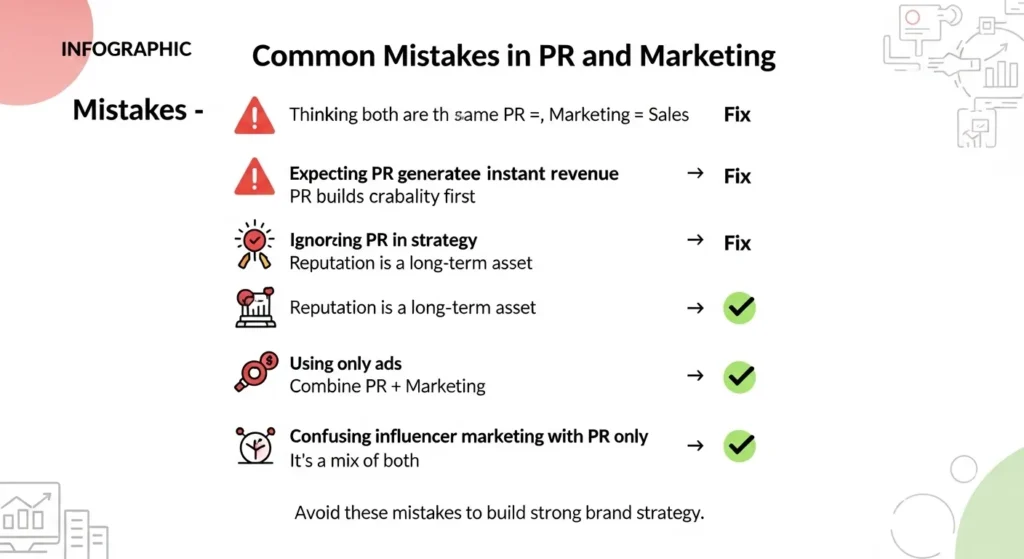
- Thinking both are the same
👉 Fix: Understand PR = trust, Marketing = sales - Expecting PR to generate instant revenue
👉 Fix: PR builds credibility first - Ignoring PR in strategy
👉 Fix: Reputation is long term asset - Using only ads
👉 Fix: Combine PR + marketing - Confusing influencer marketing with PR only
👉 Fix: It’s a mix of both
🌍 Real Life Examples with PR and Marketing
1. Startup Launch
- PR: Media coverage
- Marketing: Paid ads
2. Social Media Campaign
- PR: Organic influencer mention
- Marketing: Sponsored content on Instagram
3. Crisis Situation
- PR handles communication
- Marketing campaigns pause
🎯 When to Use PR vs Marketing
Use PR when:
- building brand trust
- managing reputation
- handling crisis
Use marketing when:
- selling products
- launching campaigns
- generating leads
👉 Best strategy: Combine both for maximum results.
😕 Why People Get Confused in PR and Marketing
- Both promote brands
- Digital platforms mix roles
- Influencer content blurs lines
- Ads and content look similar
This confusion is very common.
🔍 How Search Engines Understand PR and Marketing
Search engines like Google evaluate:
- brand mentions (PR signal)
- user engagement (marketing signal)
- content quality
Platforms like YouTube and Meta also track engagement metrics.
🧠 Expert Insight
In practical use, successful businesses do not choose between PR and marketing.
They combine both:
- PR builds trust and authority
- Marketing converts that trust into revenue
Most beginners focus only on ads. But without trust, ads don’t perform well. This is a key real world insight.
❓ FAQs:
1. What is the main difference between PR and marketing?
PR builds reputation, while marketing drives sales.
2. Can PR help increase sales?
Yes, indirectly by building trust.
3. Is advertising part of PR?
No, it is part of marketing.
4. Which is more important?
Both are equally important.
5. Is social media PR or marketing?
It can be both depending on strategy.
6. Why is PR important for businesses?
It builds long term credibility.
🏁 Conclusion
The difference between PR and marketing becomes clear when you understand their purpose. PR focuses on building trust, credibility, and reputation. Marketing focuses on driving sales and business growth.
In today’s digital environment, platforms like Google, Instagram, and YouTube have made both strategies more connected.
The smartest approach is to combine both:
- Use PR to build trust
- Use marketing to generate revenue
Now you fully understand the difference between PR and marketing with clarity and real world insight.
Discover More Articals
Difference Between Monocot and Dicot: Complete Plant Guide
Difference Between Art and Design: Complete Creative Guide

labdiff.com is my English grammar comparison website where I simplify confusing words, spelling differences, and usage rules through clear explanations and examples. My goal is to help learners, writers, and students understand English easily and use correct grammar with confidence.