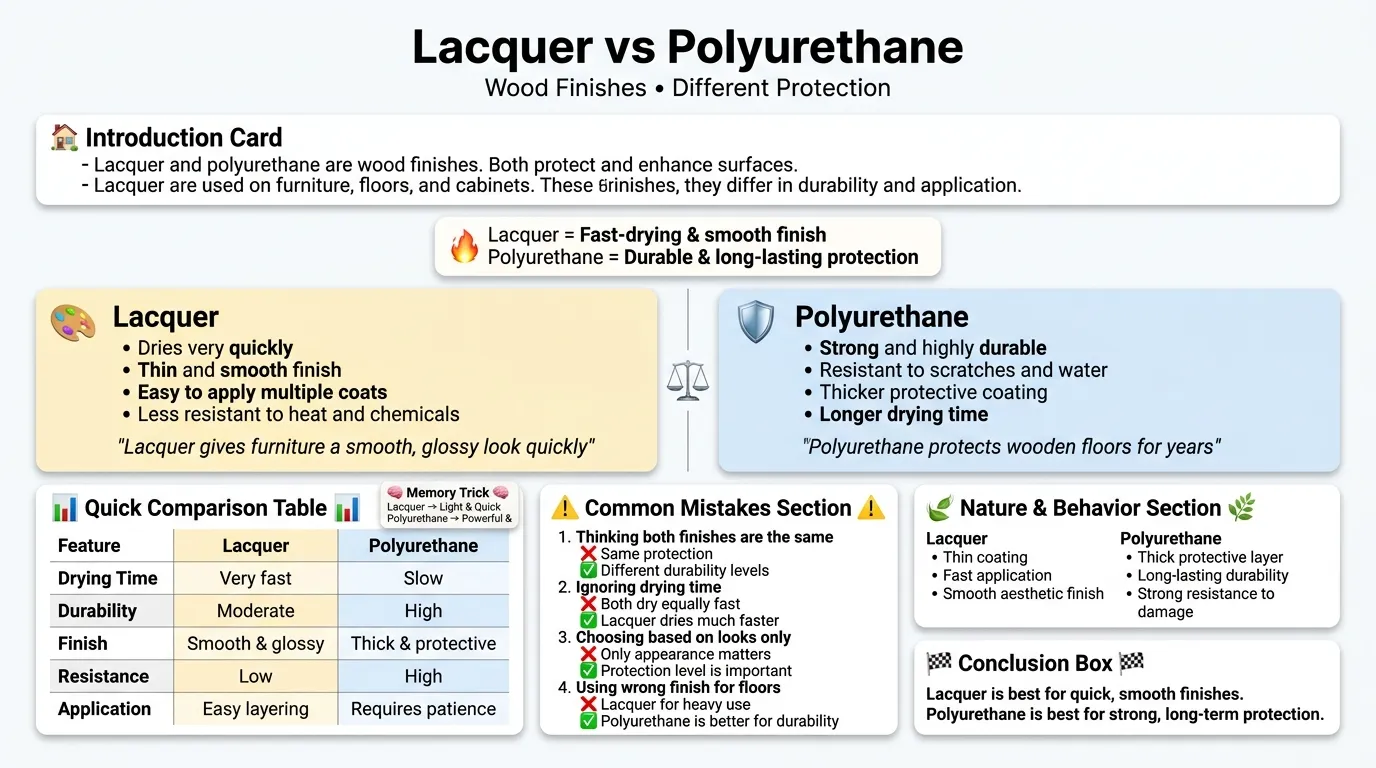
Many users get confused about the difference between lacquer and polyurethane when finishing wood. Both are popular protective coatings used on furniture, floors, and cabinets but they behave very differently.
In simple words, the difference between lacquer and polyurethane is that lacquer dries very fast and gives a smooth, glossy finish, while polyurethane is thicker, more durable, and offers stronger long term protection. One focuses on speed and appearance; the other on toughness and resistance.
If you’ve ever asked “which finish is better for furniture?”, “lacquer vs polyurethane for durability?”, or “what should I use on wood?”, this complete guide will help you make the right choice.
🟢 Quick Answer: Difference Between Lacquer and Polyurethane
- Lacquer → Fast drying, thin, smooth, high gloss finish
- Polyurethane → Thick, durable, protective coating
👉 Example:
A shiny modern table → likely lacquer
A tough floor finish → usually polyurethane
🟢 Definition of Lacquer and Polyurethane
- Lacquer: A fast drying liquid finish that forms a hard, smooth, and often glossy coating on wood surfaces.
- Polyurethane: A durable, protective finish made from synthetic resins that creates a strong, resistant coating against wear, water, and chemicals.
🟢 Pronunciation (US & UK)
- Lacquer: /ˈlæk.ər/ (UK), /ˈlæk.ɚ/ (US)
- Polyurethane: /ˌpɒl.iˈjʊə.rɪ.θeɪn/ (UK), /ˌpɑː.liˈjʊr.ə.θeɪn/ (US)
👉 Now let’s understand their real differences in detail.
🟢 Comparison Table: Lacquer vs Polyurethane
| Feature | Lacquer | Polyurethane | Similarity |
| Drying Time | Very fast | Slow to moderate | Wood finishes |
| Thickness | Thin | Thick | Protective coating |
| Durability | Moderate | High | Protect wood |
| Finish Look | Smooth, glossy | Satin to glossy | Decorative |
| Application | Spray mostly | Brush or wipe | Applied in layers |
| Repair | Easy to repair | Harder to fix | Requires maintenance |
🟢 Key Differences Explained Between Lacquer and Polyurethane
1. Drying Speed
- Lacquer dries within minutes
- Polyurethane takes hours
👉 Ideal for quick projects vs long term finishing
2. Durability and Strength
- Polyurethane is much stronger
- Lacquer is more delicate
👉 Floors → polyurethane
👉 Decorative items → lacquer
3. Application Method
- Lacquer is usually sprayed
- Polyurethane is brushed or wiped
4. Finish Appearance
- Lacquer gives a smoother, glass like finish
- Polyurethane looks thicker and slightly plastic like
5. Maintenance and Repair
- Lacquer is easier to repair
- Polyurethane requires sanding and refinishing
6. Resistance to Damage
- Polyurethane resists water, heat, and scratches
- Lacquer is less resistant
🟢 Why This Difference Exists
The difference between lacquer and polyurethane exists because they are made differently:
- Lacquer is designed for speed and smooth finish
- Polyurethane is designed for durability and protection
Each serves a different purpose in woodworking.
🟢 What Is Lacquer and How Does It Work?
Lacquer works by:
- Drying quickly through solvent evaporation
- Forming thin layers that melt into each other
👉 This creates a seamless, smooth surface often used in modern furniture.
🟢 What Is Polyurethane and How Does It Work?
Polyurethane works by:
- Forming a thick protective layer
- Hardening into a strong, resistant coating
👉 It is commonly used on floors, tables, and heavy use surfaces.
🟢 Difference and Similarity Table
| Feature | Lacquer | Polyurethane | Similarity |
| Purpose | Smooth finish | Strong protection | Wood coating |
| Speed | Fast | Slow | Applied in layers |
| Strength | Moderate | High | Protects surface |
| Repair | Easy | Difficult | Needs maintenance |
| Look | High gloss | Versatile finishes | Enhances wood |
This table clearly shows the difference and similarity between lacquer and polyurethane for quick understanding.
🟢 Common Mistakes with Lacquer and Polyurethane
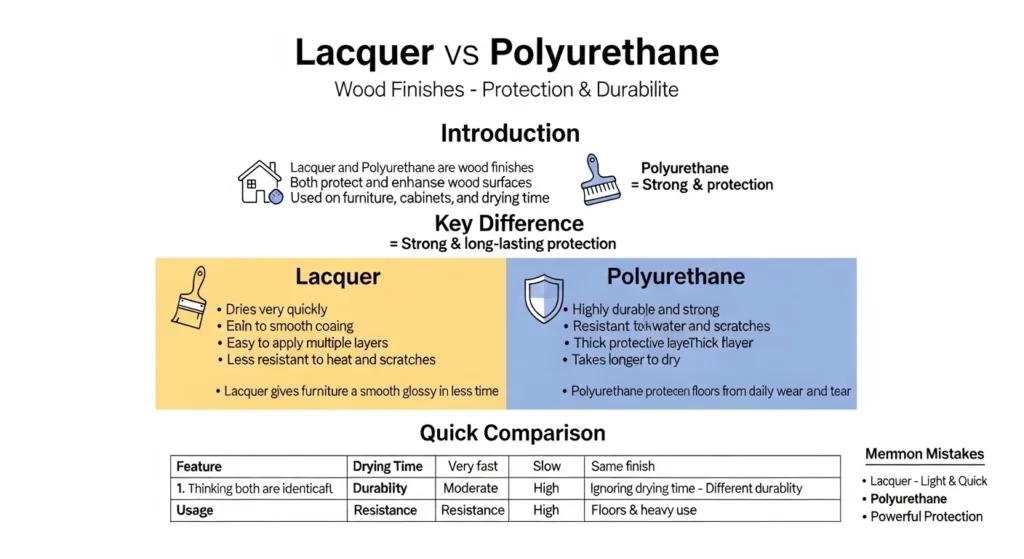
❌ 1. Using lacquer on floors
✔ It wears out quickly
❌ 2. Expecting polyurethane to dry fast
✔ It needs time to cure
❌ 3. Applying thick lacquer layers
✔ Causes uneven finish
❌ 4. Ignoring ventilation
✔ Both require proper airflow
❌ 5. Choosing based only on shine
✔ Durability matters more for heavy use
🟢 Real Life Examples
📌 Furniture
- Decorative cabinet → lacquer
- Dining table → polyurethane
📌 Flooring
- Hardwood floor → polyurethane
DIY Projects
- Quick small project → lacquer
- Long lasting finish → polyurethane
🟢 When to Use Each
Use Lacquer when:
- You want a smooth, glossy finish
- You need fast drying
- The item has light use
Use Polyurethane when:
- You need strong protection
- Surface faces heavy wear
- Long term durability matters
🟢 Why People Get Confused
The confusion in the difference between lacquer and polyurethane happens because:
- Both are clear finishes
- Both improve wood appearance
- Names sound technical
- Beginners don’t know application differences
🟢 How Search Engines Understand This Topic
Search engines like Google treat this as a DIY and woodworking comparison query.
They prioritize:
- Clear comparisons
- Use case explanations
- Practical examples
🟢 Expert Insight
In real world woodworking:
- Professionals use lacquer for speed and aesthetics
- Contractors prefer polyurethane for durability and protection
👉 Best choice depends on usage, not just appearance.
🟢 FAQ:
1. What is the main difference between lacquer and polyurethane?
Lacquer dries fast and looks smooth; polyurethane is stronger and more durable.
2. Which is better for floors?
Polyurethane is better due to durability.
3. Is lacquer more shiny?
Yes, it often provides a high gloss finish.
4. Can I apply polyurethane over lacquer?
Usually not recommended without preparation.
5. Which is easier to repair?
Lacquer is easier to fix.
6. Which lasts longer?
Polyurethane lasts longer.
🟢 Conclusion
Understanding the difference between lacquer and polyurethane helps you choose the right finish for your project.
Lacquer is ideal for smooth, fast, and decorative finishes, while polyurethane provides strong, long lasting protection.
Both have their place in woodworking, but the best choice depends on how the surface will be used. For light use items, lacquer works well. For heavy use surfaces, polyurethane is the better option.
In the end, the difference between lacquer and polyurethane comes down to speed vs durability—and knowing this makes your decision much easier.
Discover More Articals!
Difference Between Storage and Memory (RAM vs Storage Explained Simply)
Difference Between MS and MBA: Degree and Study Guide

James Whitmore. Labdiff.com is my english grammar comparision website. I explore the history and evolution of English words. I write detailed comparisons explaining why spellings change over time and how British and American English diverged. My articles add depth and credibility to grammar comparison topics.