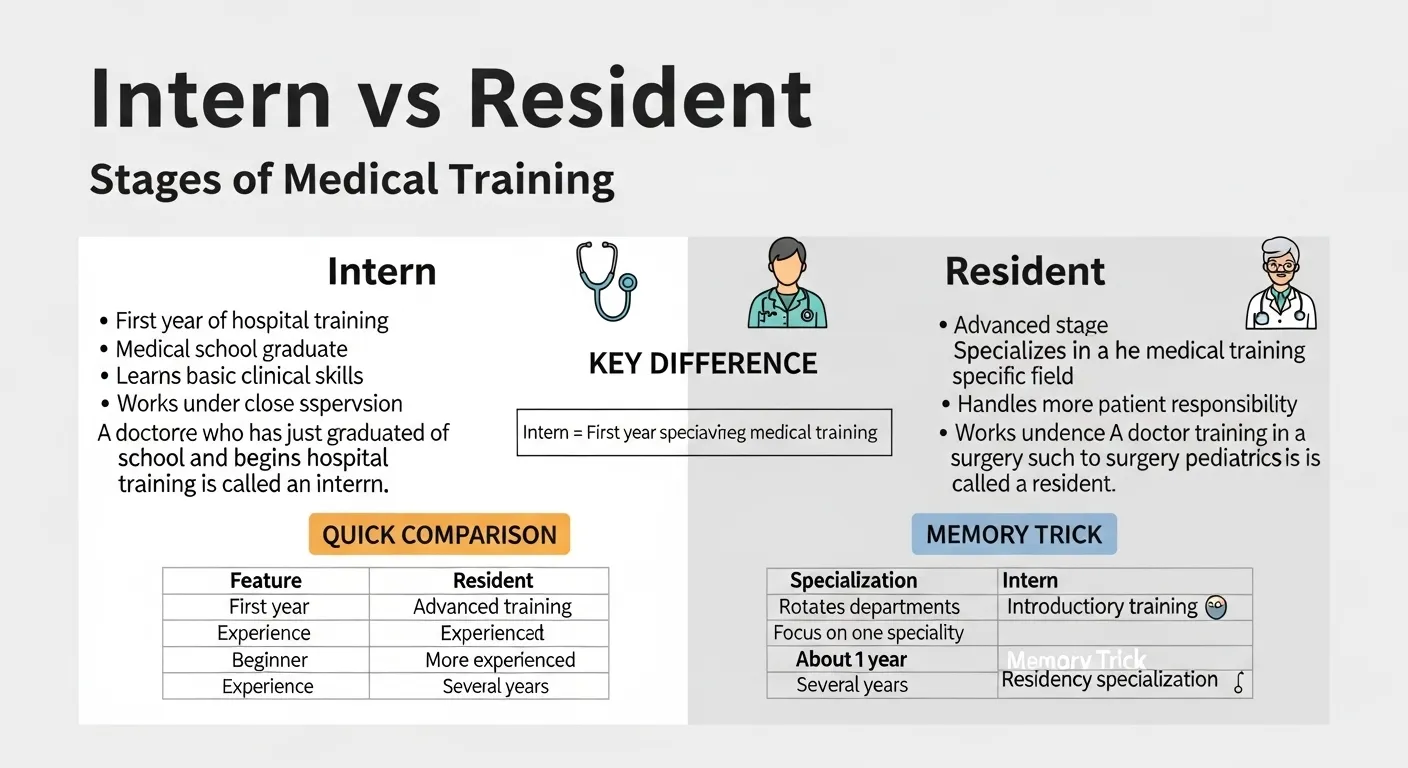
An intern is a first year medical trainee after graduation, while a resident is a more advanced doctor undergoing specialized training in a chosen field.
Medical training takes many years. Students must study medicine and then gain practical experience.
Hospitals provide this experience through training programs. Two important stages in this process are internship or residency.
The terms intern vs resident are common in hospitals and medical schools. Both refer to doctors who are still in training. Both work under supervision while learning how to treat patients.
Because of this, many people think the terms mean the same thing. However, they describe different stages of medical education.
An intern is usually a medical graduate who is in the first year of practical hospital training. Interns learn basic clinical skills and assist senior doctors. A resident is a doctor who continues specialized training after the internship year.
Understanding the difference between resident and intern helps people understand how doctors develop their professional skills. It also explains the steps required to become a fully qualified physician.
In simple terms, an intern is a beginner doctor in the first training year, while a resident is a doctor receiving advanced specialty training in a hospital.
📖 Definitions
🩺 Definition of Intern
An intern is a medical graduate who is in the first stage of hospital training. After completing medical school, new doctors usually enter an internship program. This program allows them to gain practical experience in a clinical environment.
Interns work under the supervision of experienced doctors. They assist with patient care, medical examinations, and hospital procedures. During this period, interns learn how to apply the knowledge they gained in medical school.
Interns rotate through different hospital departments. These may include surgery, internal medicine, pediatrics, and emergency medicine. This rotation helps them understand different areas of healthcare.
The internship year is important because it introduces new doctors to real patient care. It also prepares them for the next stage of medical training.
Example:
A doctor who has just graduated from medical school and is completing their first year of hospital training is called an intern.
👨⚕️ Definition of Resident
A resident is a doctor who continues specialized medical training after completing the internship year. Residency programs focus on developing advanced skills in a specific medical field.
Residents choose a specialty such as surgery, internal medicine, pediatrics, psychiatry, or cardiology. During residency, doctors gain deeper knowledge and perform more complex medical procedures.
Residents work closely with senior physicians and specialists. They are responsible for diagnosing patients and assisting in medical procedures. Although they still receive supervision, residents have more responsibility than interns.
Residency programs can last several years depending on the specialty. For example, family medicine may take three years, while surgical specialties may take longer.
Example:
A doctor training in cardiology after completing internship is known as a resident.
Internship and Residency Difference in Medical Training
Many learners search for the internship and residency difference because both stages happen after medical school and involve patient care. The main difference is training level and specialization.
In residency vs internship, internship focuses on broad clinical exposure through hospital rotations, while residency focuses on developing advanced skills in a selected specialty.
Understanding the difference between intern and resident helps students see how medical education progresses from general learning to specialized practice.
🔍 Key Differences Between Intern and Resident
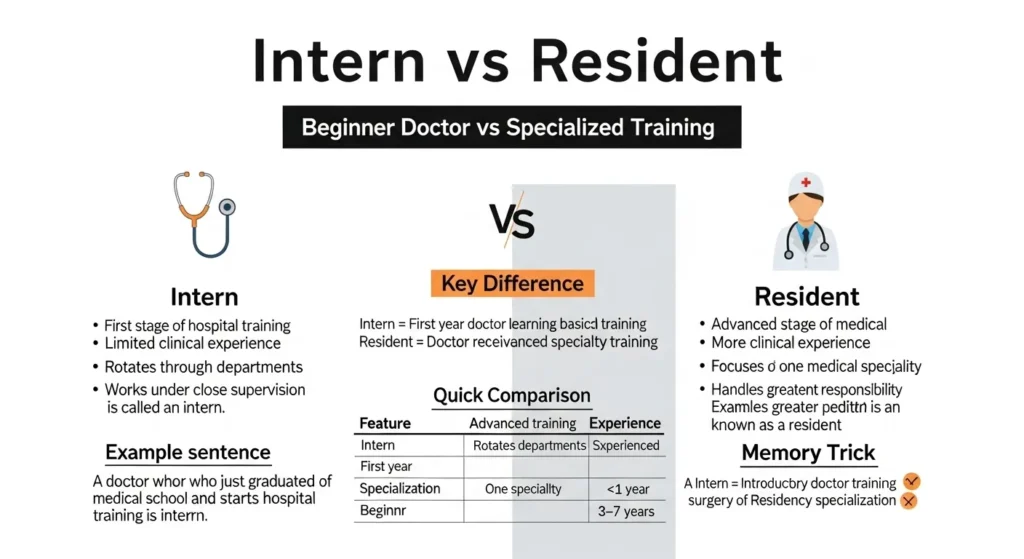
1️⃣ Stage of Training
Intern:
Internship is the first stage of practical medical training after medical school.
Resident:
Residency is the advanced stage of training after internship.
2️⃣ Experience Level
Intern:
Interns have limited clinical experience.
Resident:
Residents have more training and practical experience.
3️⃣ Responsibility
Intern:
Interns assist doctors and perform basic medical tasks.
Resident:
Residents handle more complex medical responsibilities.
4️⃣ Specialization
Intern:
Interns rotate through different medical departments.
Resident:
Residents train in a specific medical specialty.
5️⃣ Supervision
Intern:
Interns work under close supervision from senior doctors.
Resident:
Residents also work under supervision but have more independence.
6️⃣ Duration
Intern:
Internship usually lasts about one year.
Resident:
Residency may last three to seven years depending on the specialty.
7️⃣ Skill Development
Intern:
Interns learn basic clinical skills and patient care.
Resident:
Residents develop advanced medical knowledge and specialized skills.
8️⃣ Role in Hospital
Intern:
Interns assist in routine hospital tasks and patient care.
Resident:
Residents often manage patient cases and guide interns.
9️⃣ Examples
Intern Examples:
Medical graduate working in hospital rotations
Doctor assisting senior physicians during training
Resident Examples:
Doctor training in surgery
Doctor specializing in pediatrics
Doctor focusing on internal medicine
🔟 Key Difference Summary
Intern:
First stage of medical training
Limited experience
Rotates through departments
Learns basic patient care
Resident:
Advanced stage of training
More responsibility
Specializes in one medical field
Develops advanced clinical skills
Medical Intern vs Medical Resident: Hospital Roles and Career Progression
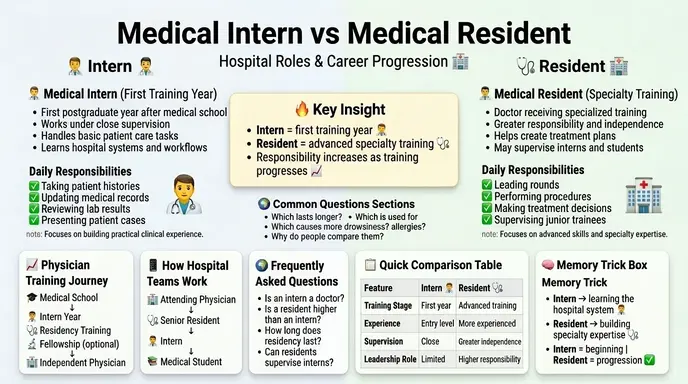
People often compare medical intern vs medical resident or hospital intern vs resident because both doctors work in similar hospital environments. However, their responsibilities are different.
An intern resident doctor relationship often involves interns learning from residents, while residents manage more patient responsibilities under senior supervision. Training also continues beyond residency.
Many doctors move from intern resident fellow stages before eventually becoming an attending physician. Readers also compare med student vs intern because medical students are still completing education, while interns have already graduated and begun clinical practice.
🏁 Conclusion
Interns and residents are both doctors in training, but they represent different stages of medical education. After completing medical school, new doctors begin their clinical journey with an internship.
This stage helps them gain practical experience in a hospital setting. Interns work under close supervision while learning how to manage patient care and medical procedures.
Internship usually lasts one year. During this period, doctors rotate through different departments such as surgery, emergency medicine, and pediatrics.
This exposure allows them to understand different areas of healthcare before choosing a specialty.
Residency begins after the internship year. At this stage, doctors select a specific field of medicine and continue their training in that specialty.
Residents receive deeper knowledge and practical experience in their chosen area. They also handle more responsibility in patient care compared to interns.
Another key difference is duration. Residency programs may last several years depending on the medical specialty.
For example, general practice programs may take three years, while surgical specialties may require longer training.
Both stages are important for building professional skills and preparing doctors for independent medical practice.
Internship builds a strong foundation in clinical care. Residency develops specialized knowledge and advanced medical abilities.
In simple terms, an intern is a beginner doctor gaining initial hospital experience, while a resident is a doctor receiving advanced training in a medical specialty.
Discover More Articals!
📚 Difference Between Endnotes and Footnotes
Difference Between Cupboard and Cabinet: With In 30 Seconds
🌮 Difference Between Migas and Chilaquiles: In(2026)

James Whitmore. Labdiff.com is my english grammar comparision website. I explore the history and evolution of English words. I write detailed comparisons explaining why spellings change over time and how British and American English diverged. My articles add depth and credibility to grammar comparison topics.