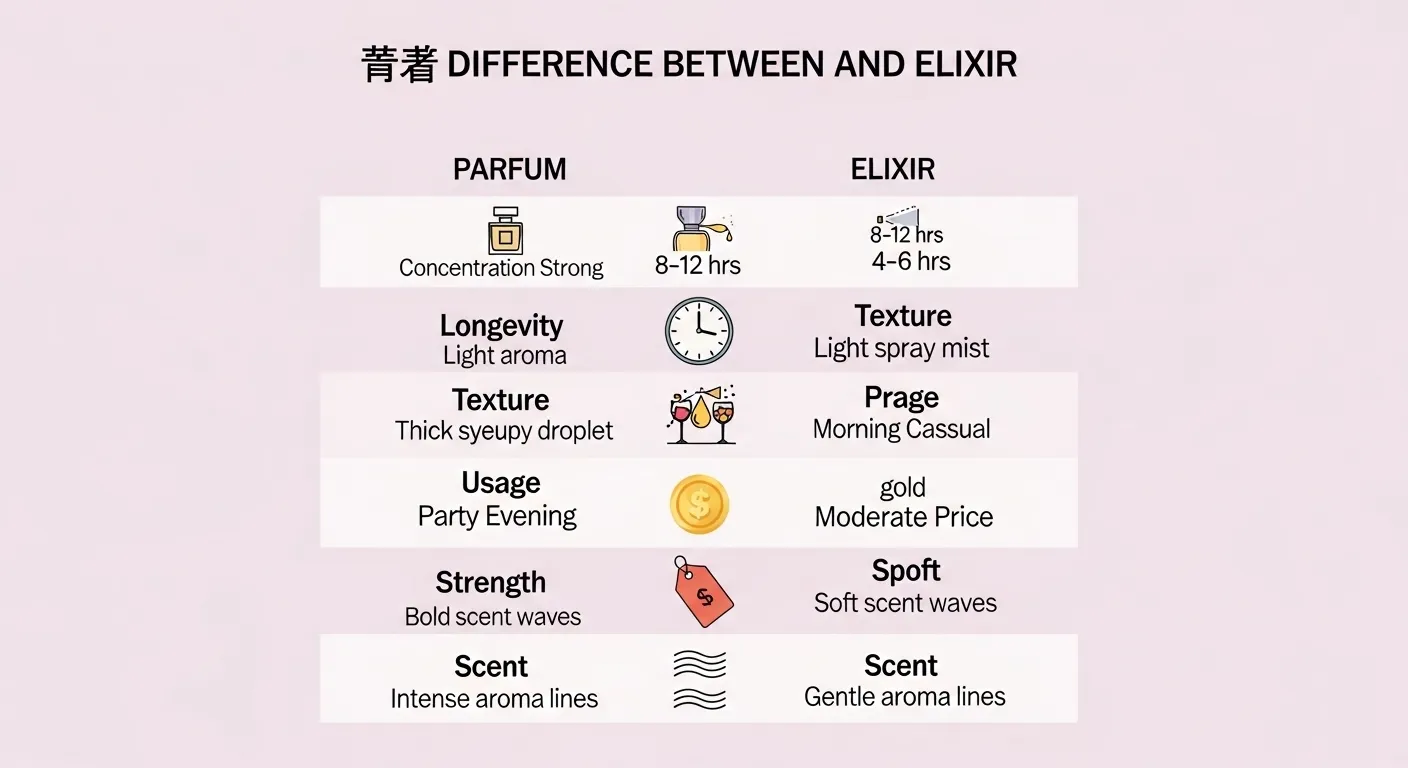
The difference between parfum and elixir is simple. Parfum is strong, thick, and lasts long. Elixir is lighter, soft, and lasts shorter.
Parfum is mostly for evenings and special occasions. Elixir is for daily use or skin benefits. Imagine walking into a perfume shop.
A parfum smells bold and stays on skin for hours. An elixir smells soft and fresh. Beginners often confuse them.
Both are types of perfumes. Knowing the difference between parfum or elixir helps you pick the right fragrance.
You can choose parfum for luxury or elixir for daily freshness. This improves your fragrance experience.
🔑 Key Differences Between Elixir and Parfum
| Feature | Parfum | Elixir |
| Concentration | High (20–30%) | Moderate (10–20%) |
| Longevity | 8–12 hours | 4–6 hours |
| Texture | Thick | Light |
| Usage | Special events | Daily use |
| Price | Expensive | Moderate |
| Strength | Very strong | Soft |
| Scent | Intense | Gentle |
Elixir vs Parfum: What’s the Real Difference?
Many people search phrases like “difference between elixir and parfum,” “elixir vs parfum,” or “what is the difference between elixir and parfum.”
All of these questions focus on one idea: strength, concentration, and purpose.
Here is the simple explanation:
- Parfum → Higher concentration, stronger scent, longer lasting
- Elixir → Moderate concentration, softer scent, more versatile
Some users also compare:
- difference between perfume and elixir
- difference between eau de parfum and elixir
👉 Key takeaway:
Parfum is designed for intensity and longevity, while elixir focuses on balance, softness, and daily comfort.
🌿 Nature and Behavior
Parfum is rich, strong, and long-lasting. It is bold and luxurious. Mostly applied on pulse points like wrists and neck.
Elixir is light, gentle, and versatile. Can include oils for skin benefits. Can be sprayed on skin or clothes.
Parfum is formal. Elixir is casual. Parfum creates strong impressions. Elixir is soothing and refreshing.
🔊 Pronunciation
- Parfum – /pɑːrˈfjuːm/ (US & UK)
- Elixir – /ɪˈlɪk.sər/ (US & UK)
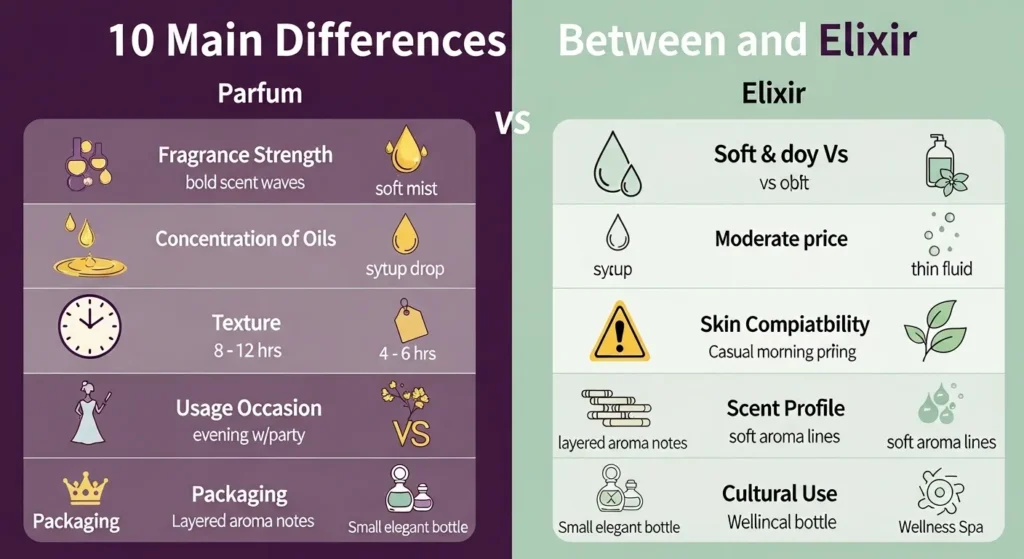
🥄 10 Main Differences Between Parfum and Elixir
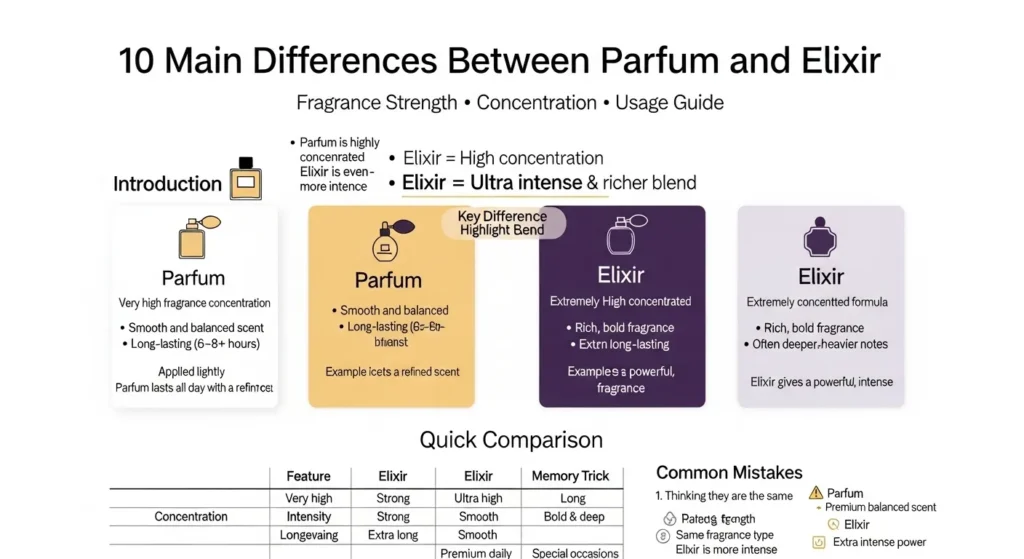
1️⃣ Fragrance Strength
- Parfum is very strong. It can last all day.
Example: Chanel No.5 parfum smells bold all evening. - Elixir is soft. It is light and subtle.
Example: Elixir perfume oil is gentle on skin.
2️⃣ Concentration of Oils
- Parfum contains 20–30% perfume oils.
- Elixir contains 10–20% oils.
3️⃣ Longevity
- Parfum lasts 8–12 hours.
- Elixir lasts 4–6 hours.
4️⃣ Texture
- Parfum is thick, syrupy, and rich.
- Elixir is thin, fluid, and light.
5️⃣ Price
- Parfum is expensive. It is luxurious.
- Elixir is moderate. Easy for daily use.
6️⃣ Usage Occasion
- Parfum is for evenings and formal events.
- Elixir is for casual or everyday use.
7️⃣ Skin Compatibility
- Parfum may irritate sensitive skin.
- Elixir is usually gentle and skin-friendly.
8️⃣ Scent Profile
- Parfum has strong top, middle, and base notes.
- Elixir has soft top notes and light base.
9️⃣ Packaging
- Parfum comes in small, elegant bottles.
- Elixir comes in medium, practical bottles.
🔟 Cultural Use
- Parfum is seen as luxurious and bold.
- Elixir is used for wellness, aromatherapy, and daily freshness.
Which Is Stronger: Elixir or Parfum?
A very common question is: “Is elixir stronger than parfum?” or “which is stronger parfum or elixir?”
The answer is clear:
👉 Parfum is stronger than elixir.
Why?
- Parfum contains higher oil concentration (20–30%)
- Elixir contains moderate concentration (10–20%)
Other related questions include:
- are elixirs stronger than parfum? → No
- is elixir higher than parfum? → No
- is elixir or parfum stronger? → Parfum
👉 Simple rule:
If you want long-lasting and bold scent, choose parfum.
If you want light and wearable scent, choose elixir.
📊 Table Comparison
| Feature | Parfum | Elixir |
| Concentration | High | Moderate |
| Longevity | 8–12 hours | 4–6 hours |
| Texture | Thick | Light |
| Price | Expensive | Moderate |
| Usage | Events | Daily/Skin |
| Strength | Very strong | Soft |
| Scent | Intense | Gentle |
🏆 Which Is Better in What Situation?
Parfum 🌹
- Best for evenings, parties, and events.
- Stays long on skin.
- Creates luxury and elegance.
- Example: Apply on pulse points at weddings or dinners.
Elixir 🌿
- Best for daily use.
- Gentle and refreshing.
- Can be used on skin or clothes.
- Example: Spray lightly in the morning or after shower.
🎭 Metaphors and Similes
- Parfum is like silk: bold, elegant, and luxurious.
- Elixir is like morning dew: soft, refreshing, and calming.
- Parfum leaves a strong impression.
- Elixir brings gentle freshness.
- Parfum is a bright candle; elixir is a soft perfume mist.
💭 Connotative Meaning
- Parfum – Positive, luxurious, elegant.
Example: “Her parfum turned heads at the party.” - Elixir – Positive, soothing, refreshing.
Example: “The elixir made her feel calm and fresh.”
📚 Literature References
- Perfume: The Story of a Murderer – Novel, Patrick Süskind, 1985
- The Elixir of Youth – Story, Honoré de Balzac, 1830
- Perfume Dreams – Poetry collection, Mary Oliver, 1990
🎬 Movies
- Perfume: The Story of a Murderer – 2006, Germany
- The Elixir – Short film, 2019, France
- Scent of a Woman – 1992, USA (parfum inspired scenes)
Elixir in Perfume: Meaning, Examples, and Usage
Many users also search for terms like “what is elixir perfume,” “elixir de parfum meaning,” and “what does elixir mean in fragrance.”
In fragrance terms:
👉 Elixir usually refers to a richer version of a fragrance, but still lighter than pure parfum in structure and feel.
It often includes:
- Smoother scent blends
- Slightly higher oil content than standard sprays
- Added skin-friendly or aromatic ingredients
You may also see popular fragrance names such as:
- Jean Paul Gaultier Le Male Elixir
- Montblanc Signature Elixir
- Azzaro Wanted Elixir
These are branded “elixirs,” but their strength can vary depending on formulation.
Related searches include:
- how long does elixir perfume last → usually 4–6 hours
- difference between eau de parfum and elixir → elixir is often softer and more skin-focused
- what is the difference between an elixir and a perfume → mainly concentration and usage style
👉 Key idea:
“Elixir” is more about experience and softness, while parfum is about power and projection.
❓ Frequently Asked Questions
1. Is parfum stronger than elixir?
Yes. Parfum has more fragrance oils.
2. Can elixir last as long as parfum?
No. Elixir lasts 4–6 hours.
3. Is elixir skin-friendly?
Yes. It is gentle and often contains oils.
4. Are parfums expensive?
Yes. High concentration makes them costly.
5. Can elixir replace parfum?
Not fully. Elixir is lighter and shorter lasting.
🌎 How Both Help in Daily Life
- Parfum creates luxury, elegance, and confidence.
- Elixir refreshes, soothes, and can help in wellness.
- Both improve mood and leave a pleasant scent around you.
- Parfum is for special impressions.
- Elixir is for casual, daily comfort.
📝 Final Words
Parfum is bold, strong, and long-lasting. Elixir is soft, light, and gentle. Knowing the difference helps pick the right fragrance.
Parfum is for luxury events. Elixir is for daily freshness. Both play an important role in fragrance culture.
Both can lift your mood and make you feel confident. Choosing the right one depends on your need, mood, or occasion.
📌 Conclusion
Parfum and elixir differ in concentration, longevity, texture, and purpose. Parfum has high fragrance oils, making it thick, rich, and long-lasting. Elixir is lighter, often infused with oils, and lasts fewer hours.
Parfum is strong, bold, and ideal for special events. Elixir is soft, gentle, and perfect for everyday use or skin benefits. Parfum leaves a strong impression and adds elegance.
Elixir refreshes and soothes. Understanding the difference helps you pick the right fragrance for each situation.
Both parfum and elixir enhance personal style, boost confidence, and improve mood. Choosing wisely makes fragrance use enjoyable.
Discover More Posts!
Difference Between Fog and Clouds: Clear Guide for Everyone
Difference Between Risk and Vulnerability: In(2026)

James Whitmore. Labdiff.com is my english grammar comparision website. I explore the history and evolution of English words. I write detailed comparisons explaining why spellings change over time and how British and American English diverged. My articles add depth and credibility to grammar comparison topics.