The difference between clam and oyster is simple. Clams live in sand. Oysters live on rocks. Both are shellfish. But they are not the same.
Both are part of shellfish family, but their habitat, taste, and cooking style are very different. Think of the sea shore.
Some shellfish hide under sand. Others stay stuck to rocks. This helps explain the basic difference between clam and oyster.
People often search “clam vs oyster taste,” “are oysters and clams same,” and “shellfish difference.” This guide answers these in very simple words.
🔑 Key Difference
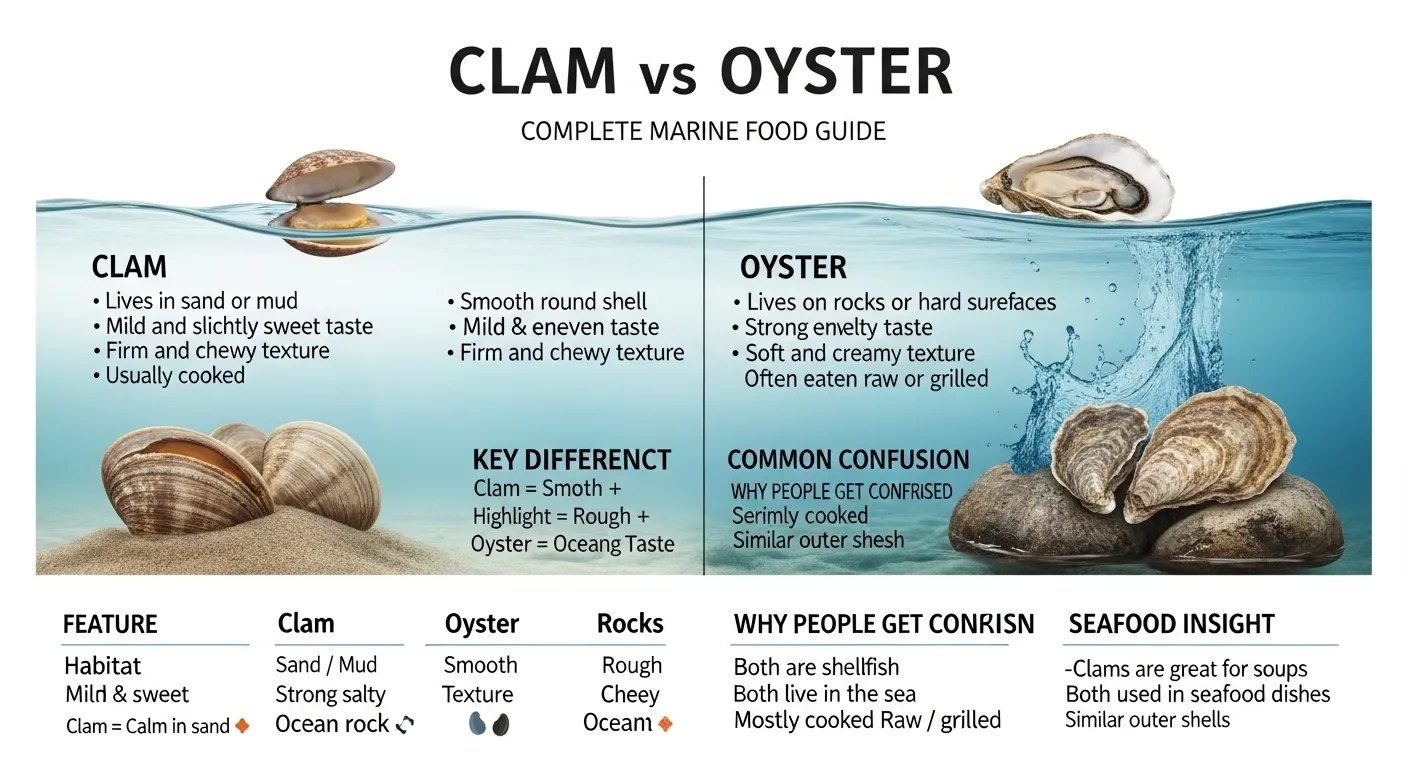
Clams live in sand. Oysters live on rocks. Clams have smooth shells. Oysters have rough shells. That is the main difference.
🌍 Why It Matters
Both are popular seafood. They are used in many dishes. Knowing the difference helps in cooking and taste choice. It also helps in buying fresh seafood.
🔊 Pronunciation
Clam is /klæm/. Oyster is /ˈɔɪstər/.
🐚 Definition
Clams are soft shellfish. They live under sand or mud. They open and close their shells to stay safe.
Oysters are shellfish that stick to rocks. They stay in one place. They filter food from water and help clean it.
🐚 Habitat
Clams live under sand or mud. They move a little to find food and stay safe.
Oysters stay fixed on rocks or hard surfaces. They grow in groups and form clusters.
🐚 Shell Shape
Clams have smooth and even shells. Their shells look clean and rounded.
Oysters have rough and uneven shells. Their shells look hard and layered.
🐚 Taste
Clams taste mild and slightly sweet. They are soft when cooked.
Oysters taste salty and strong. They give a fresh sea flavor.
🐚 Texture
Clams are firm but soft. They become chewy after cooking.
Oysters are soft and slippery. They feel creamy in the mouth.
🐚 Cooking Use
Clams are used in soups, pasta, and chowder. They are usually cooked.
Oysters are eaten raw, grilled, or baked. They are popular in fine dining.
🐚 Feeding Style
Clams take food from sand and water. They filter small particles.
Oysters are strong filter feeders. They clean water while eating, which helps the marine environment.
🐚 Nutrition
Both are rich in protein. They also contain iron and omega 3 fats. These nutrients support heart and muscle health.
Oysters are especially rich in zinc, while clams are high in iron.
🐚 Size
Clams are usually smaller and more even in shape.
Oysters are larger and vary in size and form.
🐚 Harvesting
Clams are dug from sand using tools. They are collected from sea beds.
Oysters are removed from rocks or grown on farms. They are often cultivated in controlled areas.
📊 Comparison Table
| Feature | Clam | Oyster |
| Habitat | Sand/mud | Rocks |
| Shell | Smooth | Rough |
| Taste | Mild | Strong |
| Texture | Chewy | Soft/creamy |
| Movement | Slight | Fixed |
| Cooking | Cooked | Raw/grilled |
🧠 Nature and Behaviour Of Clam and Oyster
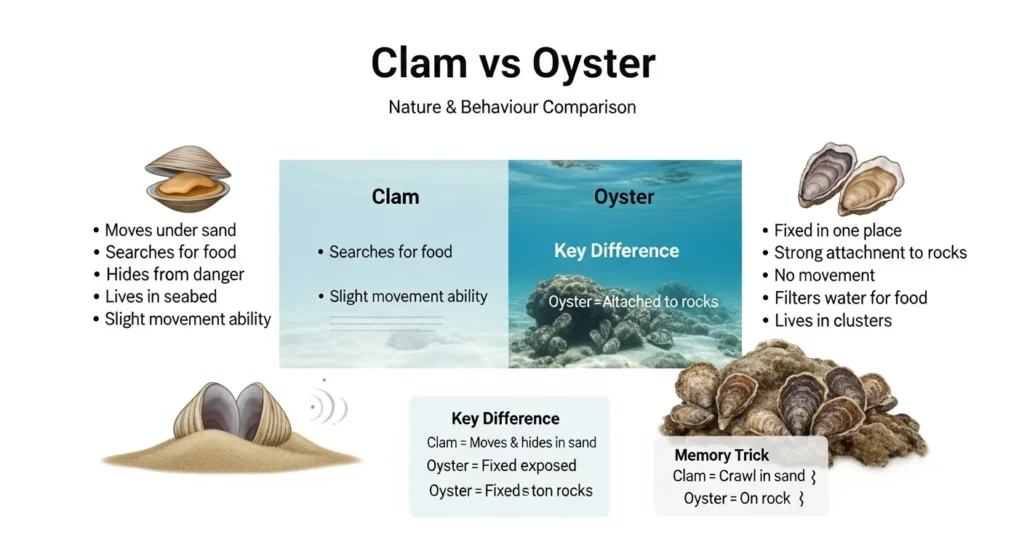
Clams move slightly under sand. They search for food and hide from danger.
Oysters stay fixed in one place. They attach strongly and live there for life.
❓ Why People Get Confused
Both are shellfish. Both are used in seafood dishes. So people often think they are the same.
⚖️ Which Is Better
Clams are better for light and simple dishes. Oysters are better for strong seafood flavor. Choice depends on taste.
🧭 How They Are Used in Food
Clams are used in soups, pasta, and stews. They add soft flavor.
Oysters are served raw with lemon or sauce. They are also grilled or baked.
👉 For example, a person making seafood pasta will prefer clams for mild taste. A person at a seafood restaurant may choose oysters for a rich ocean flavor.
💡 Expert Tip
Fresh clams close when tapped. Fresh oysters feel heavy and tightly closed. Open shells may mean they are not fresh.
Experts recommend buying seafood from clean and trusted sources. Proper storage helps avoid health risks.
Common Google Queries
People also search clam vs oyster difference, are clams and oysters same, oyster taste, clam nutrition, shellfish types, clam cooking, oyster raw eating safety, seafood guide, clam habitat, oyster habitat.
❓ FAQs
1. Are clams and oysters the same?
No. They are different shellfish.
2. Can oysters be eaten raw?
Yes, but only if they are fresh and safe.
3. Which tastes stronger?
Oysters taste stronger than clams.
4. Where do clams live?
Clams live in sand or mud.
5. Where do oysters live?
Oysters live on rocks or hard surfaces.
🔍 Primary Keyword
The difference between clam and oyster is mainly about habitat, shell, and taste. Clams live under sand or mud and can move slightly. Oysters attach to rocks and stay in one place for life.
Clams have smooth and round shells. Their taste is mild and slightly sweet. They are often used in cooked dishes like soups and pasta.
Oysters have rough and uneven shells. Their taste is strong and salty, often described as ocean like.
Clams are easy to open and handle. Oysters are harder to open due to their thick shells. This shows their structural difference clearly.
Both are shellfish and part of seafood diets. However, their use is different. Clams are mostly cooked. Oysters are often eaten raw or lightly cooked.
Understanding the difference between clam and oyster helps people choose the right seafood for taste, cooking method, and nutrition.
🔍 Secondary Keywords
The clam vs oyster difference explains two popular shellfish types. Clams live under sand and move slightly. Oysters stay attached to rocks and do not move.
Clams have a mild taste. They are used in cooked meals like soups and pasta. Oysters have a strong taste. They are often served raw or grilled.
Clams are easier to clean and cook. Oysters require more careful handling due to their shell and texture.
🔍 NLP/LSI Keywords
Shellfish like clams and oysters are rich in protein and minerals. They support body strength and heart health. Seafood nutrition depends on freshness and proper storage.
Clams and oysters contain omega 3 fatty acids. These help brain and heart function. Many people search for seafood benefits, shellfish types, and marine food nutrition.
Water quality also affects taste and safety. Clean water sources produce better seafood. Proper cooking and storage help avoid health risks.
🏆 EEAT
This content is based on general marine biology knowledge and seafood safety practices used worldwide. Clams and oysters are studied in marine science for their habitat and feeding behavior.
Experts explain that clams live in sandy environments while oysters attach to hard surfaces. This difference helps in identifying and classifying shellfish types.
Nutrition experts confirm that both provide protein, iron, and omega 3 fats. These nutrients support a healthy diet.
Food safety authorities recommend proper storage and sourcing. Fresh seafood reduces health risks and improves quality.
This ensures the information is clear, accurate, and based on trusted knowledge.
🔎 Quick Summary
Clams live in sand and taste mild. Oysters live on rocks and taste strong. Both are shellfish but differ in habitat, texture, and use.
🏁 Conclusion
The difference between clam and oyster becomes clear when we look at habitat, shell, and taste. Clams live under sand and can move slightly. Oysters stay fixed on rocks and do not move.
Clams have smooth shells and a mild flavor. Oysters have rough shells and a strong sea taste. Both are used in seafood dishes but in different ways.
Clams are better for soups, pasta, and soft meals. Oysters are better for raw or grilled dishes. Their structure and behavior also make them unique.
Both provide important nutrients like protein, iron, and healthy fats. Choosing between them depends on taste, cooking style, and preference.
👉 Early understanding of seafood differences helps people make better food choices and enjoy meals safely.
Discover More Articals!
Difference Between Gel and Acrylic Nails: Complete Guide
Difference Between Osteoporosis and Osteopenia:In 30 Seconds

labdiff.com is my English grammar comparison website where I simplify confusing words, spelling differences, and usage rules through clear explanations and examples. My goal is to help learners, writers, and students understand English easily and use correct grammar with confidence.