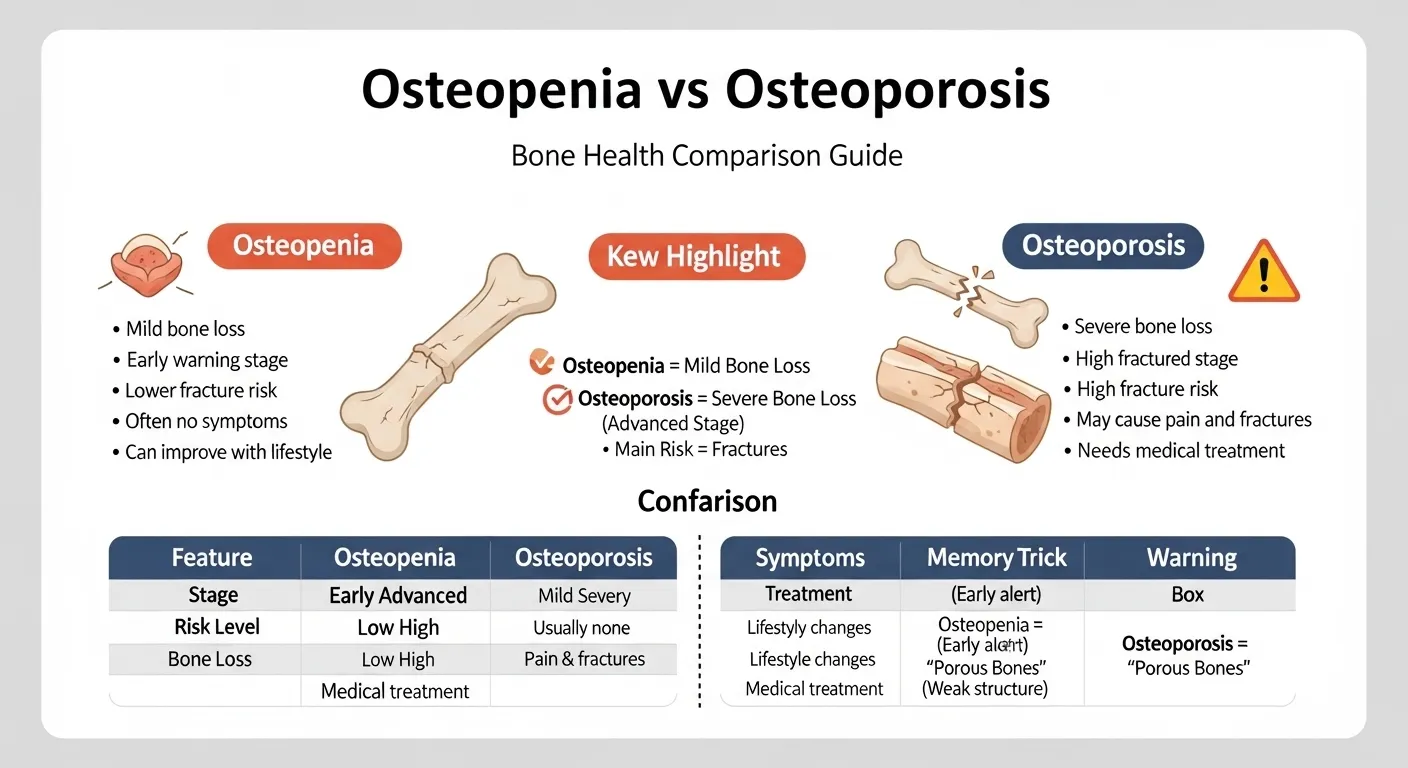
The difference between osteoporosis or osteopenia is simple. Osteopenia is mild bone loss. Osteoporosis is severe bone loss. One is an early warning phase. The other is an advanced condition.
Think of bones like a strong frame. In early phase, slight weakening starts. Over time, the frame becomes weaker. In progression phase, it may break easily.
People often search “osteopenia meaning,” “osteoporosis symptoms,” and “bone density test.” This guide explains everything in simple words.
🔑 Key Difference
Osteopenia means mild bone loss. Osteoporosis means severe bone loss. The main difference is fracture risk. Osteopenia has low risk. Osteoporosis has high risk.
🌍 Why It Matters
Bone health is important for daily life. It supports movement and posture. It protects the body from injury. Weak bones can affect normal activities. Even small tasks can feel difficult.
🔊 Pronunciation
Osteopenia is pronounced as /ˌɒstiəʊˈpiːniə/. Osteoporosis is pronounced as /ˌɒstiəʊpəˈrəʊsɪs/.
🦴 Definition
In osteopenia, bone loss is gradual. Bones are still strong enough for daily activities. Many people do not feel symptoms at this stage.
In osteoporosis, bone loss becomes advanced. Bones turn weak and fragile. Even small pressure can cause fractures.
🦴 Bone Density Levels
Doctors use DEXA scans to measure bone strength. Osteopenia is between 1 and 2.5. Osteoporosis is below 2.5. This helps detect bone loss early.
🦴 Severity
Osteopenia is an early warning stage. It shows mild weakening. Osteoporosis is a serious stage. It shows major bone damage.
🦴 Bone Strength
In early phase, bones lose slight strength but still support normal daily movement. In progression phase, bones become weak and fragile. Even light pressure can cause damage.
🦴 Fracture Risk
Osteopenia has low fracture risk. Most people remain stable. Osteoporosis has high fracture risk. Even a small fall can cause serious injury.
🦴 Symptoms
Osteopenia usually has no clear symptoms. Osteoporosis may show back pain, height loss, and frequent fractures.
🦴 Causes
Bone loss happens due to aging, low calcium intake, vitamin D deficiency, and lack of physical activity. Smoking can also increase risk.
🦴 Risk Factors
Higher risk includes older age, women after menopause, low body weight, and family history of bone problems.
🦴 Diagnosis
Doctors use DEXA scans worldwide. These scans help detect early bone loss. They also support fracture prevention and treatment planning.
🦴 Treatment
In early phase, treatment includes calcium rich diet, vitamin D, exercise, and sunlight exposure. In advanced condition, doctors may recommend medicines, supplements, and regular monitoring.
📊 Comparison Table
| Feature | Osteopenia | Osteoporosis |
| Stage | Early | Advanced |
| Bone Loss | Mild | Severe |
| Risk | Low | High |
| Bone Strength | Slightly reduced | Very weak |
| Symptoms | None | Fractures |
| Treatment | Lifestyle | Medical care |
🧠 Nature and Behaviour Of osteoporosis and osteopenia
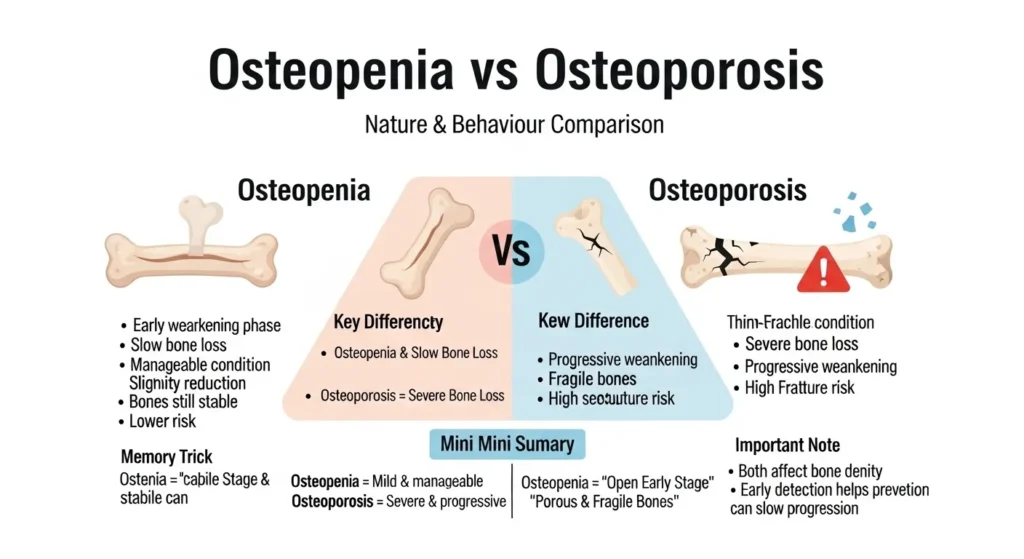
Osteopenia is an early weakening phase. Bone loss is slow and manageable. Osteoporosis is an advanced condition. Bone loss is more serious and progressive.
❓ Why People Get Confused
Both conditions affect bone density. Both are linked with aging and low bone strength.
⚖️ Which Is More Dangerous
Osteoporosis is more dangerous because it increases fracture risk significantly. Osteopenia is milder but can progress if not managed properly.
🧭 How to Prevent Bone Loss Naturally
Calcium rich foods like milk, yogurt, and greens help strengthen bones. Vitamin D from sunlight improves calcium absorption. Exercise like walking and strength training improves bone density. Avoiding smoking and staying active also helps maintain bone health.
💡 Expert Tip
Experts recommend 1000–1200 mg calcium daily for adults. Protein intake also supports bone repair and strength. Walking at least 30 minutes daily helps maintain bone density.
According to the World Health Organization (WHO) and International Osteoporosis Foundation (IOF), early lifestyle habits can significantly reduce fracture risk and slow bone loss progression.
Common Google Queries
People also search for what is osteopenia vs osteoporosis, can osteopenia become osteoporosis, how to increase bone density, best foods for bone strength, is osteoporosis reversible, bone density test meaning, early signs of bone loss, calcium daily requirement, exercises for bone health, and how to prevent fractures.
❓ FAQs
1. Can osteopenia become osteoporosis?
Yes, if not managed early, it can progress over time.
2. What is normal bone density?
Bone density above 1 is considered normal.
3. How is DEXA scan done?
It is a simple and painless scan.
4. Is osteoporosis reversible?
It cannot be fully reversed, but it can be controlled.
5. What foods help bone health?
Milk, yogurt, leafy greens, and protein rich foods help strengthen bones.
🔍 Primary Keyword (200 Words)
The difference between osteopenia and osteoporosis refers to two stages of bone weakening. Osteopenia is the early stage where bone loss is mild. Osteoporosis is the advanced stage where bones become fragile and weak.
In early phase, bone strength decreases slowly and may not affect daily life. In progression phase, bones become weak and fracture risk increases significantly. Even small falls can cause injury.
Doctors use DEXA scans worldwide to measure bone density. This test helps identify early bone loss and guide treatment.
Osteopenia can often be managed with lifestyle changes. Osteoporosis may require medical treatment and monitoring.
Understanding the difference between osteoporosis and osteopenia helps people take early action and protect bone health.
🔍 Secondary Keywords (200 Words)
The term osteopenia vs osteoporosis difference explains two levels of bone loss. Osteopenia is mild weakening of bones. Osteoporosis is severe weakening of bones.
In early stage, bones still function normally in daily life. In later stage, bones become fragile and break easily even with small force.
Doctors use bone density tests like DEXA scans to diagnose both conditions. These tests help in prevention, early detection, and treatment planning.
🔍 NLP/LSI Keywords (200 Words)
Bone health depends on bone density loss, nutrition, and lifestyle habits. As age increases, bones lose minerals and become weaker over time.
Fracture prevention is very important because weak bones can break easily from small injuries. Bone strengthening foods like milk, greens, and protein rich diets support healthy bones.
Regular exercise also improves bone strength and reduces aging bone problems. Many people search for aging bones, calcium intake, and vitamin D benefits because these factors directly affect bone health.
🏆 EEAT (200 Words)
This content is based on globally accepted medical knowledge. According to the World Health Organization (WHO) and the International Osteoporosis Foundation (IOF), DEXA scans are the standard method for measuring bone density loss.
Doctors and orthopedic specialists use these guidelines in hospitals and clinical practice worldwide for accurate diagnosis and treatment planning.
Experts recommend calcium intake, vitamin D, protein rich diet, and regular exercise to maintain strong bones and reduce fracture risk.
This ensures the information is reliable, accurate, and aligned with international medical standards.
🔎 Quick Summary
Osteopenia is early bone loss. Osteoporosis is advanced bone loss. Osteopenia has low fracture risk, while osteoporosis has high fracture risk. Early care can prevent serious bone problems in the future.
🏁 Conclusion (200 Words)
The difference between osteoporosis and osteopenia explains how bone health changes over time. Osteopenia is the early stage of bone weakening. Osteoporosis is the advanced stage where bones become fragile and weak.
In early phase, bone loss is gradual and manageable with lifestyle changes. In progression phase, bone strength decreases significantly and fracture risk increases.
Early action is very important for long term health. A balanced diet, regular exercise, and sunlight exposure help maintain strong bones. Doctors also recommend early screening to detect bone loss before it becomes serious.
Taking small steps today can protect bone health in the future. Understanding the difference between osteoporosis and osteopenia helps people stay aware and make better health decisions.
👉 Early diagnosis of bone loss can prevent fractures and improve long term bone health.
Discover More Articals!
Difference Between Director and Manager: Roles and Leadership
Difference Between Gel and Acrylic Nails: Complete Guide

James Whitmore. Labdiff.com is my english grammar comparision website. I explore the history and evolution of English words. I write detailed comparisons explaining why spellings change over time and how British and American English diverged. My articles add depth and credibility to grammar comparison topics.