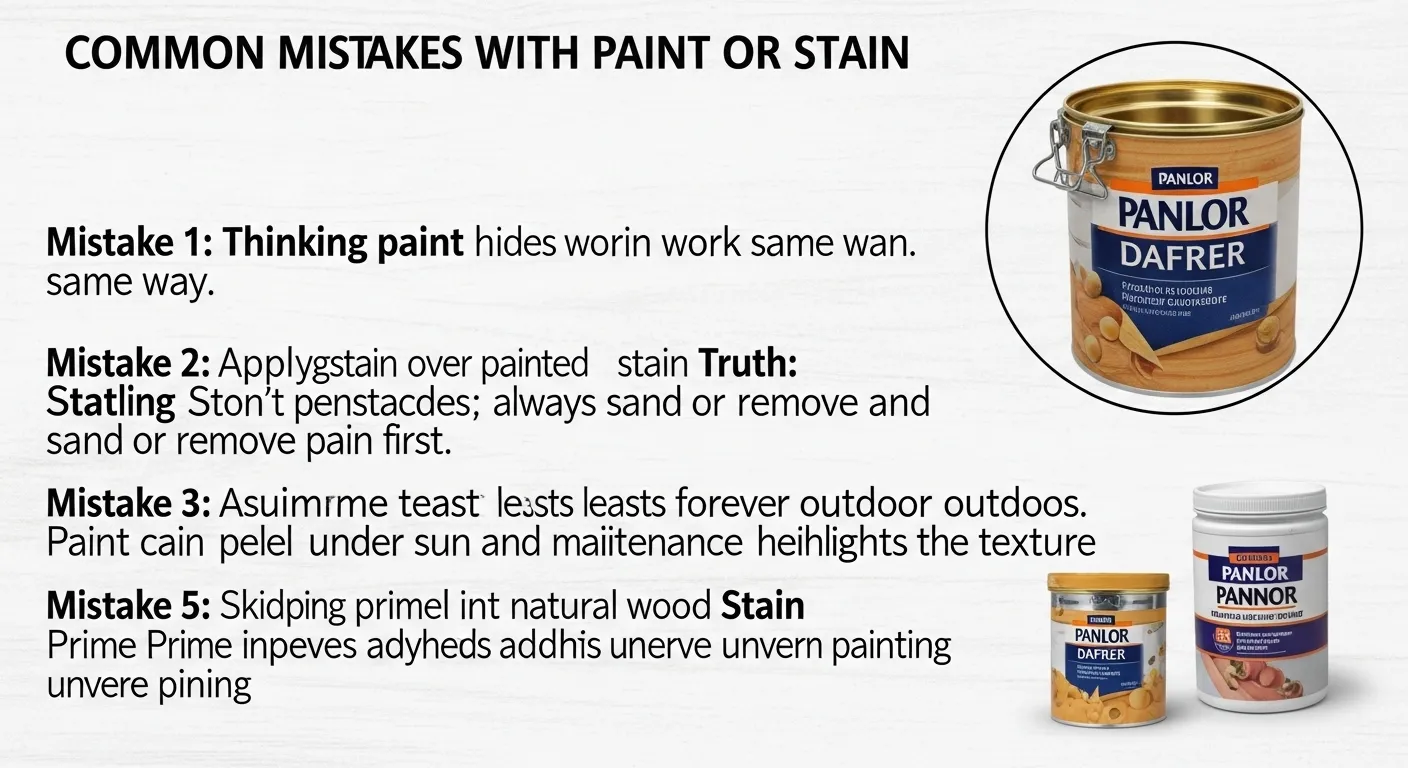
The difference between paint or stain is simple. Paint covers the surface with color and hides the wood grain, while stain soaks into the wood and enhances its natural texture.
Both are used for wood finishing. Both protect surfaces. But their look, application, and durability differ.
Knowing the difference between paint and stain helps in home improvement, woodworking, and decoration. Paint gives a solid color. Stain shows the wood’s natural beauty.
Understanding the difference between paint vs stain is important for DIY projects, furniture making, and house painting.
🔑 Key Differences Between Stain and Paint
| Feature | Paint | Stain |
| Coverage | Covers surface fully | Penetrates wood |
| Appearance | Solid color, hides grain | Transparent or semi-transparent, shows grain |
| Protection | High, forms a layer | Moderate, protects from moisture |
| Finish | Smooth, glossy or matte | Natural, enhances texture |
| Application | Brush, roller, spray | Brush or cloth |
| Drying Time | Longer | Shorter |
| Layers Needed | 2–3 coats | Usually 1–2 coats |
| Durability | Lasts longer | May fade faster |
| Maintenance | Peeling possible, requires repainting | May need re-staining over time |
| Best Use | Furniture, walls, cabinets | Decks, wood floors, natural furniture |
📖 Definition of Paint and Stain
Paint is a coating applied on surfaces. It covers the surface completely. Paint hides imperfections and color variations. Paint protects wood and other materials.
Stain is a coloring agent for wood. It soaks into the surface. Stain enhances the wood’s natural grain. Stain provides color without hiding texture.
Both protect surfaces. Both decorate materials. Paint hides, stain reveals.
🌿 Nature and Characteristics
Paint forms a layer on top. It is thick and opaque. It comes in many colors. Paint can be glossy, matte, or satin. It is ideal for bold decoration.
Stain penetrates wood. It is thin and transparent. Stain enhances natural beauty. It may darken or tint wood slightly. Stain is ideal for natural wood look.
Paint is strong and covers imperfections. Stain is subtle and shows patterns.
🔊 Pronunciation (US & UK)
- Paint: /peɪnt/
- Stain: /steɪn/
Both are easy to pronounce. Both are common in home improvement.
🥄 10 Main Differences Between Paint and Stain
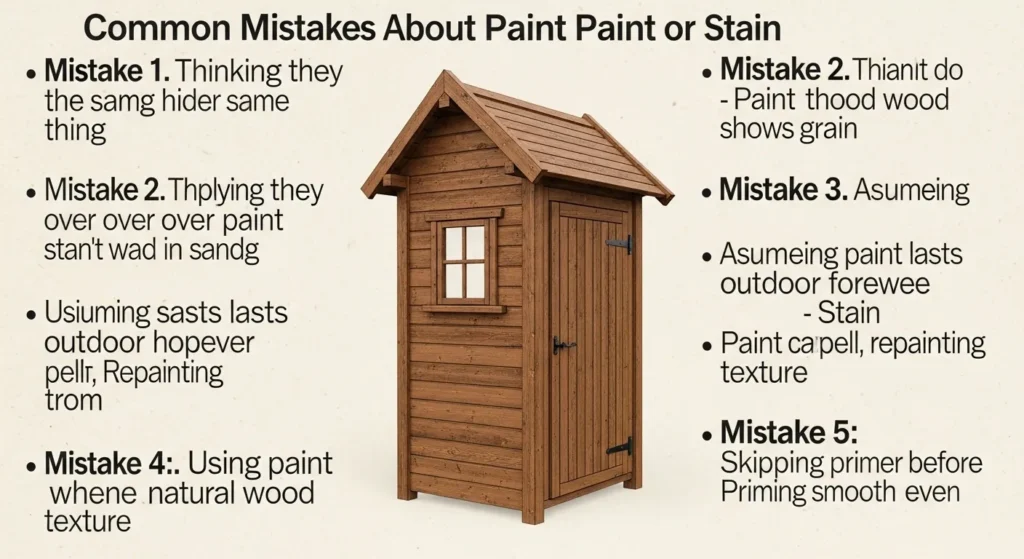
1️⃣ Coverage
- Paint: Covers the wood completely.
- Stain: Soaks into wood, shows texture.
Example 1: Painted door hides wood pattern.
Example 2: Stained deck shows wood grain.
2️⃣ Appearance
- Paint: Opaque color.
- Stain: Transparent or semi-transparent.
Example 1: White paint on wall.
Example 2: Walnut stain on table.
3️⃣ Protection
- Paint: Protects against water, sun, and scratches.
- Stain: Protects against moisture, less against scratches.
Example 1: Painted fence lasts longer.
Example 2: Stained bench needs maintenance.
4️⃣ Finish
- Paint: Smooth, glossy, or matte.
- Stain: Natural finish, highlights grain.
Example 1: Glossy white paint on cabinet.
Example 2: Oak stain shows patterns on wood.
5️⃣ Application Method
- Paint: Brush, roller, or spray.
- Stain: Brush, cloth, or sponge.
Example 1: Roller for wall paint.
Example 2: Cloth to rub stain on deck.
6️⃣ Drying Time
- Paint: Longer, may need 2–3 hours per coat.
- Stain: Shorter, usually dries in 1 hour.
Example 1: Wall paint takes hours to dry.
Example 2: Deck stain dries faster.
7️⃣ Layers Needed
- Paint: Usually 2–3 coats.
- Stain: Usually 1–2 coats.
Example 1: Painted chair needs 2 coats.
Example 2: Stained table needs 1 coat.
8️⃣ Durability
- Paint: Lasts longer, resists wear.
- Stain: May fade faster over time.
Example 1: Painted door lasts years.
Example 2: Stained deck fades in sun.
9️⃣ Maintenance
- Paint: May peel; requires sanding and repainting.
- Stain: Reapply when color fades.
Example 1: Painted fence peeling needs sanding.
Example 2: Stained bench can be re-stained yearly.
🔟 Best Use
- Paint: Furniture, walls, cabinets.
- Stain: Decks, wood floors, natural furniture.
Example 1: Kitchen cabinets painted white.
Example 2: Garden deck stained dark brown.
📊 Comparison Table
| Feature | Paint | Stain | Similarity |
| Coverage | Opaque, hides wood | Transparent, shows wood | Both decorate and protect |
| Protection | Strong | Moderate | Both protect surfaces |
| Texture | Smooth | Natural grain visible | Both can be applied with brush |
| Durability | Long-lasting | Medium | Both enhance appearance |
| Maintenance | Repaint if peeling | Re-stain if faded | Both need occasional upkeep |
🤔 Why People Confuse Paint and Stain
- Both color wood or surfaces.
- Both are applied with a brush.
- Both protect materials.
- But paint hides grain; stain enhances it.
- Paint is thicker, stain is thinner.
🏆 Which Is Better in What Situation?
Paint 🎨
- Best for walls, cabinets, furniture.
- Hides imperfections.
- Comes in many colors.
- Ideal for bold or bright looks.
Stain 🌿
- Best for decks, floors, natural wood furniture.
- Highlights natural grain.
- Easier to refresh.
- Ideal for subtle, natural look.
🎭 Metaphors and Similes
- Paint is like a solid coat of armor.
- Stain is like a gentle hug for wood.
- Paint hides flaws like a mask.
- Stain shows beauty like sunlight on leaves.
💭 Connotative Meaning
- Paint: Bold, strong, covering.
- Example: “A painted wall feels bright and clean.”
- Stain: Natural, subtle, enhancing.
- Example: “A stained table looks warm and elegant.”
📚 Literature References
- The Art of Wood Finishing – DIY, Bob Flexner, 2012
- Furniture Painting Tips – Guide, Suzanne McNeill, 2015
🎬 Movies Featuring Paint or Stain
- The Great Wall – 2016, China/USA, shows wooden walls and painting techniques.
- Fantastic Mr. Fox – 2009, USA, wood textures shown with stains and colors.
❓ Frequently Asked Questions
1. Can I stain over paint?
No, stain won’t soak into painted surfaces.
2. Can I paint over stain?
Yes, after sanding and primer.
3. Which lasts longer?
Paint usually lasts longer than stain.
4. Is stain healthier for outdoor wood?
Stain allows natural wood to breathe.
5. Can I use paint and stain together?
Yes, but on separate surfaces for best results.
🌎 How Both Are Useful
- Paint protects and decorates furniture, walls, and doors.
- Stain protects and enhances natural wood textures.
- Both improve home appearance.
- Both increase wood lifespan.
- Both are important in DIY and professional carpentry.
📝 Final Words
Paint and stain are important for wood finishing. Paint hides wood and gives solid color. Stain soaks into wood and shows grain.
Paint lasts longer, stain is natural and subtle. Knowing the difference between paint and stain helps in choosing the right product.
Both protect surfaces. Both are valuable for DIY, furniture, and home improvement.
📌 Conclusion
Paint and stain differ in coverage, appearance, texture, and use. Paint is opaque and bold. Stain is transparent and subtle.
Paint hides imperfections; stain shows natural grain. Paint is ideal for walls, furniture, and cabinets. Stain is ideal for decks, floors, and natural wood. Both protect surfaces and enhance beauty.
Understanding the difference between paint and stain helps in home projects, DIY, and furniture finishing.
Choosing the right option depends on your goal: bold and covered, or natural and enhanced. Both are essential in woodworking and decoration.
Discover More Articals!
🛠️ Difference Between Steel and Metal: Simple Guide
⚡ Difference Between Ground and Neutral: Complete Guide
🎬 Difference Between Actor and Actress: Simple Guide

labdiff.com is my English grammar comparison website where I simplify confusing words, spelling differences, and usage rules through clear explanations and examples. My goal is to help learners, writers, and students understand English easily and use correct grammar with confidence.