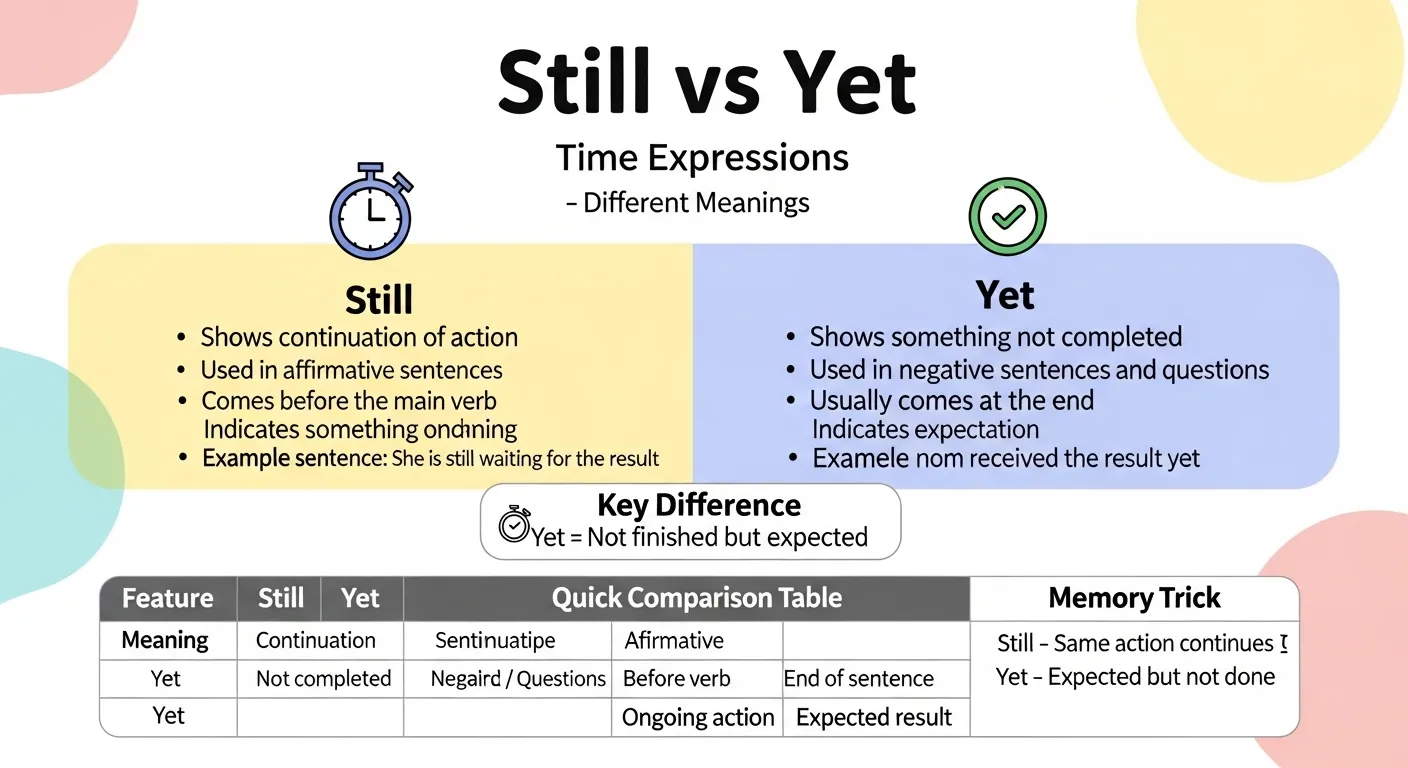
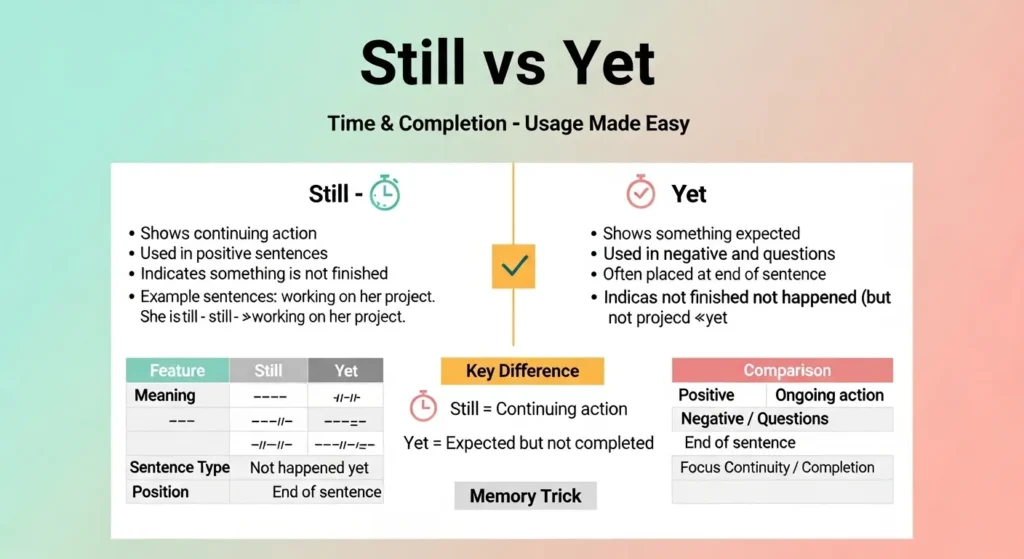
The difference between still and yet is simple. Still shows that something continues, while yet shows that something has not happened but is expected.
Imagine a student waiting for exam results. He says, “I am still waiting.” This means the waiting continues. Later he says, “I have not received my result yet.”
This means the result is expected but has not arrived. This real-life situation explains the difference between still and yet clearly.
Many learners search questions like “still vs yet meaning,” “when to use still and yet,” and “examples of still and yet in sentences.” These questions show that the difference between still and yet is important in English.
Both words relate to time, but their meanings are different. Understanding the difference between still and yet helps learners express ideas correctly and avoid common mistakes in speaking and writing.
Key Difference Between the Both
The main difference is continuation vs expectation. Still shows that an action continues, while yet shows that something has not happened but is expected.
Why Their Difference Is Necessary for Learners and Experts
Understanding this difference improves clarity in communication. Students use these words to describe ongoing actions and expected results. Teachers explain time expressions using still and yet.
In daily life, people use still to show continuation and yet to show delay or expectation. Using them correctly helps avoid confusion and makes sentences more accurate and meaningful.
Pronunciation (US & UK)
| Term | US Pronunciation | UK Pronunciation |
| Still | /stɪl/ | /stɪl/ |
| Yet | /jɛt/ | /jet/ |
Now that the basics are clear, let’s explore the detailed difference between still and yet.
Difference Between the Keywords
1. Basic Meaning
Still shows continuation. Yet shows something not completed.
Example 1:
She is still working on the project.
Example 2:
She has not finished the project yet.
2. Sentence Position
Still usually comes before the main verb. Yet usually comes at the end.
Example 1:
He is still reading the book.
Example 2:
He has not finished the book yet.
3. Use in Affirmative Sentences
Still is common in affirmative sentences. Yet is not usually used in positive sentences.
Example 1:
They are still playing.
Example 2:
They have not stopped yet.
4. Use in Negative Sentences
Yet is commonly used in negative sentences. Still can also appear but with different meaning.
Example 1:
I still do not understand the topic.
Example 2:
I do not understand the topic yet.
5. Time Focus
Still focuses on an action continuing. Yet focuses on expectation.
Example 1:
She is still waiting.
Example 2:
She has not arrived yet.
6. Use in Questions
Yet is often used in questions. Still is less common.
Example 1:
Are you still working?
Example 2:
Have you finished yet?
7. Tone
Still gives a neutral or slightly emotional tone. Yet gives a sense of delay.
Example 1:
He still loves his hometown.
Example 2:
He has not visited his hometown yet.
8. Grammar with Tenses
Still is used with continuous and simple tenses. Yet is common with present perfect.
Example 1:
She is still studying.
Example 2:
She has not completed her work yet.
9. Meaning in Communication
Still shows persistence. Yet shows incompletion.
Example 1:
They are still trying.
Example 2:
They have not succeeded yet.
10. Everyday Use
Still is used to describe ongoing actions. Yet is used to talk about expected results.
Example 1:
He is still sleeping.
Example 2:
He has not woken up yet.
Nature and Behaviour
Nature of Still
Still is active and continuous. It shows that an action has started and continues.
Nature of Yet
Yet is expectant. It shows that something has not happened but is likely to happen.
Why People Are Confused About Their Use
Both words relate to time and appear in similar contexts. Many learners think they are interchangeable. However, one shows continuation and the other shows expectation, which creates confusion.
Table Showing Difference and Similarity
| Feature | Still | Yet | Similarity |
| Meaning | Continuation | Not completed | Both relate to time |
| Sentence type | Affirmative | Negative and questions | Both used in daily English |
| Position | Before verb | End of sentence | Both describe actions |
| Tone | Ongoing | Expectation | Both affect meaning |
| Usage | Continuous action | Expected result | Both used in communication |
Which Is Better in What Situation
When Still Is Better
Still is better when an action continues over time. It is useful when describing ongoing situations. For example, saying “She is still studying” shows that the action started earlier and continues now.
When Yet Is Better
Yet is better when something has not happened but is expected. It is useful in questions and negative sentences. For example, “Have you finished yet?” shows expectation of completion.
How the Keywords Are Used in Metaphors and Similes
Still metaphor:
Example: “His hope is still like a steady flame.”
Yet metaphor:
Example: “The answer is yet like a hidden treasure.”
Connotative Meaning
Still – neutral or positive
Example: “She still believes in success.”
Yet – neutral
Example: “The result has not come yet.”
Idioms or Proverbs Related to the Words
Still waters run deep
Example: He speaks little, but still waters run deep.
As yet
Example: No decision has been made as yet.
Works in Literature
- Still Life Novel, Louise Penny, 2005
- Still Alice Novel, Lisa Genova, 2007
- Yet Being Someone Other Essays, Fernando Pessoa, 1982
Movies Related to the Keywords
- Still Alice 2014, United States
- The World Is Not Yet Enough 1999, United Kingdom
- Yet to Come 2022, South Korea
Frequently Asked Questions
1. What is the difference between still and yet?
Still shows continuation, while yet shows something not completed.
2. Can yet be used in positive sentences?
It is rarely used in positive sentences.
3. Where is still placed in a sentence?
It usually comes before the main verb.
4. Where is yet placed in a sentence?
It usually comes at the end.
5. Why do learners confuse still and yet?
Because both relate to time.
How Both Are Useful for Surroundings
Both words help describe time and actions in daily life. Still shows ongoing actions, while yet shows expected results. They help make communication clear and meaningful.
Final Words for the Both
Still and yet are simple but powerful words. Understanding their difference improves grammar and communication.
Conclusion
The difference between yet vs still lies in meaning and usage. Still shows that an action continues, while yet shows that something has not happened but is expected. Both words are important in English and are used in daily communication.
By understanding the difference between still or yet, learners can express ideas clearly and avoid common mistakes.
Discover More Articals!
Difference Between 220V and 240V
Difference Between Ago and Before: Meaning and Correct Usage Guide(2026)
When to Use A Little vs Little: Understanding the Main Difference(2026)

James Whitmore. Labdiff.com is my english grammar comparision website. I explore the history and evolution of English words. I write detailed comparisons explaining why spellings change over time and how British and American English diverged. My articles add depth and credibility to grammar comparison topics.