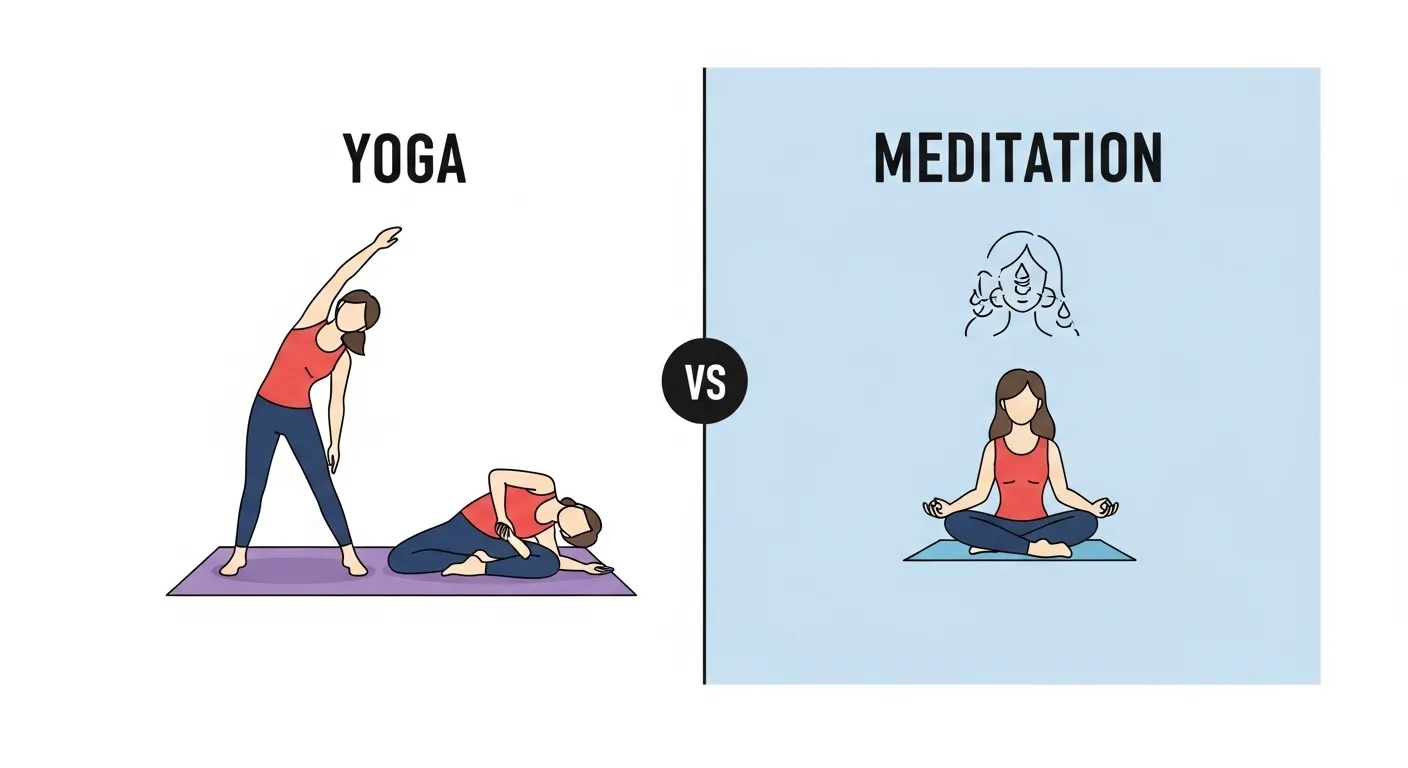
Yoga is a physical and mental practice combining postures and breathing, while meditation is a mental practice focused on mindfulness and inner calm.
Many people today look for ways to relax the mind and improve health. Two common practices that help with this are yoga and meditation.
These practices have been used for thousands of years. They come from ancient traditions and are now popular all over the world.
Yoga and meditation both focus on improving the mind and body. They help people reduce stress, increase focus, and feel more peaceful.
Because they are often practiced together, many people think they are the same thing. However, they are different practices with different methods.
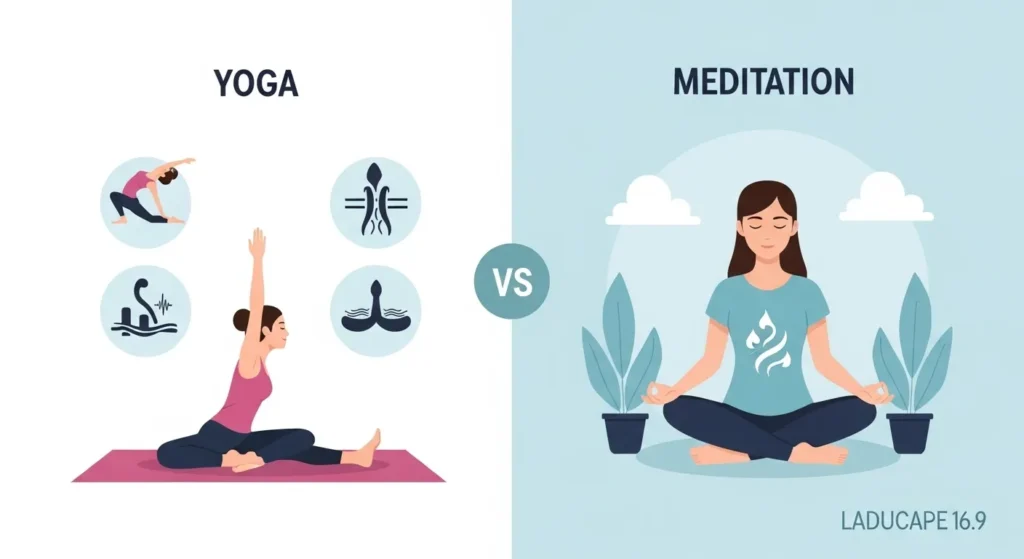
Yoga usually involves physical postures, breathing exercises, and movement. Meditation mainly focuses on mental awareness and calm thinking. Both practices support mental and physical well-being.
Understanding the difference between yoga or meditation helps people choose the right practice for their needs.
In simple terms, yoga is a physical vs mental practice, while meditation is mainly a mental practice focused on awareness and concentration.
📖 Definitions
🧘 Definition of Yoga
Yoga is a practice that combines physical movements, breathing exercises, and mental focus. It helps improve flexibility, strength, balance, and relaxation.
Yoga involves different body poses called asanas. Breathing techniques and relaxation are also important parts of yoga.
Many people practice yoga to improve both physical health and mental calm.
Example:
A person may attend a morning yoga class where they practice stretching poses and controlled breathing to relax the body.
🧠 Definition of Meditation
Meditation is a practice that focuses on training the mind and developing awareness. It usually involves sitting quietly and concentrating on breathing, thoughts, or a specific object.
Meditation helps calm the mind and improve focus. It reduces stress and promotes emotional balance.
Unlike yoga, meditation usually does not involve physical movement.
Example:
A person may sit quietly for 10 minutes while focusing on breathing to calm the mind and practice meditation.
🔍 Key Differences Between Yoga and Meditation
1️⃣ Scope
Yoga:
Yoga is both a physical and mental practice.
It includes body movements, breathing, and relaxation.
Meditation:
Meditation is mainly a mental practice.
It focuses on awareness and calm thinking.
2️⃣ Purpose
Yoga:
Helps improve flexibility, strength, and balance.
Also supports mental relaxation.
Meditation:
Helps calm the mind.
Improves focus and emotional control.
3️⃣ Process / Structure
Yoga:
Includes body postures, stretching, and breathing exercises.
The body moves during the practice.
Meditation:
Usually done while sitting quietly.
Focus remains on breathing or thoughts.
4️⃣ Usage
Yoga:
Used in fitness routines and wellness programs.
Often practiced in gyms or yoga studios.
Meditation:
Used for mental relaxation and mindfulness.
Can be practiced anywhere.
5️⃣ Origin
Yoga:
Originated in ancient India thousands of years ago.
It developed as a spiritual and physical discipline.
Meditation:
Also began in ancient spiritual traditions.
It was practiced in many religious and philosophical systems.
6️⃣ Method / Preparation
Yoga:
Requires a comfortable space and sometimes a yoga mat.
The practice involves physical movement.
Meditation:
Requires a quiet place and a relaxed posture.
The practice focuses on breathing and awareness.
7️⃣ Size or Form
Yoga:
Includes many different poses and sequences.
Some styles are gentle while others are intense.
Meditation:
Usually involves stillness and quiet concentration.
The body remains mostly motionless.
8️⃣ Cultural Role
Yoga:
Often connected with health, wellness, and spiritual growth.
Many cultures practice it for physical fitness.
Meditation:
Often linked with mindfulness, spirituality, and mental peace.
Used in many religious and wellness traditions.
9️⃣ Examples
Yoga Examples:
Hatha yoga practice
Morning stretching yoga
Yoga classes in fitness centers
Yoga breathing exercises
Meditation Examples:
Mindfulness meditation
Breathing meditation
Guided meditation
Silent meditation practice
🔟 Key Difference Summary
Yoga:
Includes physical postures and breathing exercises.
Improves body strength and flexibility.
Meditation:
Focuses on calming the mind.
Improves concentration and mental clarity.
🏁 Conclusion
Yoga and meditation are both powerful practices that support health and well being. They share similar goals, such as reducing stress and improving mental peace. However, their methods and focus are different.
Yoga is a combination of physical movement, breathing exercises, and mental focus. It improves flexibility, strength, and balance while also helping the mind relax.
Many people practice yoga as part of their daily fitness routine. It connects the body and mind through movement and controlled breathing.
Meditation, on the other hand, focuses mainly on training the mind. It encourages calm thinking, awareness, and concentration.
During meditation, a person usually sits quietly and pays attention to breathing or thoughts. This helps reduce stress and improve emotional balance.
Another important point is that yoga and meditation can work together. Many yoga sessions end with meditation to help relax the mind after physical movement. This combination supports both mental and physical health.
In simple terms, yoga focuses on both body and mind through movement and breathing, while meditation focuses mainly on calming and training the mind. Practicing either or both can help people live healthier and more balanced lives.
Discover More Articals!
🌸 Difference Between Parfum and Elixir : Complete Guide
🏢 Difference Between Corporation and Company: Simple and Clear Guide
🛠️ Difference Between Steel and Metal: Simple Guide

James Whitmore. Labdiff.com is my english grammar comparision website. I explore the history and evolution of English words. I write detailed comparisons explaining why spellings change over time and how British and American English diverged. My articles add depth and credibility to grammar comparison topics.