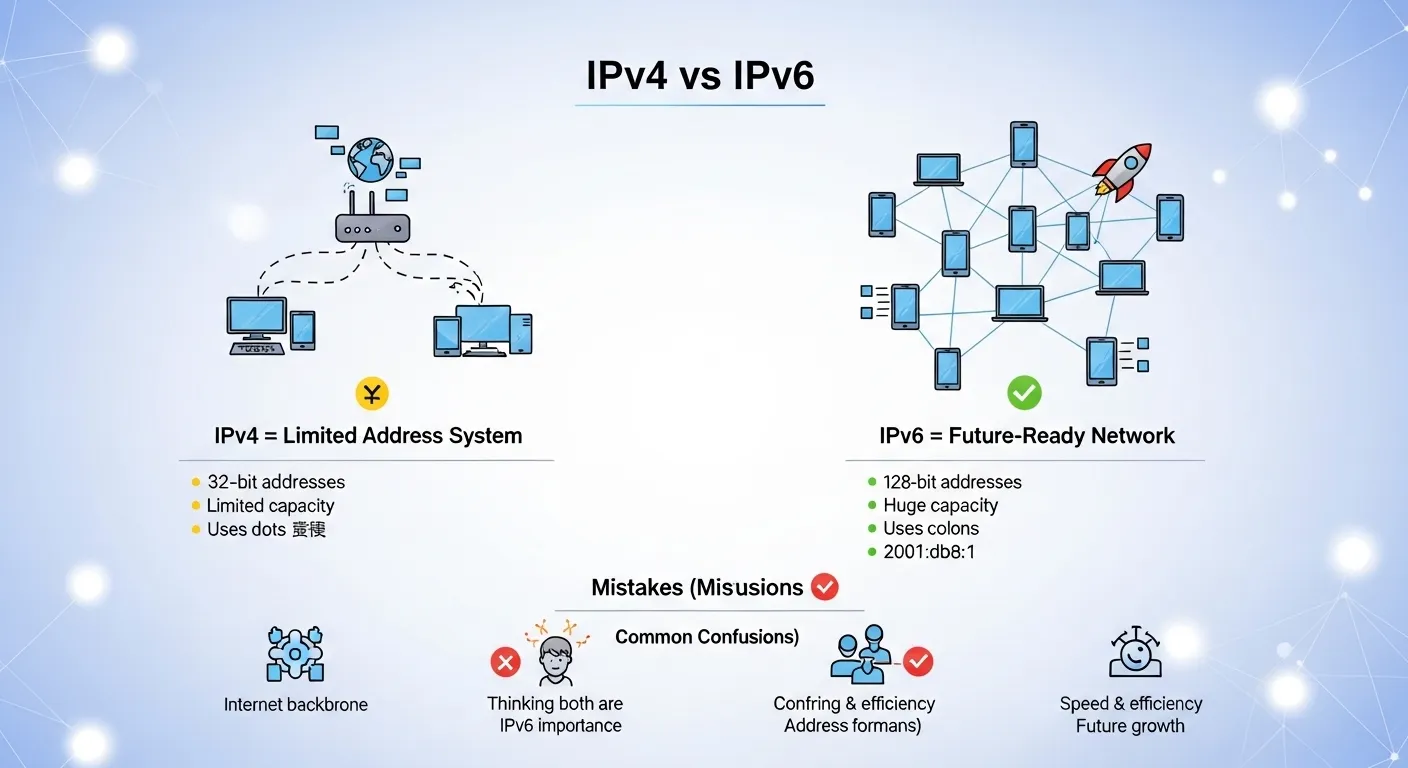
The difference between IPv4 and IPv6 is simple. IPv4 uses 32 bit addresses. IPv6 uses 128 bit addresses.
Imagine a city with limited house numbers. One day, numbers run out. A new system is created with longer numbers.
This allows more houses. This is how IPv6 replaced IPv4 limits. This example explains the difference between IPv4 and IPv6 clearly.
Many users search queries like “IPv4 vs IPv6 speed” and “why IPv6 is needed.” These queries show the difference between IPv4 and IPv6 is important.
Both identify devices on the internet. But they work differently. Understanding the difference between IPv4 and IPv6 helps learners and professionals.
Key Difference Between the Both
The main difference is address size. IPv4 uses 32 bit addresses. IPv6 uses 128 bit addresses.
Why Their Difference Is Necessary for Learners and Experts
This difference is important in networking. IPv4 has limited addresses. IPv6 solves this problem. It supports more devices. Students learn modern systems. Professionals design better networks. This knowledge improves real world skills.
Pronunciation (US & UK)
| Term | US Pronunciation | UK Pronunciation |
| IPv4 | /ˌaɪ piː ˈviː fɔːr/ | /ˌaɪ piː ˈviː fɔː/ |
| IPv6 | /ˌaɪ piː ˈviː sɪks/ | /ˌaɪ piː ˈviː sɪks/ |
Now let’s explore the difference between IPv4 and IPv6 in detail.
Definition with Examples
IPv4 Definition
IPv4 is Internet Protocol version 4. It uses 32 bit addresses.
Example 1:
A router uses 192.168.0.1.
Example 2:
A server uses 8.8.8.8.
IPv6 Definition
IPv6 is Internet Protocol version 6. It uses 128 bit addresses.
Example 1:
An address looks like 2001:0db8::1.
Example 2:
Modern phones support IPv6.
Difference Between the Keywords
1. Address Length
IPv4 uses 32 bits. IPv6 uses 128 bits.
Example 1:
IPv4: 192.168.1.1
Example 2:
IPv6: 2001:0db8::1
2. Address Format
IPv4 uses decimal. IPv6 uses hexadecimal.
Example 1:
IPv4 uses dots.
Example 2:
IPv6 uses colons.
3. Number of Addresses
IPv4 is limited. IPv6 is very large.
Example 1:
IPv4 can run out.
Example 2:
IPv6 supports many devices.
4. Security
IPv6 has built in security. IPv4 needs extra setup.
Example 1:
IPv4 uses optional tools.
Example 2:
IPv6 supports IPsec.
5. Configuration
IPv4 needs setup. IPv6 auto configures.
Example 1:
IPv4 uses DHCP.
Example 2:
IPv6 sets itself.
6. Speed
IPv6 can be faster. IPv4 may be slower.
Example 1:
IPv4 may delay.
Example 2:
IPv6 improves routing.
7. Broadcast
IPv4 uses broadcast. IPv6 does not.
Example 1:
IPv4 sends to all.
Example 2:
IPv6 uses multicast.
8. Header Complexity
IPv4 is complex. IPv6 is simple.
Example 1:
IPv4 has many fields.
Example 2:
IPv6 has fewer fields.
9. Network Configuration
IPv4 uses NAT. IPv6 avoids NAT.
Example 1:
IPv4 shares addresses.
Example 2:
IPv6 gives unique IPs.
10. Adoption
IPv4 is common. IPv6 is growing.
Example 1:
Old systems use IPv4.
Example 2:
New systems use IPv6.
Nature and Behaviour Of ip4 and ip6
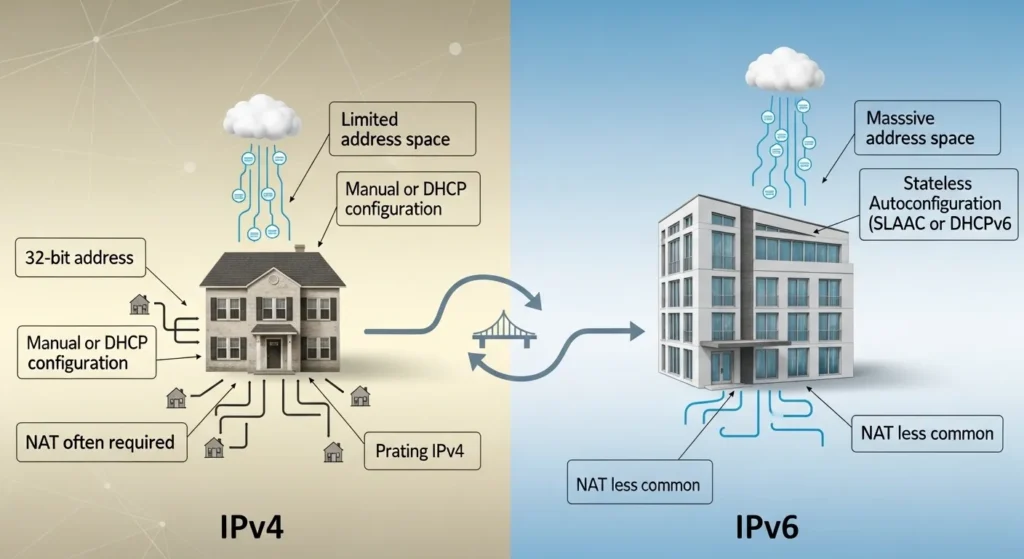
Nature of IPv4
IPv4 is old. It is widely used. It has limits.
Nature of IPv6
IPv6 is modern. It is scalable. It supports future growth.
Why People Are Confused About Their Use
Both are internet protocols. Names are similar. Both appear in settings. This causes confusion.
Table Showing Difference and Similarity
| Feature | IPv4 | IPv6 | Similarity |
| Address Size | 32 bit | 128 bit | Both identify devices |
| Format | Decimal | Hexadecimal | Both used in networking |
| Capacity | Limited | Huge | Both connect devices |
| Security | Optional | Built in | Both support communication |
| Usage | Common | Growing | Both part of internet |
Which Is Better in What Situation
When IPv4 Is Better
IPv4 is good for old systems. It is simple. It is widely supported. Many networks still use it.
When IPv6 Is Better
IPv6 is good for modern networks. It supports more devices. It is future ready.
How the Keywords Are Used in Metaphors and Similes
IPv4 metaphor:
Example: “IPv4 is like an old road.”
IPv6 metaphor:
Example: “IPv6 is like a wide highway.”
Connotative Meaning
IPv4 neutral
Example: “IPv4 shows tradition.”
IPv6 positive
Example: “IPv6 shows growth.”
Idioms or Proverbs Related to the Words
Out with the old, in with the new
Example: IPv6 replaces IPv4.
Works in Literature
- Computer Networking Andrew Tanenbaum, 2010
- TCP/IP Illustrated W. Richard Stevens, 1994
- Network Fundamentals 2015
Movies Related to the Keywords
- The Social Network 2010, United States
- Hackers 1995, United States
- Blackhat 2015, United States
Frequently Asked Questions
1. What is the difference between IPv4 and IPv6?
IPv4 uses 32 bit. IPv6 uses 128 bit.
2. Why is IPv6 needed?
IPv4 is limited.
3. Is IPv6 faster?
Sometimes yes.
4. Can both work together?
Yes.
5. Which is secure?
IPv6 is more secure.
How Both Are Useful for Surroundings
Both connect devices. Both support communication.
Final Words for the Both
IPv4 and IPv6 are important. Each has a role.
Conclusion
The difference between IPv4 and IPv6 is clear and important. IPv4 is older. It has limited addresses. It still works well today. Many systems depend on it. However, the number of devices is growing fast.
This creates a need for more addresses. IPv6 solves this problem. It provides a huge number of addresses. It also offers better security and simple configuration.
Both systems are used together today. This helps in smooth communication. IPv4 supports older networks. IPv6 supports modern needs. Over time, IPv6 will become more common. It is built for future technology.
Understanding the difference between IPv4 and IPv6 helps learners and professionals. It builds strong networking knowledge.
It also helps in making better technical decisions. In simple words, IPv4 is the past and present, while IPv6 is the future of internet connectivity.
Discover More Articals!
Difference Between Intern and Resident
Difference Between Remote and Teleworka

labdiff.com is my English grammar comparison website where I simplify confusing words, spelling differences, and usage rules through clear explanations and examples. My goal is to help learners, writers, and students understand English easily and use correct grammar with confidence.