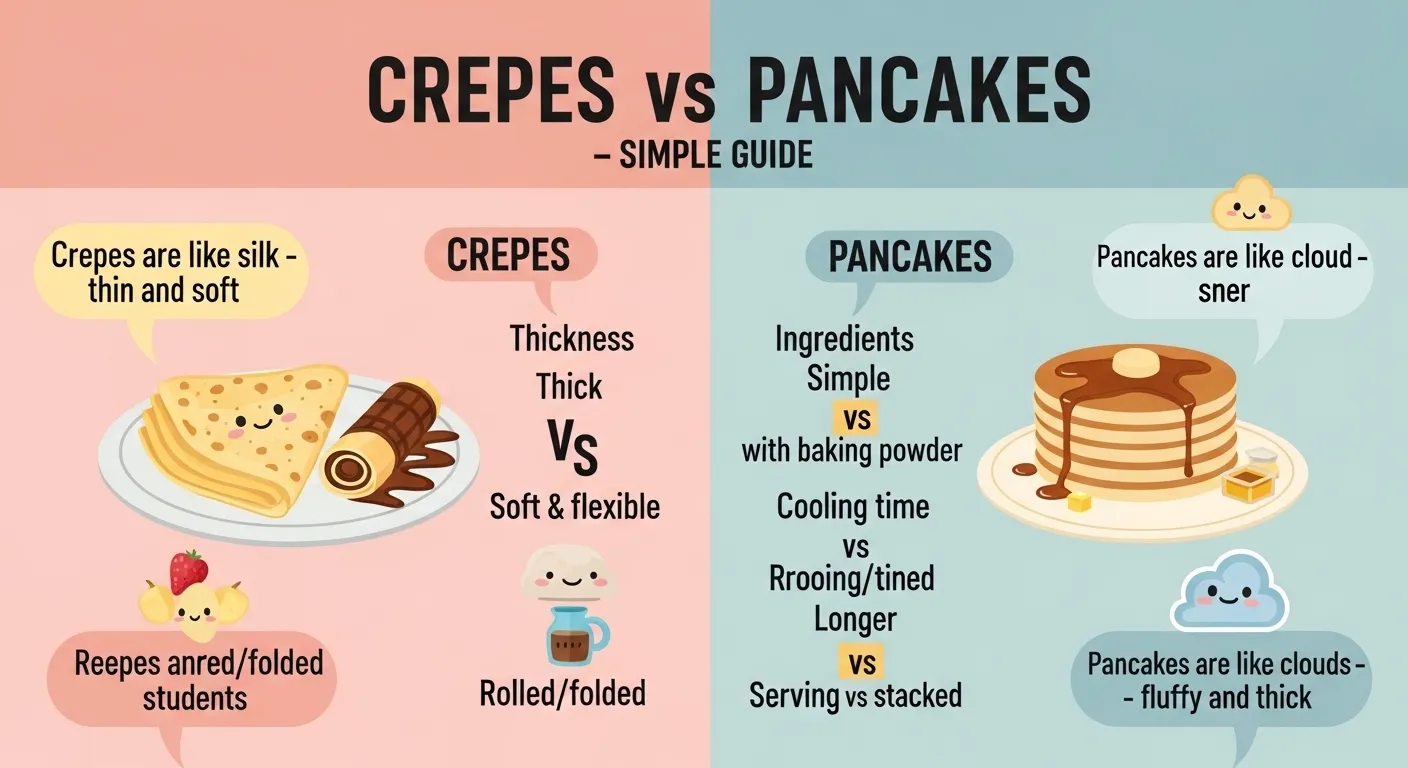
The difference between crepes and pancakes is that crepes are thin and soft, while pancakes are thick and fluffy.
Both are popular breakfast foods, but their texture, ingredients, and cooking styles are different. Understanding the difference helps you choose what to cook, eat, or order at a café.
Imagine waking up hungry on a weekend. You see two options: a soft, thin crepe filled with chocolate or a thick, fluffy pancake topped with syrup.
Both are delicious, but they feel completely different when you bite into them. Knowing the difference between crepes and pancakes makes breakfast more enjoyable and helps in recipes.
Many beginners confuse the two because they are both flat cakes cooked on a pan, but the result is very different
Crepes and pancakes are both popular worldwide. They can be sweet or savory. Crepes are common in France, while pancakes are popular in America.
Knowing the difference between crepes and pancakes helps you cook better and understand recipes.
- Crepes: Thin, soft, and light.
- Pancakes: Thick, fluffy, and filling.
Pronunciation:
- Crepes – /krɛps/ (US & UK)
- Pancakes – /ˈpæn.keɪks/ (US & UK)
🔑 Key Difference Between Crepes and Pancakes
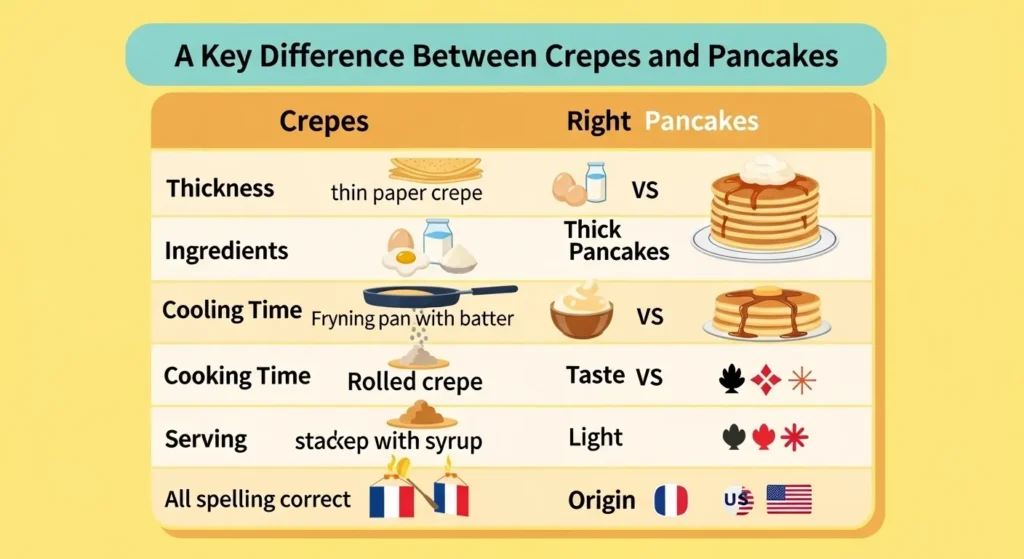
| Feature | Crepes | Pancakes |
| Thickness | Very thin | Thick and fluffy |
| Ingredients | Flour, milk, eggs, a bit of sugar | Flour, milk, eggs, sugar, baking powder |
| Cooking Time | Quick (thin batter) | Longer (thicker batter) |
| Serving | Rolled or folded | Stacked with syrup |
| Taste | Light, delicate | Sweet, heavy |
| Origin | France | USA |
🥄 10 Main Differences Between Crepes and Pancakes
1️⃣ Thickness
- Crepes: Very thin, almost paper-like.
Example: A chocolate crepe rolled with strawberries. - Pancakes: Thick and fluffy.
Example: A stack of pancakes with maple syrup.
2️⃣ Ingredients
- Crepes: Simple – flour, milk, eggs, little sugar.
Example: Savory crepe with cheese and ham. - Pancakes: Include baking powder for fluffiness.
Example: Blueberry pancakes with butter.
3️⃣ Cooking Style
- Crepes: Cooked quickly on medium heat. Spread thin.
- Pancakes: Cooked slowly on low-medium heat. Batter poured thickly.
4️⃣ Texture
- Crepes: Soft, flexible, smooth.
- Pancakes: Spongy, fluffy, sometimes slightly chewy.
5️⃣ Serving Style
- Crepes: Rolled or folded, often filled with sweet or savory toppings.
- Pancakes: Stacked, served with syrup, butter, or fruits.
6️⃣ Origin
- Crepes: French, traditional breakfast or dessert.
- Pancakes: American, typical breakfast food.
7️⃣ Sweet vs Savory
- Crepes: Can be savory (cheese, ham) or sweet (chocolate, jam).
- Pancakes: Mostly sweet (maple syrup, fruits, chocolate chips).
8️⃣ Batter Consistency
- Crepes: Thin, runny batter.
- Pancakes: Thick, pourable batter.
9️⃣ Cooking Equipment
- Crepes: Flat pan or crepe maker. Spread batter thin.
- Pancakes: Regular skillet, pour thick batter to make rounds.
🔟 Meal Use
- Crepes: Snack, dessert, or meal (savory crepes).
- Pancakes: Breakfast or dessert. Usually served in morning meals.
🌿 Nature and Behavior
Crepes are delicate and versatile. They are light and can be eaten anytime.
Pancakes are hearty and filling. They are mainly eaten as breakfast and make you full quickly.
❓ Why People Get Confused
Both are flat, round, and cooked on a pan. Both can be sweet or savory. The difference is in thickness, batter, and texture.
📊 Crepes vs Pancakes Table
| Feature | Crepes | Pancakes |
| Thickness | Thin | Thick & fluffy |
| Batter | Runny | Thick |
| Texture | Soft & flexible | Spongy & chewy |
| Origin | France | USA |
| Serving | Rolled/Folded | Stacked |
| Sweet/Savory | Both | Mostly sweet |
| Cooking | Quick | Longer |
| Meal | Snack/Breakfast | Breakfast |
🏆 Which Is Better in What Situation?
Crepes 🍫
- Best for light snacks, desserts, or fancy meals.
- Can be sweet or savory.
- Example: Chocolate crepe with fruit for dessert.
Pancakes 🥞
- Best for filling breakfast.
- Sweet toppings are common.
- Example: Stack of blueberry pancakes for morning energy.
🎭 Metaphors and Similes
- Crepes are like silk – thin and soft.
- Pancakes are like clouds – fluffy and thick.
- Eating a crepe is like a gentle hug.
- Eating pancakes is like a big cozy breakfast.
💭 Connotative Meaning
- Crepes – Positive, elegant, delicate. Example: “The crepe was perfect for dessert.”
- Pancakes – Positive, hearty, comforting. Example: “Pancakes made the kids happy in the morning.”
📚 Literature References
- French Crepes – Cookbook, Julia Child’s French Cookbook
- Pancakes, Pancakes! – Children’s Book, Eric Carle
🎬 Movies or Shows
- Pancakes! – Animated short, 2017, USA
- Crêpes à la Carte – French Cooking Show, 2015, France
❓ Frequently Asked Questions
1. Are crepes sweet or savory?
Both. They can be filled with chocolate or cheese.
2. Are pancakes only for breakfast?
Mostly yes, but sometimes as desserts.
3. Which is thinner?
Crepes are very thin.
4. Which is fluffier?
Pancakes are thick and fluffy.
5. Can I make pancakes like crepes?
Yes, but you must make the batter thinner.
🌎 How Both Help in Daily Life
- Crepes: Healthy snack, quick dessert, elegant meals.
- Pancakes: Filling breakfast, easy to serve for kids and family.
Both foods are versatile and loved worldwide.
📝 Final Words
Crepes are thin and delicate. Pancakes are thick and fluffy. Both are tasty. Knowing the difference helps you choose what to cook, eat, or serve. Crepes are elegant; pancakes are hearty. Both are important in breakfast culture.
📌 Conclusion
The difference between crepes and pancakes is easy to see once you know the thickness, batter, and serving style. Crepes are thin, soft, and versatile.
Pancakes are thick, fluffy, and filling. Crepes can be rolled or folded with sweet or savory fillings. Pancakes are usually stacked and eaten with syrup, butter, or fruits.
Understanding the difference makes breakfast more fun and cooking easier. Both are delicious and loved globally.
Discover More Posts!
Difference Between Fog and Clouds: Clear Guide for Everyone
Difference Between CFO and Controller: Clear and Simple Guide

James Whitmore. Labdiff.com is my english grammar comparision website. I explore the history and evolution of English words. I write detailed comparisons explaining why spellings change over time and how British and American English diverged. My articles add depth and credibility to grammar comparison topics.