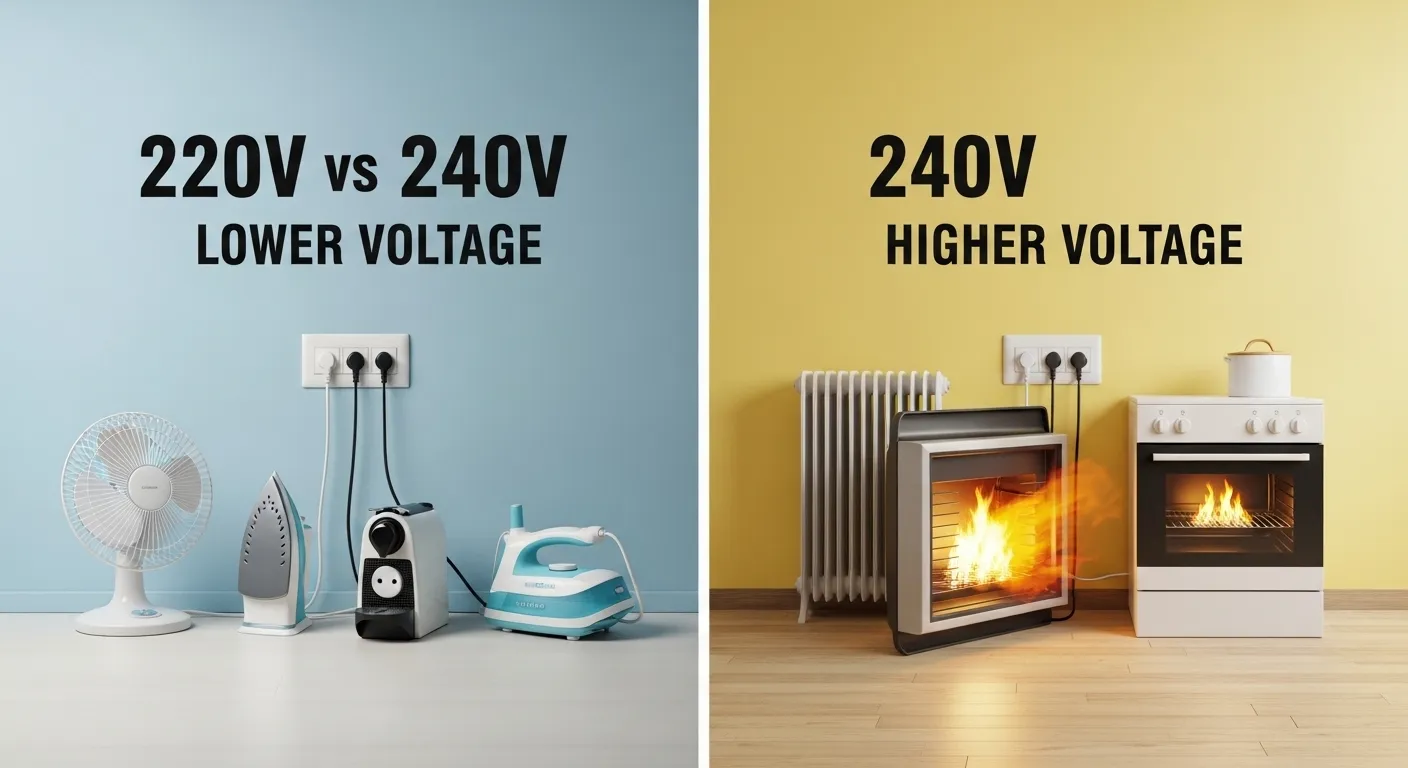
The difference between 220V and 240V is minimal, as both are standard voltage ranges, but 240V provides slightly higher electrical power than 220V.
Electricity powers many things in our homes. Lights, fans, televisions, and kitchen appliances all use electric power.
This electricity comes to our homes with a certain voltage level. Voltage is the force that pushes electric current through wires.
Two common voltage levels are 220V and 240V. Many countries use one of these standards for household electricity.
The numbers look very similar. Because of this, many people think they are exactly the same. In reality, there is a small difference between them.
Both voltage levels can run most home appliances. Many modern devices are built to support both 220V and 240V. Still, electrical systems in different countries may prefer one voltage level.
Understanding the difference between these two voltages is useful. It helps when buying appliances or using electrical devices in different countries.
In simple words, 220V and 240V are two very similar voltage levels used to supply electricity to homes and buildings.
📖 Definitions
🔌 Definition of 220V
220V means electricity that has 220 volts of electrical pressure. Voltage is the force that pushes electric current through wires in a power system.
Many countries used 220V as the standard voltage for homes. This level of voltage is strong enough to run many household appliances.
Homes receive this electricity through power outlets connected to the main electrical supply.
Example:
A household electric kettle or iron in many Asian homes may operate using 220V electricity.
⚡ Definition of 240V
240V means electricity that has 240 volts of electrical pressure. This voltage is slightly higher than 220V.
Many modern electrical systems use 240V because it can support larger appliances that require more electrical power.
Homes receive 240V electricity through the main electrical grid.
Example:
In some countries, electric ovens and water heaters operate using 240V electricity.
🔍 Key Differences Between 220V and 240V
1️⃣ Scope
220V:
This voltage level is used in many homes around the world.
It became common in older electrical systems.
240V:
This voltage level is also used in residential power systems.
Many modern systems operate closer to this level.
2️⃣ Purpose
220V:
Used to power everyday household appliances.
It runs lights, fans, televisions, and small machines.
240V:
Used to power home electricity as well.
It supports large appliances that require more power.
3️⃣ Process / Structure
220V:
Electric current flows with 220 volts of pressure.
This electricity travels through wires into household outlets.
240V:
Electric current flows with 240 volts of pressure.
The electrical push is slightly stronger.
4️⃣ Usage
220V:
Common in many parts of Asia, Africa, and the Middle East.
Many homes still use this voltage level.
240V:
Common in countries such as Australia and the United Kingdom.
Many homes receive power at this voltage.
5️⃣ Origin
220V:
Early electrical grids adopted 220 volts as a standard.
It became widely used in many countries.
240V:
Later improvements increased voltage slightly.
This helped improve electrical efficiency.
6️⃣ Method / Preparation
220V:
Electricity is produced at power plants.
Transformers reduce voltage to 220V before it reaches homes.
240V:
The same process occurs.
Transformers adjust the voltage to 240V for distribution.
7️⃣ Size or Form
220V:
This voltage level is slightly lower.
The electrical pressure is a bit less.
240V:
This voltage level is higher.
The electrical pressure is slightly stronger.
8️⃣ Cultural Role
220V:
Many countries built their electrical infrastructure around this voltage.
It became a common household standard.
240V:
Some countries adopted 240V later.
It became part of modern electrical systems.
9️⃣ Examples
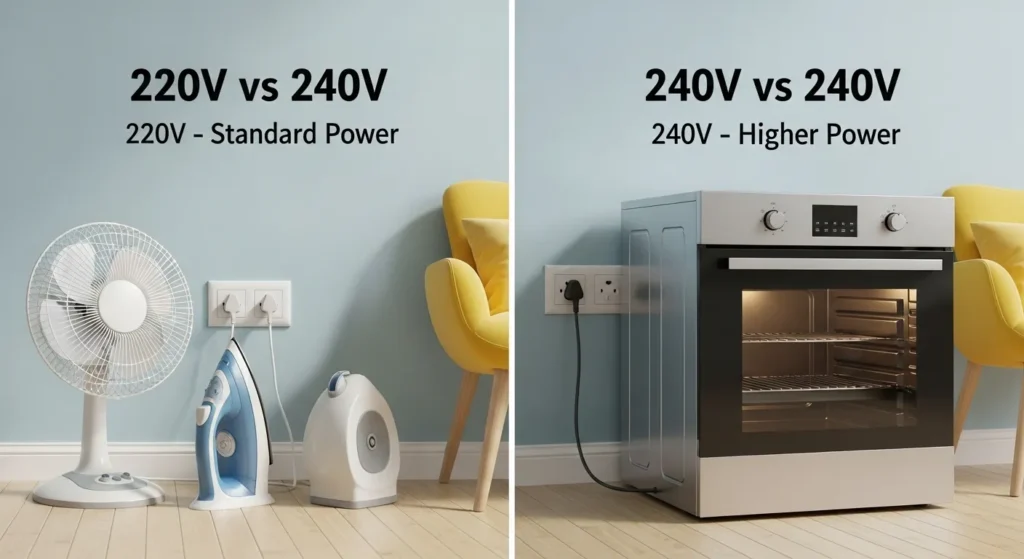
220V Examples:
Electric iron
Electric kettle
Television
Table fan
240V Examples:
Electric oven
Water heater
Large air conditioner
Clothes dryer
🔟 Key Difference Summary
220V:
Lower household voltage level.
Common in older electrical systems.
Still widely used in many countries.
240V:
Slightly higher voltage level.
More common in modern electrical standards.
Better suited for high-power appliances.
🏁 Conclusion
The difference between 220V and 240V is small but still important in electrical systems. Both voltage levels are used to deliver electricity to homes and buildings around the world. They power many appliances such as lights, fans, televisions, heaters, and kitchen devices.
A 220V system provides electricity with 220 volts of pressure. Many countries have used this voltage level for many years. It is strong enough to operate most household appliances safely.
A 240V system provides slightly more electrical pressure. The difference is only 20 volts. However, this small increase can help large appliances operate more efficiently.
Devices like electric ovens, water heaters, and air conditioners often benefit from higher voltage.
In daily life, most people do not notice much difference between these two systems. Many modern appliances are designed to work within a range of 220–240 volts. This means they can operate safely in either system.
Voltage standards often depend on the electrical infrastructure of each country. Some countries traditionally use 220V, while others use 240V.
Many modern power systems now operate around 230 volts, which sits between these two levels.
In simple terms, 220V and 240V are very similar household electricity standards. Both provide reliable power for homes and appliances.
Understanding their difference helps ensure safe appliance use and compatibility across different regions.
Discover More Articals!
🌸 Difference Between Parfum and Elixir : Complete Guide
🏢 Difference Between Corporation and Company: Simple and Clear Guide
🛠️ Difference Between Steel and Metal: Simple Guide

James Whitmore. Labdiff.com is my english grammar comparision website. I explore the history and evolution of English words. I write detailed comparisons explaining why spellings change over time and how British and American English diverged. My articles add depth and credibility to grammar comparison topics.