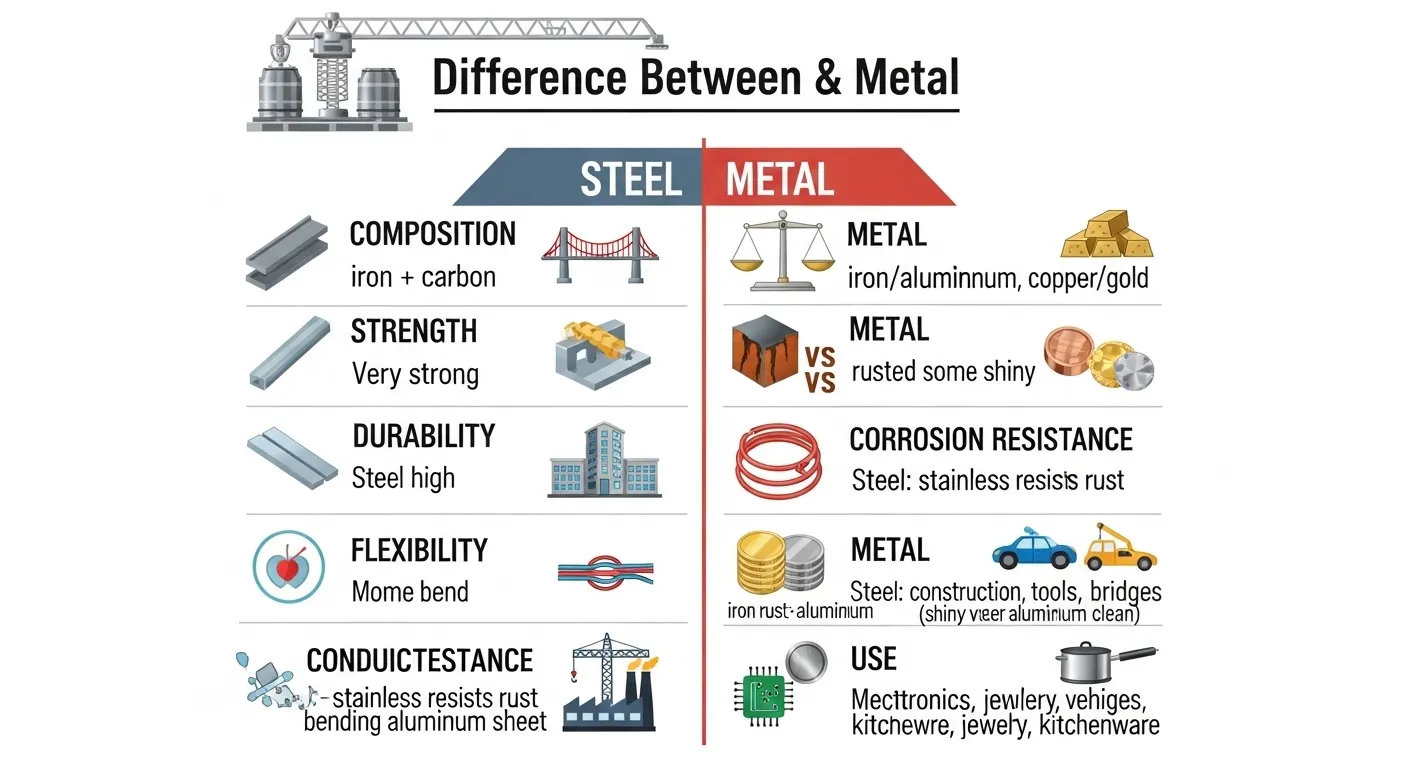
The difference between steel and metal is that steel is a type of metal made mainly from iron and carbon, while metal is a general material category including iron, copper, aluminum, and others.
Imagine a construction site. Steel beams hold up buildings because they are strong and durable.
Metal sheets like aluminum or copper are used in roofs, pipes, and wiring because they are lighter or flexible.
Beginners often confuse steel with metal because all steel is metal, but not all metals are steel.
Knowing the difference between steel and metal helps in construction, engineering, and daily use. It ensures proper material choice.
🔑 Key Differences Between Metal and Steel
| Feature | Steel | Metal |
| Definition | Alloy of iron and carbon | Element or alloy of any metallic element |
| Strength | Very strong | Varies by type |
| Durability | High | Varies |
| Composition | Iron + Carbon | Can include iron, aluminum, copper, etc. |
| Cost | Moderate | Depends on type |
| Use | Construction, tools | Everyday objects, electronics, vehicles |
| Types | Carbon steel, stainless steel | Iron, aluminum, gold, copper |
🌿 Nature and Behavior
Steel is hard, strong, and durable. It can resist pressure and heat. It is used where strength is needed.
Metal is a general term. Some metals are soft like aluminum. Some are very strong like tungsten. Metals conduct heat and electricity. They can be shiny or dull.
🥄 10 Main Differences Between Steel and Metal
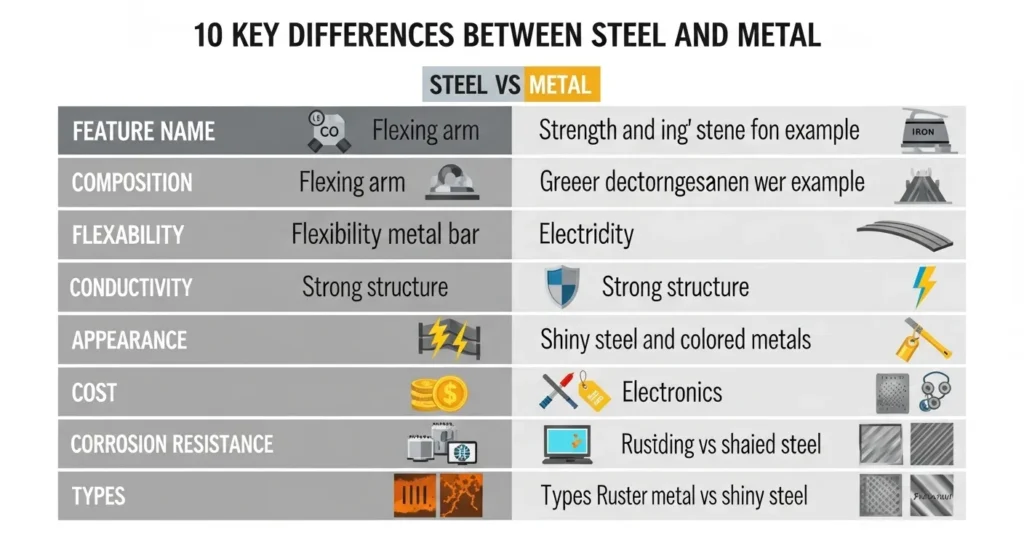
1️⃣ Composition
- Steel: Made of iron and carbon.
Example: Steel beams in bridges. - Metal: Can be iron, aluminum, copper, or alloys.
Example: Aluminum foil in kitchens.
2️⃣ Strength
- Steel: Very strong and durable.
- Metal: Strength depends on the type.
3️⃣ Flexibility
- Steel: Hard, less flexible.
- Metal: Some metals like aluminum bend easily.
4️⃣ Durability
- Steel: Lasts long under heavy use.
- Metal: Some metals corrode easily, like iron.
5️⃣ Conductivity
- Steel: Moderate electrical conductor.
- Metal: Most metals conduct electricity, e.g., copper wires.
6️⃣ Appearance
- Steel: Silvery-gray, shiny when polished.
- Metal: Color varies: gold, silver, copper, aluminum.
7️⃣ Cost
- Steel: Moderate price for construction.
- Metal: Depends on type; gold is expensive, aluminum is cheap.
8️⃣ Use
- Steel: Bridges, tools, vehicles, buildings.
- Metal: Electronics, coins, jewelry, machinery.
9️⃣ Corrosion Resistance
- Steel: Stainless steel resists rust.
- Metal: Some metals like iron rust; aluminum resists corrosion.
🔟 Types
- Steel: Carbon steel, alloy steel, stainless steel.
- Metal: Iron, aluminum, copper, zinc, gold, silver.
📊 Table Comparison
| Feature | Steel | Metal |
| Composition | Iron + Carbon | Iron, aluminum, copper, others |
| Strength | Very strong | Varies by type |
| Durability | High | Varies |
| Flexibility | Low | Some bend easily |
| Conductivity | Moderate | High (like copper) |
| Corrosion | Some types resistant | Varies |
| Use | Construction, tools | Electronics, jewelry, vehicles |
🔧 Which Is Better in What Situation?
Steel 🏗️
- Best for buildings, bridges, vehicles.
- Strong, durable, and can bear heavy weight.
- Example: Steel frame of a skyscraper.
Metal ⚙️
- Best for daily use, electronics, cooking, and jewelry.
- Flexible, lightweight, and easy to shape.
- Example: Aluminum foil or copper wiring.
🎭 Metaphors and Similes
- Steel is like a mountain: strong and unyielding.
- Metal is like water: it can be shaped, melted, or poured.
- Steel represents strength.
- Metal represents versatility.
💭 Connotative Meaning
- Steel – Strong, durable, reliable.
Example: “His determination was steel-like.” - Metal – Flexible, versatile, everyday use.
Example: “The metal coins jingled in her pocket.”
📚 Literature References
- The Steel of Civilization – Engineering Book, John Smith, 2001
- Metals and Their Uses – Science Text, Robert Brown, 2010
🎬 Movies
- The Iron Giant – 1999, USA
- Steel Magnolias – 1989, USA
- Metal: A Journey Through Elements – Documentary, 2015, UK
❓ Frequently Asked Questions
1. Is steel a metal?
Yes, all steel is metal.
2. Is all metal steel?
No. Metals include aluminum, copper, and gold too.
3. Which is stronger, steel or metal?
Steel is generally stronger than most metals.
4. Can metals rust like steel?
Some metals like iron rust; others like aluminum resist corrosion.
5. Where is steel mainly used?
In construction, tools, bridges, vehicles, and machines.
🌎 How Both Help in Daily Life
- Steel: Builds homes, bridges, cars, and tools.
- Metal: Used in electronics, kitchenware, coins, jewelry, wires.
- Steel is strong for heavy tasks.
- Metal is versatile for everyday life.
📝 Final Words
Steel is a type of metal. It is strong and durable. Metals are more general. They can be soft or hard, heavy or light. Knowing the difference between steel or metal helps in choosing materials.
Steel is used where strength is needed. Metal is used where flexibility or conductivity is needed.
Both are important in construction, engineering, and daily life. Steel provides support and strength. Metal provides variety and versatility.
📌 Conclusion
Steel and metal are closely related but different. Steel is an alloy made of iron and carbon. It is very strong, hard, and long lasting.
Steel is used for construction, bridges, tools, and vehicles. Metal is a general term for all metallic elements. It can be soft like aluminum or precious like gold.
Metals are used in electronics, coins, jewelry, and machinery. Steel is chosen for strength. Metals are chosen for versatility.
Understanding the difference helps in construction, engineering, and daily tasks. Both steel and metal are essential. They shape our buildings, tools, and everyday objects.
Discover More Posts!
📘 Difference Between Are and Our: Clear and Simple Guide
🥞 Difference Between Crepes and Pancakes: Simple Guide

labdiff.com is my English grammar comparison website where I simplify confusing words, spelling differences, and usage rules through clear explanations and examples. My goal is to help learners, writers, and students understand English easily and use correct grammar with confidence.