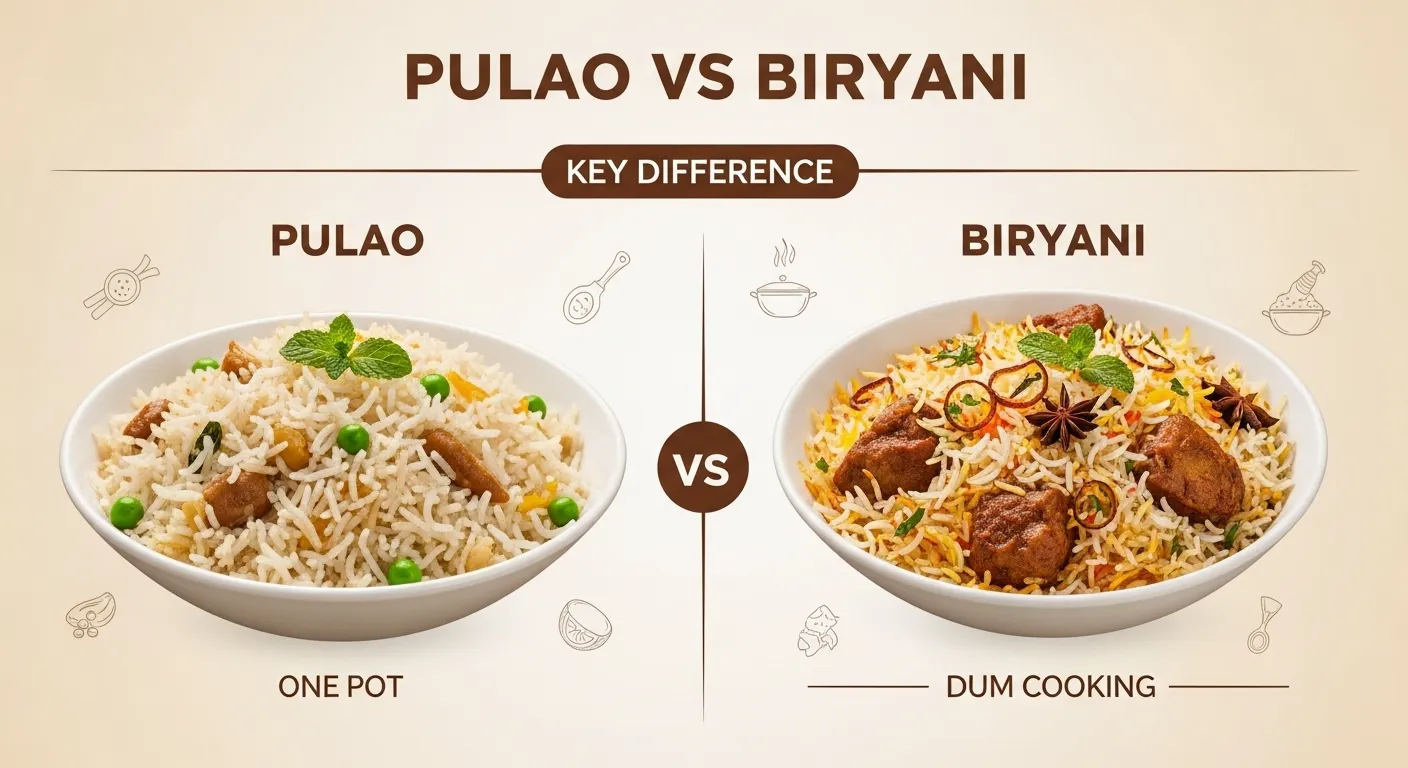
Pulao is a mildly spiced rice dish cooked with simple flavors, while Biryani is a rich, aromatic dish made with layered rice, stronger spices, and more complex cooking methods.
Last weekend, I went to a family dinner. Someone ordered pulao. Someone ordered biryani. At first, both dishes looked similar.
Both had rice and spices. But when I tasted them, I understood the difference between pulao vs biryani.
The difference between pulao or biryani is mainly in cooking method and flavor. Pulao is simple and mildly spiced.
Biryani is layered and strongly flavored. Many people confuse them because both use rice and meat or vegetables.
But once you learn the difference between pulao vs biryani, you can easily tell them apart. Understanding the difference between pulao and biryani also helps when ordering food.
🔑 Key Difference Between the Both
The main difference between biryani and pulao is that pulao is cooked together in one pot, while biryani is cooked in layers using the dum method.
🎓 Why Is Their Difference Important?
Knowing the difference between pulao and biryani is useful for food lovers and cooks. It helps in proper cooking. It also shows knowledge of South Asian cuisine.
🔊 Pronunciation
🗣️ Pulao
- US: /puːˈlaʊ/
- UK: /puːˈlaʊ/
🗣️ Biryani
- US: /ˌbɪriˈɑːni/
- UK: /ˌbɪriˈɑːni/
Now let’s see the detailed differences.
🍛 Difference Between Biryani and Pulao
📖 Definition of Pulao
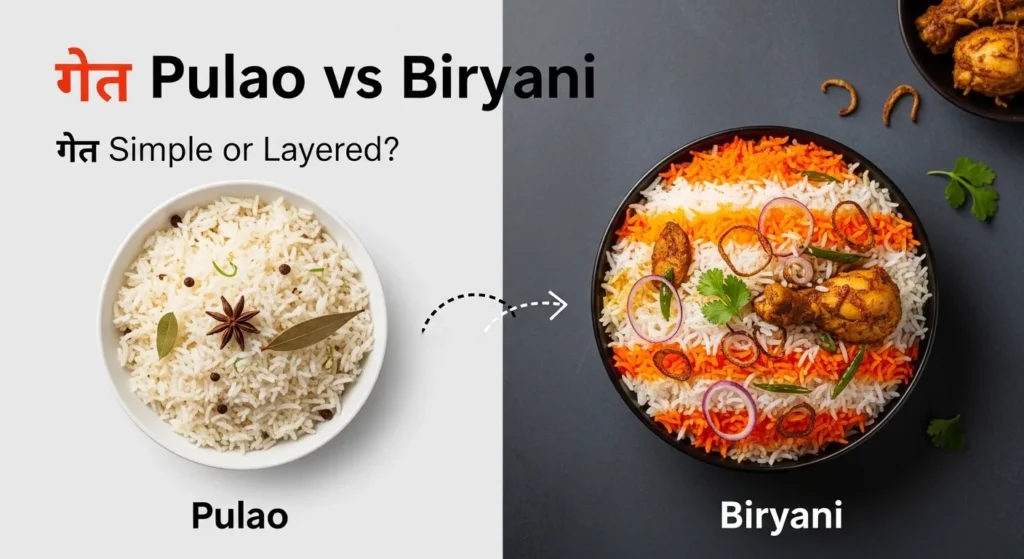
Pulao is a rice dish cooked with vegetables or meat and mild spices in one pot.
📖 Definition of Biryani
Biryani is a layered rice dish cooked with marinated meat or vegetables and strong spices using dum cooking.
1️⃣ Cooking Method
Pulao: One-pot cooking.
- Example: Rice and vegetables cooked together.
- Example: Meat and rice boiled in same pot.
Biryani: Layered cooking.
- Example: Rice layered over marinated chicken.
- Example: Cooked using dum method.
2️⃣ Flavor
Pulao: Mild flavor.
- Example: Light spice taste.
- Example: Subtle aroma.
Biryani: Strong flavor.
- Example: Rich spicy taste.
- Example: Deep aroma of saffron.
3️⃣ Spices
Pulao: Fewer spices.
- Example: Bay leaf and cumin.
- Example: Simple garam masala.
Biryani: Many spices.
- Example: Cardamom, cloves, cinnamon.
- Example: Saffron and fried onions.
4️⃣ Preparation Time
Pulao: Quick to prepare.
- Example: Ready in 30–40 minutes.
- Example: Simple home meal.
Biryani: Takes longer time.
- Example: Needs marination.
- Example: Slow dum cooking.
5️⃣ Marination
Pulao: Usually no marination.
- Example: Direct cooking.
- Example: Simple seasoning.
Biryani: Meat is marinated.
- Example: Chicken marinated in yogurt.
- Example: Spiced meat rested before cooking.
6️⃣ Texture
Pulao: Rice mixed evenly.
- Example: All ingredients blended.
- Example: Uniform color.
Biryani: Visible layers.
- Example: White and colored rice layers.
- Example: Meat between rice layers.
7️⃣ Occasion
Pulao: Everyday meal.
- Example: Lunch at home.
- Example: Simple family dinner.
Biryani: Special occasions.
- Example: Weddings.
- Example: Festivals.
8️⃣ Oil and Ghee
Pulao: Less oil.
- Example: Light cooking.
- Example: Less greasy.
Biryani: More oil or ghee.
- Example: Rich texture.
- Example: Heavy dish.
9️⃣ Origin Influence
Pulao: Central Asian origin.
- Example: Persian pilaf.
- Example: Afghan pulao style.
Biryani: Mughal influence in India.
- Example: Hyderabadi biryani.
- Example: Lucknowi biryani.
🔟 Complexity
Pulao: Simple recipe.
- Example: Easy steps.
- Example: Beginner friendly.
Biryani: Complex recipe.
- Example: Multiple steps.
- Example: Skilled cooking needed.
🌿 Nature and Behavior
🍚 Pulao
Pulao is light and simple. It is less spicy. It is easy to digest.
🍛 Biryani
Biryani is rich and heavy. It is spicy and aromatic. It feels festive.
🤔 Why Are People Confused?
Both use rice. Both may contain meat or vegetables.That is why people mix them up.
📊 Difference and Similarity Table
| Feature | Pulao | Biryani | Similarity |
| Cooking | One pot | Layered dum | Rice-based |
| Flavor | Mild | Strong | Use spices |
| Time | Quick | Slow | Main dish |
| Occasion | Daily | Special | Popular meal |
| Oil | Less | More | Served hot |
🏆 Which Is Better in What Situation?
🍚 Pulao (Best for Simple Meals)
Pulao is best for daily meals. It is light and quick. It is easier to cook at home.
🍛 Biryani (Best for Special Occasions)
Biryani is best for parties and festivals. It is perfect for guests. It has strong taste and aroma.
✍️ Metaphors
- Life is not always biryani; sometimes it is simple pulao.
- His plan was a biryani of ideas.
🎭 Connotative Meaning
Pulao: Simple and homely.
Biryani: Royal and rich.
❓ FAQs
1. Is pulao and biryani the same?
No. Cooking method is different.
2. Which is spicier?
Biryani is spicier.
3. Which is easier to cook?
Pulao is easier.
4. Which is healthier?
Pulao is usually lighter.
5. Which is popular at weddings?
Biryani is common at weddings.
🌍 Usefulness
Both dishes bring people together. Both are important in South Asian culture.
📝 Final Words
Pulao and biryani are famous rice dishes. They look similar but taste different.
📌 Conclusion
The difference between pulao and biryani is clear in cooking style and flavor. Pulao is simple and mild. Biryani is layered and rich.
Understanding the difference between pulao and biryani helps in cooking and ordering food. Once you know the difference between pulao or biryani, you can enjoy both properly.
Discover More Articals!
Difference Between Fog and Clouds: Clear Guide for Everyone
Difference Between Risk and Vulnerability: In(2026)

labdiff.com is my English grammar comparison website where I simplify confusing words, spelling differences, and usage rules through clear explanations and examples. My goal is to help learners, writers, and students understand English easily and use correct grammar with confidence.