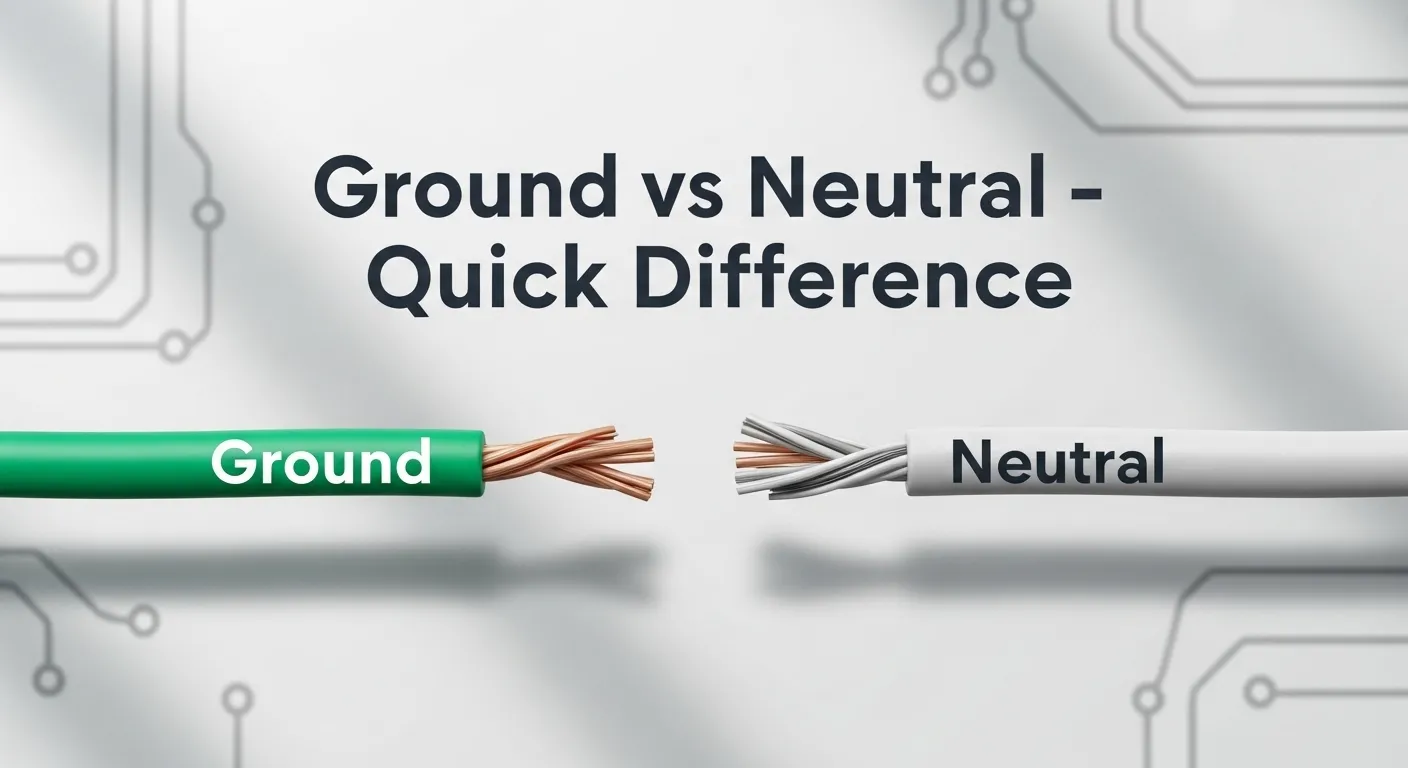
The difference between ground and neutral is simple. Neutral carries current back to the power source, while ground provides a safe path for excess electricity during faults. Imagine your home.
Electricity flows to lights, fans, and appliances. Neutral completes the circuit so devices work. Ground protects you if something goes wrong. A loose wire or short circuit can cause shocks.
Ground safely directs excess current into the earth. Beginners often confuse ground and neutral because both are connected to earth in some way.
Knowing the difference between ground and neutral is very important. It ensures safety, proper repairs, and prevents accidents.
Electricity can be dangerous. Using neutral and ground correctly protects you, your family, and devices. Neutral is always active when electricity flows. Ground is only active during faults.
Both are connected at the main panel but serve different purposes. Understanding them is crucial for electricians, students, and homeowners.
This guide will explain the differences, uses, safety tips, and common mistakes in simple language.
🔑 Key Differences Between Neutral and Ground
| Feature | Ground | Neutral |
| Purpose | Safety in case of faults | Completes the circuit |
| Current | Normally 0 | Carries normal current |
| Connection | Connected to earth | Connected to power source return |
| Wire Color | Green or bare | White or light blue |
| Role | Protects humans | Completes electrical path |
| Device Dependency | Works during faults | Needed for normal operation |
| Safety Importance | Essential | Less critical |
| Fault Behavior | Carries excess electricity | Can carry extra current if fault occurs |
| Typical Usage | Appliances, metal cases | All electrical devices |
| Continuity | Only active during faults | Active all the time |
🌿 Nature and Behavior of Ground or Neutral
Ground wire is a safety wire. It only carries electricity during faults. It protects people from electric shocks.
Neutral wire is a return wire. It carries electricity back to the power source. Without neutral, the circuit cannot work.
Ground is connected directly to earth using rods or plates. Neutral is connected to the electrical system’s zero potential. Ground prevents hazards. Neutral ensures proper device operation.
Think of ground as a safety net. Neutral is like a road for electricity to return home. Ground only “works” in emergencies. Neutral “works” all the time.
🏗️ Real-World Examples
- Home appliances: The metal body of a washing machine is connected to ground. If electricity leaks, ground carries it safely. The neutral wire completes the circuit for power to reach the motor.
- Electrical outlets: Neutral allows devices to function. Ground prevents shocks if there is a fault in the device.
- Street lights: Neutral returns current to the power source. Ground protects the system in case of lightning strikes or short circuits.
🥄 10 Main Differences Between Ground and Neutral
1️⃣ Purpose
- Ground: Safety wire. Protects humans from shocks.
- Neutral: Completes circuit. Ensures devices function.
2️⃣ Current Flow
- Ground: Usually carries no current. Only during faults.
- Neutral: Always carries current. Normal operation.
3️⃣ Connection
- Ground: Connected to earth via rods or metal pipes.
- Neutral: Connected to the main power source return line.
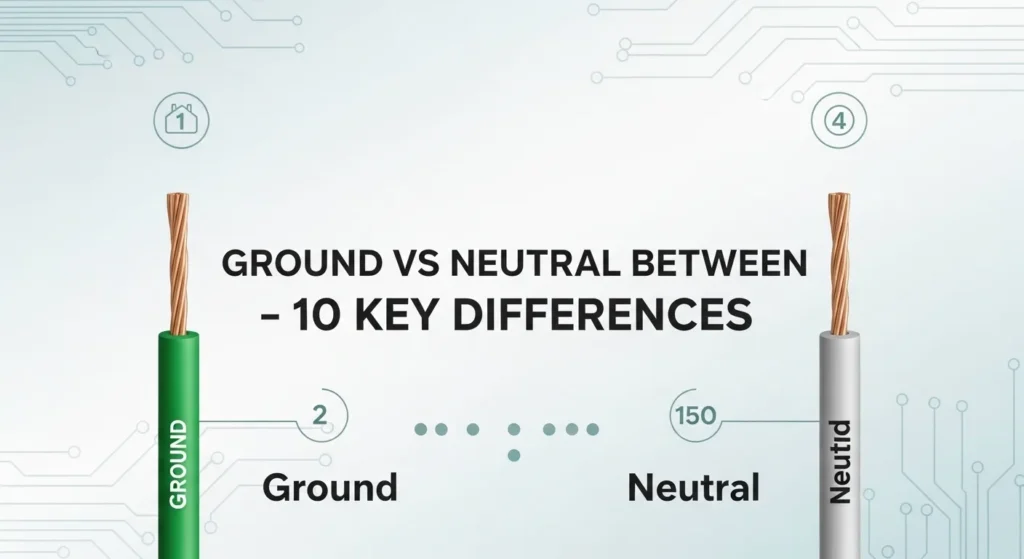
4️⃣ Wire Color
- Ground: Green or bare copper.
- Neutral: White or light blue.
5️⃣ Role in Circuit
- Ground: Provides a safe path during faults.
- Neutral: Returns electricity to complete the circuit.
6️⃣ Device Dependency
- Ground: Only active during faults. All devices benefit.
- Neutral: Required for devices to work continuously.
7️⃣ Safety Importance
- Ground: Essential to prevent electric shocks.
- Neutral: Helps flow but is not mainly for safety.
8️⃣ Location in Wiring
- Ground: Connected to appliance metal parts, pipes, and earth rod.
- Neutral: Runs from devices back to the panel.
9️⃣ Interaction With Faults
- Ground: Carries excess electricity safely to earth.
- Neutral: Can carry extra current if ground fails, increasing risk.
🔟 Continuity
- Ground: Active only when there is a fault.
- Neutral: Always active with electricity flow.
📊 Table Comparison
| Feature | Ground | Neutral |
| Purpose | Safety | Circuit completion |
| Current | 0 (normal) | Active current |
| Wire Color | Green/Bare | White/Blue |
| Device Role | Safety | Operation |
| Fault Response | Carries excess current | May carry extra in fault |
| Safety | Critical | Less critical |
| Location | Appliance body, earth | Device return |
| Active Time | Only in fault | Always |
| Necessity | Essential | Essential for devices |
| Real-life Example | Washing machine body | Light bulb circuit |
⚡ Which Is Important in What Situation?
Ground 🛡️
- Protects humans during faults.
- Example: Metal case of oven is grounded.
- Prevents shocks, fires, and hazards.
- Active only when electricity leaks.
Neutral 🔌
- Completes electrical circuit.
- Example: Light bulb needs neutral to return current.
- Always carries current.
- Active all the time.
Both wires are essential. Ground protects, neutral powers.
🎭 Metaphors and Similes
- Ground is like a safety net. Catches problems before they hurt you.
- Neutral is like a road back home. Returns electricity safely.
- Ground protects like an umbrella in rain.
- Neutral is like a river returning to its source.
💭 Connotative Meaning
- Ground: Safety, protection, security.
Example: “The ground wire saved him from a shock.” - Neutral: Functional, necessary, essential.
Example: “The neutral wire completed the circuit for the fan.”
🏫 History of Ground and Neutral
- Early electrical systems had no safety wires. People often got shocks.
- Ground wires were introduced in late 19th century for protection.
- Neutral wires were always used to complete circuits in AC systems.
- Modern homes have both neutral and ground for safe and functional electricity.
🔧 Types of Grounding and Neutral Systems
Grounding Systems:
- Rod grounding: Metal rod driven into earth.
- Pipe grounding: Uses water pipes as earth connection.
- Plate grounding: Metal plate buried in ground.
Neutral Systems:
- Three-wire single-phase: One neutral, two phases.
- Four-wire three-phase: Neutral returns current from three phases.
🏠 Practical Applications
- Home wiring: Ground prevents shocks; neutral completes circuits.
- Schools: All electrical equipment grounded. Neutral allows devices to work.
- Factories: Ground protects workers; neutral powers machines.
❓ Frequently Asked Questions
1. Can neutral cause shock?
Yes, if the neutral wire is broken or misused.
2. Is ground always safe?
Yes, if properly installed.
3. Why is neutral white?
Standard color coding for easy identification.
4. Why is ground green or bare?
Standard for safety identification.
5. Can devices work without ground?
Yes, but risk of electric shock increases.
6. Are ground and neutral connected?
Yes, only at the main panel in AC systems.
7. Can lightning damage neutral?
Neutral usually handles normal current. Ground protects against lightning.
🌎 How Both Help in Daily Life
- Ground: Prevents shocks, fires, and appliance damage.
- Neutral: Powers lights, fans, computers, and appliances.
- Both make electricity safe and functional.
- Proper grounding prevents accidents in homes and industries.
- Neutral ensures electricity flows correctly.
📝 Final Words
Ground and neutral wires are different but connected. Ground protects humans. Neutral carries current back. Both are needed for safe electricity. Ground prevents shocks during faults. Neutral completes circuits for devices.
Knowing the difference between ground and neutral is crucial. It helps in wiring, repairs, and safety. Both are important in homes, schools, factories, and industries.
Correct installation prevents accidents. Ground and neutral together make electricity safe, reliable, and functional.
📌 Conclusion
Ground and neutral are essential parts of electrical systems. Ground provides a safe path for excess electricity during faults.
Neutral returns electricity to the source for normal operation. Ground protects humans and appliances. Neutral allows devices to work correctly. Ground is connected to earth.
Neutral is connected to the power system. Both work together for safe and functional electricity. Understanding the difference is important for electricians, students, and homeowners.
Correct use prevents shocks, fires, and damage. Ground ensures safety, neutral ensures operation. Together, they make electricity safe and reliable for daily life.
Discover More Posts!
🛠️ Difference Between Steel and Metal: Simple Guide
Difference Between Correlation and Covariance
Difference Between Bao and Dumpling With In 30 Seconds

James Whitmore. Labdiff.com is my english grammar comparision website. I explore the history and evolution of English words. I write detailed comparisons explaining why spellings change over time and how British and American English diverged. My articles add depth and credibility to grammar comparison topics.