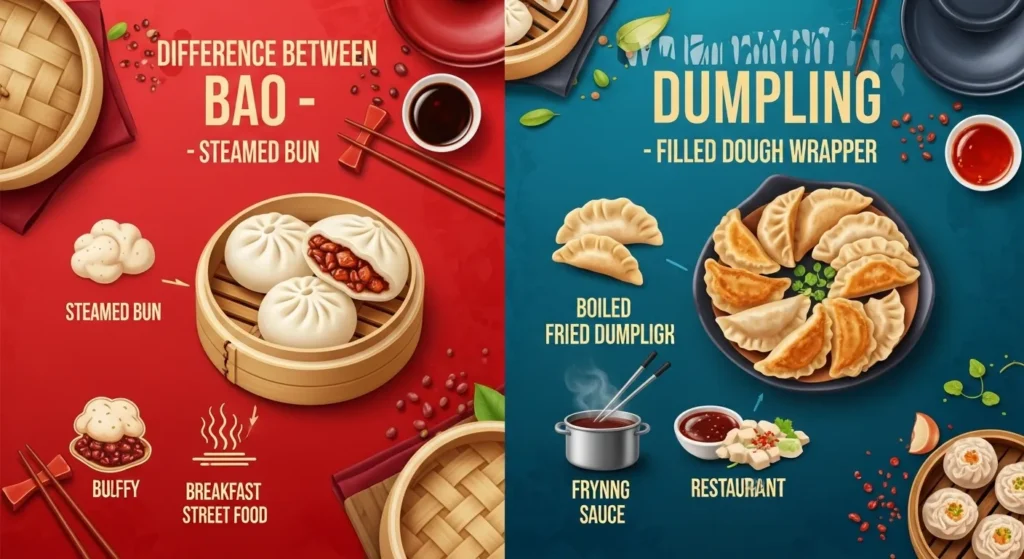
A bao is a soft, fluffy, often steamed bun with filling, while a dumpling is a smaller, thinner dough pocket that can be boiled, steamed, or fried with savory or sweet fillings.
Many people enjoy Asian food. Dumplings and bao are among the most loved dishes in many countries.
They are commonly found in restaurants, street food markets, and family kitchens. At first look, they seem similar. Both are made from dough.
Both contain fillings such as meat, vegetables, or seafood. Because of these similarities, many people think they are the same food.
However, there is a clear difference between bao and dumpling. Bao is a soft and fluffy steamed bun.
It uses yeast dough, which makes the texture light and bread like. Dumpling, on the other hand, is a broad category of food.
Dumplings can be boiled, steamed, or fried. They usually have thin wrappers and are folded around fillings.
Understanding the difference between bao or dumpling helps food lovers, students of culinary arts, and travelers exploring Asian cuisines.
When people know the difference between bao vs dumpling, they can better appreciate traditional recipes and cultural food habits.
Learning this difference between bao and dumpling also helps when ordering food in Asian restaurants or reading menus.
📖 Definitions
📌 Definition of Bao
Bao is a Chinese steamed bun made from yeast dough. The dough rises before cooking. This process makes the bun soft, fluffy, and slightly sweet. Bao usually contains fillings such as pork, chicken, vegetables, or sweet paste. The bun completely covers the filling.
Bao is popular in Chinese street food and dim sum culture. It is often eaten as breakfast, lunch, or a snack.
Example:
Char siu bao is a famous type of bao. It contains sweet barbecue pork inside a soft steamed bun.
📌 Definition of Dumpling
A dumpling is a general term used for dough wrapped around a filling. Dumplings can be prepared in many ways. They may be steamed, boiled, or fried. The dough wrapper is usually thin, and the filling is the main highlight.
Dumplings exist in many cultures. They are popular in Asian, European, and even American cuisines.
Example:
Chinese jiaozi dumplings contain minced pork and vegetables wrapped in a thin dough wrapper and are usually boiled or pan fried.
🔍 Difference Between Dumpling and Bao
1️⃣ Scope
Bao:
Bao refers to a specific food.
It belongs to Chinese cuisine.
The term only describes steamed buns made with yeast dough.
It is not a general category.
Dumpling:
Dumpling is a broad food category.
Many cultures have their own dumplings.
The term includes many different dishes.
Examples include Chinese jiaozi, Japanese gyoza, and Korean mandu.
Examples
Bao examples:
• Pork bao
• Chicken bao
Dumpling examples:
• Jiaozi
• Potstickers
2️⃣ Purpose
Bao:
Bao is usually eaten as a main snack or light meal.
It can be served as breakfast or lunch.
Street vendors often sell bao as quick food.
Dumpling:
Dumplings are often served as appetizers or side dishes.
They are usually eaten in groups or portions.
They may also be served during family gatherings.
Examples
Bao example:
A person may eat two pork bao buns for lunch.
Dumpling example:
A plate of ten dumplings may be served as a starter in a restaurant.
3️⃣ Structure
Bao:
Bao has thick and fluffy dough.
The texture is similar to soft bread.
The dough rises due to yeast.
Dumpling:
Dumplings have thin wrappers.
The wrapper is not fluffy.
The filling is usually the main focus.
Examples
Bao example:
A steamed bao bun feels soft and airy.
Dumpling example:
A dumpling wrapper feels thin and slightly chewy.
4️⃣ Usage
Bao:
Bao is usually eaten individually.
Each bun contains one portion of filling.
It can be held easily in the hand.
Dumpling:
Dumplings are usually served in groups.
They are eaten with chopsticks.
They are often dipped in sauces.
Examples
Bao example:
A worker may buy one bao from a street stall.
Dumpling example:
Friends may share a basket of dumplings in a restaurant.
5️⃣ Origin
Bao:
Bao originated in China.
It has been part of Chinese cuisine for many centuries.
It is linked to traditional Chinese cooking methods.
Dumpling:
Dumplings exist in many cultures.
China has jiaozi.
Japan has gyoza.
Europe has pierogi and gnocchi.
Examples
Bao example:
Steamed pork bao from Chinese dim sum restaurants.
Dumpling example:
Polish pierogi dumplings filled with potatoes.
6️⃣ Cooking Method
Bao:
Bao is almost always steamed.
Steaming creates a soft and fluffy texture.
The bun expands while cooking.
Dumpling:
Dumplings have many cooking methods.
They can be boiled, steamed, or fried.
Each method changes the texture.
Examples
Bao example:
Pork bao cooked in bamboo steamers.
Dumpling example:
Potstickers are pan fried dumplings with crispy bottoms.
7️⃣ Size or Form
Bao:
Bao buns are larger.
They look like round bread buns.
They are easy to hold.
Dumpling:
Dumplings are smaller.
They are folded into shapes like crescents or triangles.
Examples
Bao example:
A bao bun is about the size of a small burger.
Dumpling example:
A dumpling is usually bite sized.
8️⃣ Cultural Role
Bao:
Bao is common in Chinese street food culture.
It is popular for quick meals.
Many people eat bao for breakfast.
Dumpling:
Dumplings often have cultural meaning.
They are eaten during festivals and holidays.
Families gather to make dumplings together.
Examples
Bao example:
Street vendors selling bao in Chinese markets.
Dumpling example:
Families making dumplings during Lunar New Year.
9️⃣ Examples
Bao Examples
Char siu bao
Steamed chicken bao
Sweet red bean bao
Dumpling Examples
Jiaozi
Gyoza
Mandu
Potstickers
These examples show how dumplings exist in many varieties, while bao remains a specific dish.
🔟 Key Difference Summary
The main difference between bao and dumpling is their category and structure.
Bao is a specific type of Chinese steamed bun.
It uses yeast dough and has a soft texture.
Dumpling is a general food category.
It includes many dishes from different cultures.
Dumplings have thin wrappers and different cooking methods.
Because of this, all bao may be considered a type of dumpling in a very broad sense, but not all dumplings are bao.
🏁 Conclusion
The difference between bao and dumpling becomes clear when we examine their ingredients, cooking styles, and cultural roles.
Bao is a traditional Chinese steamed bun made with yeast dough. The dough rises before steaming, which creates a soft and fluffy texture. The bun surrounds the filling completely, forming a bread like snack or meal.
Dumplings are much more diverse. The word dumpling refers to many foods made with dough and filling. These dishes appear in different cuisines around the world.
Dumplings may be boiled, steamed, or fried. Their wrappers are thin, and they are usually smaller than bao buns.
Another important difference between bao and dumpling is their scope. Bao is one specific dish within Chinese cuisine. Dumpling is a broad category that includes many regional foods such as jiaozi, gyoza, and pierogi.
Learning the difference between bao and dumpling helps people understand food cultures better.
It also makes it easier to choose dishes from menus and explore new cuisines. Both foods are delicious and widely loved.
Each represents unique cooking traditions. Understanding the difference between bao and dumpling allows us to appreciate the variety and richness of global cuisine.
Discover More Articals!
Difference Between Fog and Clouds: Clear Guide for Everyone
Difference Between CFO and Controller: Clear and Simple Guide

labdiff.com is my English grammar comparison website where I simplify confusing words, spelling differences, and usage rules through clear explanations and examples. My goal is to help learners, writers, and students understand English easily and use correct grammar with confidence.