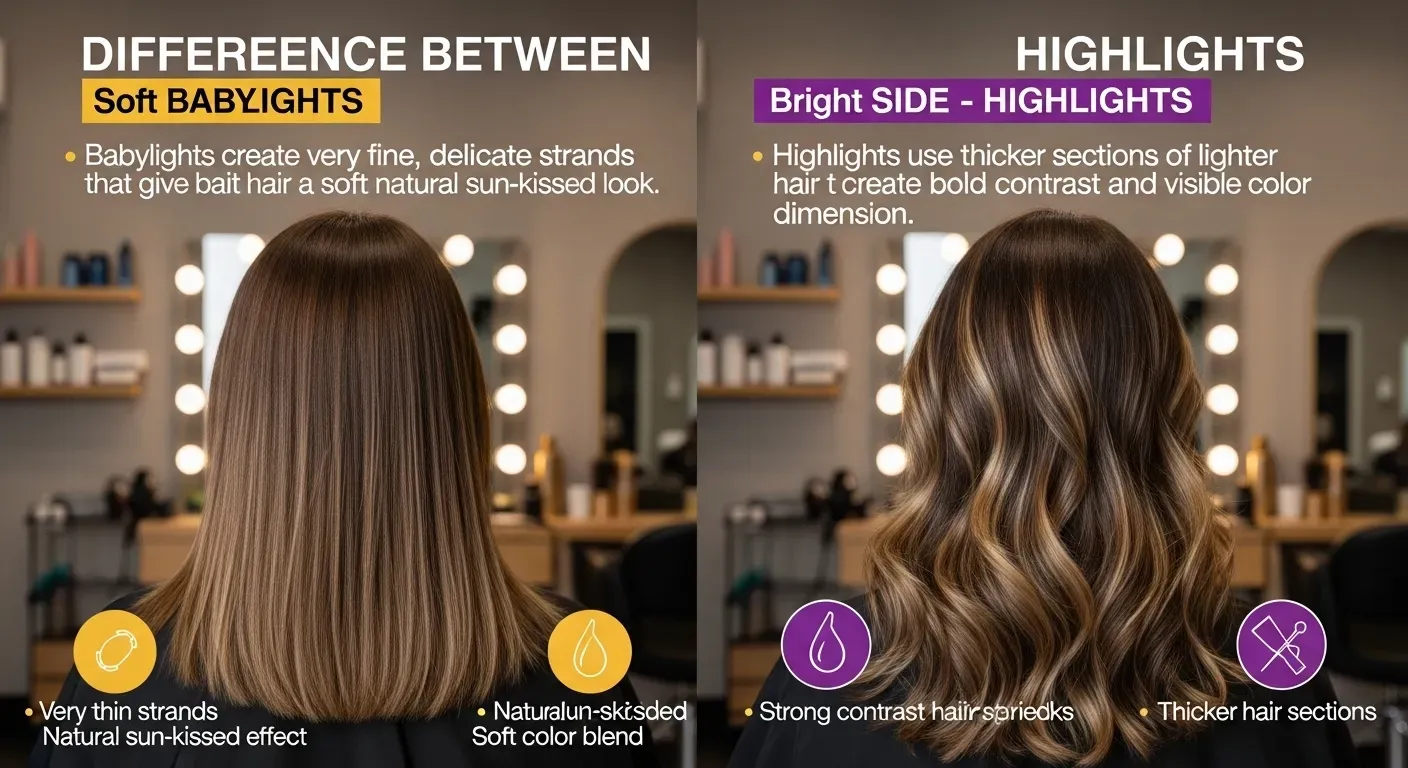
Babylights are very fine, subtle highlights for a natural sun-kissed look, while highlights are thicker, more noticeable streaks of lighter color.
Hair coloring has become very popular in modern beauty trends. Many people want to add depth and brightness to their hair.
Two common techniques are babylights or highlights. Both methods lighten certain sections of hair. However, there is a clear difference between babylights vs highlights.
Imagine someone visiting a salon to refresh their hairstyle. The stylist may suggest babylights for a soft, natural look.
Another person may choose highlights for a bold and visible color effect. This is where understanding the difference between highlights and babylights becomes important.
Babylights create very fine and delicate strands of lighter color. They imitate the natural highlights seen in children’s hair.
Highlights, on the other hand, are thicker and more noticeable. Learning the difference between babylights and highlights helps people choose the best option for their hair style, hair texture, and personal preference.
📖 Definitions
📌 Definition of Babylights
Babylights are very thin and delicate highlights.
They are carefully placed to create a natural sun kissed effect.
Stylists use very small sections of hair.
Babylights blend smoothly with the natural hair color.
Example:
A person with brown hair may add soft golden babylights to create a natural bright look.
📌 Definition of Highlights
Highlights are sections of hair that are colored lighter than the base hair color.
They are usually thicker and more visible than babylights.
Highlights create contrast and dimension in the hair.
Example:
A woman with dark brown hair may add blonde highlights to create a bold color contrast.
🔍 Difference Between Highlightsand Babylights
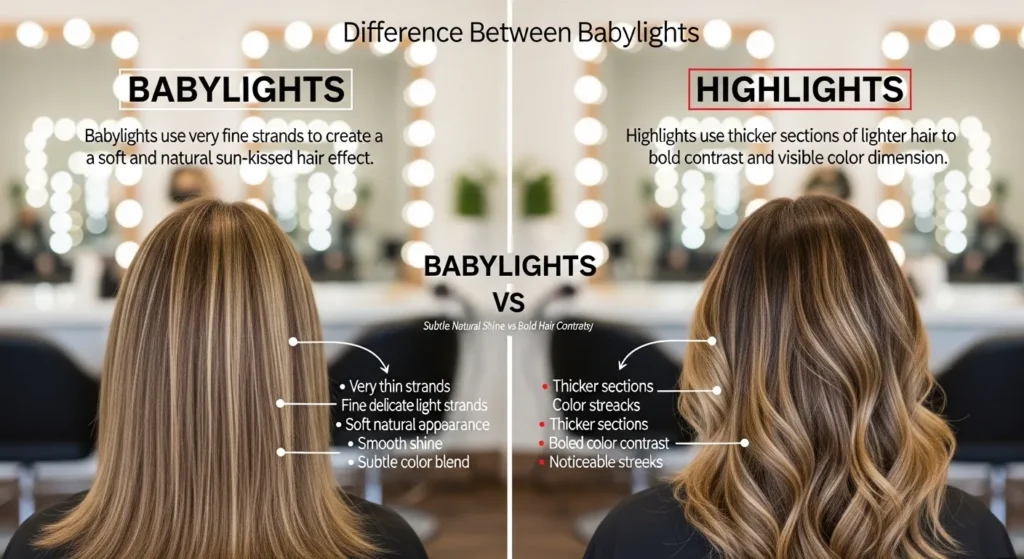
1️⃣ Thickness of Strands
Babylights:
Babylights use extremely fine strands of hair.
The sections are very thin.
Highlights:
Highlights use thicker hair sections.
They are more noticeable.
Examples
Babylights examples:
• Soft golden strands in light brown hair.
• Subtle blonde lines in dark blonde hair.
Highlights examples:
• Thick blonde pieces in brunette hair.
• Chunky caramel streaks in dark hair.
2️⃣ Appearance
Babylights:
Babylights create a soft and natural look.
They mimic children’s natural hair highlights.
Highlights:
Highlights create a stronger color contrast.
They are more visible.
Examples
Babylights example:
Hair looks naturally sun lightened.
Highlights example:
Hair has clear color streaks.
3️⃣ Application Technique
Babylights:
Stylists separate very small hair sections.
The process requires precision.
Highlights:
Larger sections of hair are colored.
The technique is simpler.
Examples
Babylights example:
Foil technique with extremely thin strands.
Highlights example:
Foil or cap method with thicker strands.
4️⃣ Time Required
Babylights:
Babylights take more time.
The stylist must work carefully.
Highlights:
Highlights take less time.
Examples
Babylights example:
A full head may take several hours.
Highlights example:
Standard highlights may take less salon time.
5️⃣ Color Effect
Babylights:
The color effect is very subtle.
Highlights:
The color effect is bold and noticeable.
Examples
Babylights example:
Soft light tones mixed with natural hair.
Highlights example:
Clear blonde streaks across the hair.
6️⃣ Maintenance
Babylights:
Babylights require less maintenance.
Regrowth blends naturally.
Highlights:
Highlights may need frequent touch ups.
Examples
Babylights example:
Hair grows out without harsh lines.
Highlights example:
Visible roots may appear sooner.
7️⃣ Hair Coverage
Babylights:
Babylights are spread evenly throughout the hair.
Highlights:
Highlights may be placed only in selected areas.
Examples
Babylights example:
Fine strands across the entire head.
Highlights example:
Face framing highlights.
8️⃣ Suitability
Babylights:
Suitable for people who want a natural look.
Highlights:
Suitable for people who want dramatic hair color.
Examples
Babylights example:
Professionals wanting subtle hair color.
Highlights example:
Fashion styles with bold color contrast.
9️⃣ Hair Texture Compatibility
Babylights:
Work well on fine hair.
Highlights:
Work well on thick hair.
Examples
Babylights example:
Fine straight hair with light strands.
Highlights example:
Thick curly hair with bright streaks.
🔟 Key Difference Summary
The main difference between babylights and highlights is their thickness and visual effect.
Babylights are very thin and subtle. They create a natural appearance.
Highlights are thicker and more noticeable. They create a bold contrast in hair color.
Understanding the difference between babylights and highlights helps people choose the best coloring technique for their style and personality.
🏁 Conclusion
The difference between babylights vs highlights mainly lies in their appearance, technique, and overall effect. Both are popular hair coloring methods used to add brightness and dimension to hair.
Babylights are extremely fine highlights. They create a natural and soft look. The technique mimics the gentle highlights often seen in children’s hair.
Because the strands are so thin, babylights blend smoothly with the natural hair color. This makes them ideal for people who want a subtle change.
Highlights, on the other hand, are thicker and more visible. They create a stronger contrast between the colored strands and the natural hair. Highlights are often chosen by people who want a bold and dramatic style.
Another key difference is maintenance. Babylights grow out naturally and require fewer salon visits. Highlights may need regular touch ups to maintain the color.
Understanding the difference between babylights and highlights allows people to make better decisions when choosing a hair coloring technique.
Both methods can enhance beauty and style when selected according to personal preference and hair type.
Discover More Articals!
⚡ Difference Between Ground and Neutral: Complete Guide
🎬 Difference Between Actor and Actress: Simple Guide
🔥 Difference Between Grill and Griddle – Simple Cooking Guide

James Whitmore. Labdiff.com is my english grammar comparision website. I explore the history and evolution of English words. I write detailed comparisons explaining why spellings change over time and how British and American English diverged. My articles add depth and credibility to grammar comparison topics.