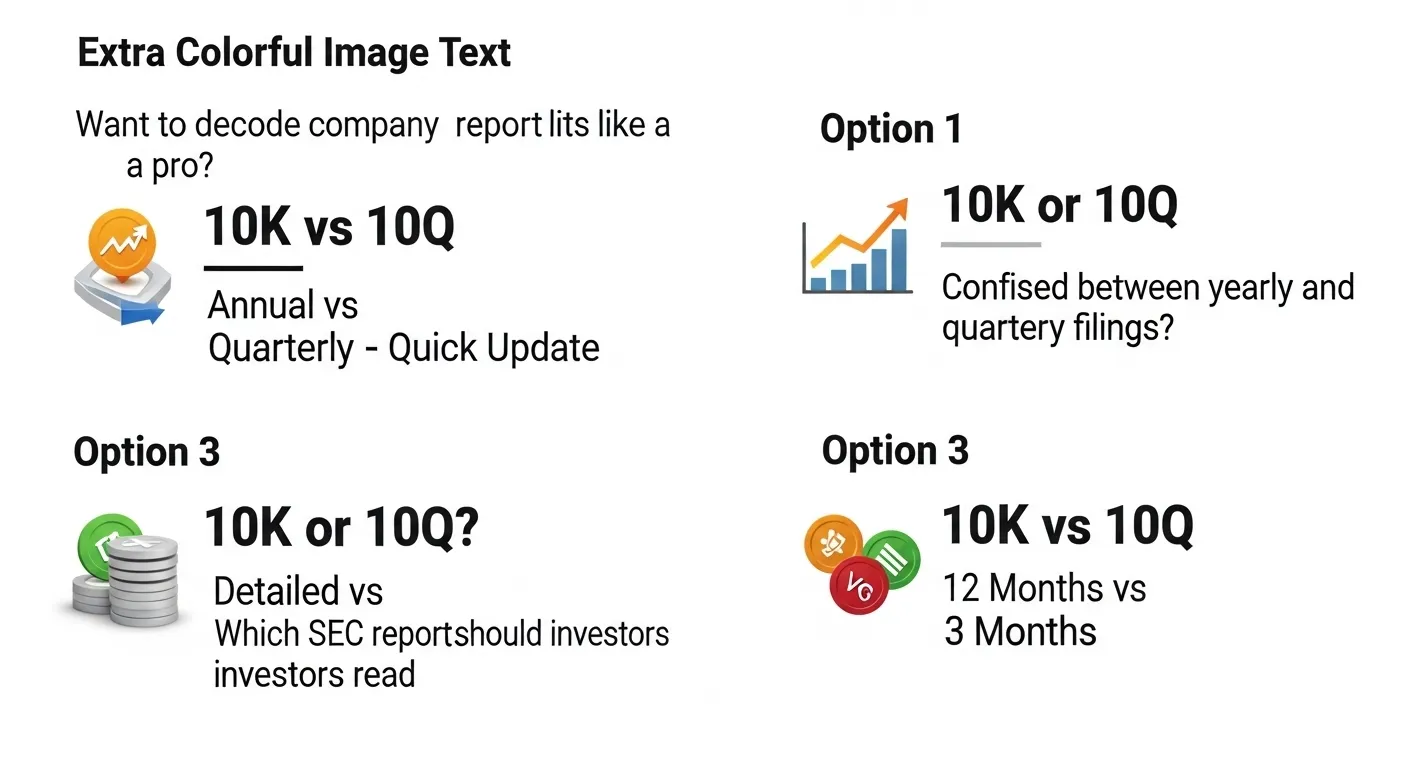
The difference between 10K and 10Q is that a 10-K is a detailed annual financial report filed once a year, while a 10-Q is a shorter quarterly report filed three times a year.
When I first learned about stock market reports, I heard about 10K and 10Q. Both are company reports. Both are filed with the government. But there is a clear difference between 10K and 10Q.
The difference between 10K or 10Q is mainly about time period and detail. 10K is yearly and detailed. 10Q is quarterly and shorter. Many investors read both reports.
Understanding the difference between 10K vs 10Q helps in better financial decisions. Once you know the difference between 10K and 10Q, reports become easy to read.
🔑 Key Difference Between the Both
The main difference between 10K and 10Q is that 10K is an annual report filed once a year, while 10Q is a quarterly report filed four times a year.
🎓 Why Is Their Difference Important?
Knowing the difference between 10K and 10Q helps investors. It helps finance students. It improves company analysis.
🔊 Pronunciation
🗣️ 10K
- US: /ten keɪ/
- UK: /ten keɪ/
🗣️ 10Q
- US: /ten kjuː/
- UK: /ten kjuː/
Now let’s see the detailed differences.
📊 Difference Between 10Q and 10K
📖 Definition of 10K
10K is a detailed annual report of a public company. It shows full year performance.
📖 Definition of 10Q
10Q is a quarterly financial report of a public company. It shows three month performance.
1️⃣ Filing Frequency
10K: Filed once a year.
- Covers 12 months.
- Filed after fiscal year ends.
10Q: Filed four times a year.
- Covers 3 months.
- Filed after each quarter.
2️⃣ Level of Detail
10K: Very detailed.
- Business overview.
- Risk factors.
- Management discussion.
10Q: Less detailed.
- Financial statements.
- Short updates.
3️⃣ Audit Requirement
10K: Audited report.
- Reviewed by external auditors.
- Certified statements.
10Q: Mostly unaudited.
- Internal review.
- Not fully audited.
4️⃣ Purpose
10K: Full annual review.
- Long term planning.
- Deep analysis.
10Q: Short term update.
- Quarterly progress.
- Performance tracking.
5️⃣ Length
10K: Long document.
- Many pages.
- Detailed explanation.
10Q: Shorter document.
- Fewer pages.
- Summary format.
6️⃣ Risk Disclosure
10K: Full risk details.
- Market risk.
- Legal risk.
10Q: Risk updates only.
- New risks.
- Changes in old risks.
7️⃣ Financial Statements
10K: Complete yearly data.
- Annual income statement.
- Full balance sheet.
10Q: Quarterly data.
- 3 month income statement.
- Quarterly balance sheet.
8️⃣ Investor Use
10K: Used for deep research.
- Company valuation.
- Long term decisions.
10Q: Used for recent updates.
- Check profit growth.
- Track quarterly trends.
9️⃣ Submission Authority
Both reports are filed with the U.S. Securities and Exchange Commission.
- 10K: Annual SEC filing.
- 10Q: Quarterly SEC filing.
🔟 Filing Deadline
10K: Filed within 60–90 days after year end.
10Q: Filed within 40–45 days after quarter end.
🌿 Nature and Behavior
📘 10K
Complete report.
Detailed information.
Big financial picture.
📗 10Q
Short update.
Recent data.
Quick overview.
🤔 Why Are People Confused?
Both are company reports.
Both are filed with SEC.
Names look similar.
📊 Difference and Similarity Table
| Feature | 10K | 10Q | Similarity |
| Frequency | Yearly | Quarterly | SEC filing |
| Detail | High | Medium | Financial data |
| Audit | Audited | Mostly unaudited | Public report |
| Length | Long | Shorter | Company info |
| Purpose | Full review | Update | Investor use |
🏆 Which Is Better in What Situation?
📘 10K (Best for Deep Research)
Best for long term investors.
Gives full company picture.
Helps in serious analysis.
📗 10Q (Best for Recent Updates)
Best for tracking quarterly growth.
Shows recent performance.
Helps short term review.
❓ FAQs
1. Is 10K filed every quarter?
No. Once a year.
2. Is 10Q audited?
Mostly no.
3. Which report is longer?
10K is longer.
4. Who receives these reports?
SEC receives them.
5. Which is better for deep analysis?
10K is better.
🌍 Usefulness
Both reports increase transparency.
Both show company performance.
📝 Final Words
10K and 10Q are important financial filings.
They differ in timing and detail.
📌 Conclusion
The difference between 10K and 10Q is mainly about time period, detail level, and purpose. 10K is an annual report.
It covers the full fiscal year. It includes business overview, risks, financial statements, and management discussion.
Investors use it for deep research. It helps in long term planning. It gives a complete picture of the company’s health.
On the other hand, 10Q is a quarterly report. It is shorter and mostly unaudited.
It provides financial updates and recent performance data. Investors use it to track short term progress. It helps in monitoring growth trends during the year.
Both reports are filed with the U.S. Securities and Exchange Commission. Both are important for transparency. However, they serve different purposes.
10K gives depth. 10Q gives updates. Understanding the difference between 10K and 10Q helps investors make smarter and more informed financial decisions.
Discover More Articals!
Difference Between CFO and Controller: Clear and Simple Guide
Difference Between Fog and Clouds: Clear Guide for Everyone

James Whitmore. Labdiff.com is my english grammar comparision website. I explore the history and evolution of English words. I write detailed comparisons explaining why spellings change over time and how British and American English diverged. My articles add depth and credibility to grammar comparison topics.